Want to be in the loop?
subscribe to
our notification
Business News
DEVELOPERS HUNT FOR LAND AVAILABILITY
Real estate businesses are on the hunt for land across the country to develop urban and resort projects.
Last week, the Department of Planning and Investment of Long An province in the Mekong Delta region announced that a joint venture between Vinhomes and Vietnam Investment Group, which registered to implement the new Phuoc Vinh Tay urban area in Can Giuoc district.
This project is expected to be located in a 1,000-hectare plot and will have a population of about 90,000 people. Long An also approved Green City Development, a subsidiary of Vinhomes, as an investor in the Duc Hoa-Hau Nghia urban area project, with registered capital of more than $1.15 billion.
Novaland also proposed investing in a tourism-resort complex of nearly 450ha in Mui Yen of the south-central province of Binh Thuan, with expected capital of $2.5 billion.
Meanwhile, many non-core real estate businesses such as steel manufacturers Hoa Sen and Hoa Phat, as well as “shrimp king” Minh Phu, are entering real estate to prepare for a new market cycle.
Last month, Hoa Sen Group established Hoa Sen Saigon JSC, which has a charter capital of $4.1 million, operating mainly in real estate in Ho Chi Minh City. After establishment, Hoa Sen announced that it was looking for assets worth up to $125 million to develop offices, a commercial centre, and housing.
The shrimp-farmer Minh Phu Group also announced plans to expand into real estate by adding the real estate business into its portfolio of business. Last week, it announced plans to build social housing projects in the southernmost province of Ca Mau, where its factories are based. With investment of more than $26.2 million, the project is expected to provide accommodation for about 4,000 people.
With Hoa Phat Group returning to the real estate race in early 2023, it has taken steps to collect land in many localities. This includes two urban projects in the northern provinces of Hung Yen and Phu Tho worth over $415 million. Apart from those, Hoa Phat has proposed to invest in hundreds of hectares in Khanh Hoa, Quang Ngai, Quang Tri, Hai Duong, Can Tho, Thua Thien-Hue, Phu Yen, and Dak Nong provinces.
TCO Holdings JSC, which operates in the transport sector, also plans to enter the real estate market. Last month, TCO approved a comprehensive restructuring, including renaming and redirecting operations. Thereby, the business will focus on developing transportation, logistics, agriculture, food and its supporting industries, and real estate.
TCO aims to expand into developing industrial and agricultural real estate and carrying out potential merger and acquisition deals. It has also established TCO Real Estate JSC with a charter capital of $4 million.
Phenikaa Group, through Nam Hung JSC, also entered the field in February when launching the Endless Skyline Westlake office, hotel, and luxury apartment complex project in Tay Ho district in Hanoi.
The project has 27 floors and provides over 350 serviced, residential, and hotel apartments to the market. Phenikaa acquired the Endless Skyline Westlake project from Song Kim Company in 2020.
Real estate expert Tran Khanh Quang said, “Up to 95 per cent of businesses are thirsty for money, while prices of land are continuously decreasing. Therefore, this is an opportunity for investors who have financial sources in hand to jump in and acquire real estate projects. Notably, non-core businesses of real estate with strong financial potential are actively encroaching in the field, creating momentum for existing ones.”
Vo Hong Thang, director of Consulting Services and Project Development at DKRA Group, added that there would be investors leaving the market after a fierce competitive period, but others with potential would rise strongly and lead the development of real estate in the next stage.
“This makes the market more competitive and end-users such as house buyers will benefit with an increasing fund of houses and affordable prices,” Thang said.
Source: VIR
Related News

CHARITY / EXHIBITION / OTHER EVENTS
INVESTMENT OPPORTUNITIES IN CA MAU PROVINCE: 96 PROJECTS AND 20 STRATEGIC PROJECTS
We are pleased to share with you information on investment projects currently seeking investors in Ca Mau Province. Should your esteemed company or association be interested, we kindly invite you to review the project information and complete the registration form via the links provided. The Ho Chi Minh City Investment and Trade Promotion Centre (ITPC) will consolidate the expressions of interest and facilitate connections with the leadership of Ca Mau Province at a meeting tentatively scheduled for 13 November 2026 in Ho Chi Minh City.

MEMBER CORNER / PROMOTIONS
BẰNG KIỀU LIVESHOW - A SYMPHONY OF LOVE UNDER THE GOLDEN GLOW
A masterclass in live music that takes the audience on a soulful journey through immortal love songs, guided by the peerless artistry and emotive storytelling of renowned singer Bằng Kiều. The highlight of the night is his seamless musical chemistry with special guest Triệu Hồng Ngọc, promising passionate and deeply resonant duets inside the magnificent Grand Ballroom.
INFRASTRUCTURE / CONSTRUCTION / LOGISTIC / PORT
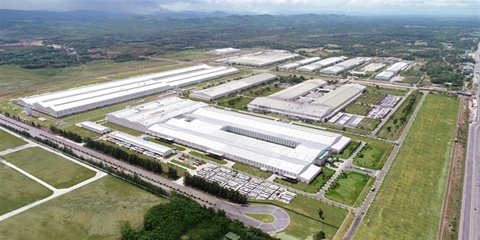
ĐÀ NẴNG GREEN-LIGHTS US$105 MILLION THAI DEVELOPMENT DEAL
The central city has approved an investment proposal by Thailand’s WHA Group to develop infrastructure for the 400ha WHA Đà Nẵng Industrial Park project on two communes of Thăng Bình and Đồng Dương, with an investment of more than VNĐ2.7 trillion (US$105 million). The city said it approved WHA Industrial Development International's status as an investor in the project, which is expected to take place between 2027 and 2034.
VIETNAM ECONOMY INVESTMENT
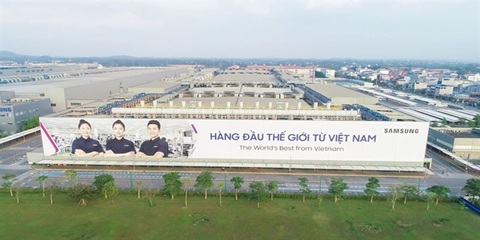
MOBILE PHONE EXPORTS RISE 20% TO $51.8 BILLION IN FIRST NINE MONTHS
Exports of mobile phones and components rose 20 per cent year-on-year to nearly US$51.8 billion in the first nine months of 2026, with China, the US and Republic of Korea accounting for more than half of the total. Shipments to the three markets reached a combined $26.18 billion, or 50.6 per cent of total exports of the product group during the period, according to data from the Vietnam Department of Customs under the Ministry of Finance.
INFRASTRUCTURE / CONSTRUCTION / LOGISTIC / PORT
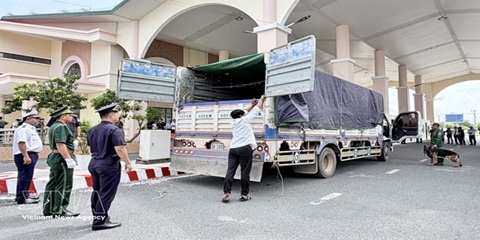
VIỆT NAM-CAMBODIA TRADE GATHERS PACE TOWARDS $20 BILLION TARGET
Trade between Việt Nam and Cambodia continues to grow, remaining a bright spot and a key pillar of bilateral cooperation as the two countries aim to raise two-way trade to US$20 billion in the coming years. After setting a record of more than $11.3 billion last year, bilateral trade reached about $8.7 billion in the first eight months of this year, up 8.3 per cent year on year.
VIETNAM ECONOMY INVESTMENT
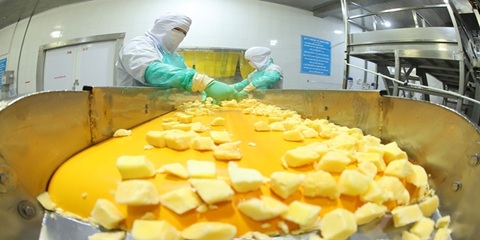
FRUIT AND VEGETABLE EXPORTS POISED TO HIT $10 BILLION IN 2026
Fruit and vegetable exports are on track to reach nearly US$10 billion in 2026, after rising 19.9 per cent year on year to nearly US$7.4 billion in the first nine months, driven by strong seasonal demand and abundant tropical fruit supplies. The Ministry of Agriculture and Environment said the growth reflected stronger international demand for fresh produce and processed agricultural products.
Events Sponsors






















