Want to be in the loop?
subscribe to
our notification
Business News
DEPUTY PM EXPLORES ECONOMIC DEVELOPMENT EXPERIENCE IN CHINA
At working sessions with specialised agencies in Shenzhen, China, Deputy PM Nguyễn Chí Dũng shared Việt Nam's development priorities in the new era, underscoring the Vietnamese Party and Government's interest in enhancing the private sector's role, improving the business climate, attracting high-quality human resources, and developing free trade zones.
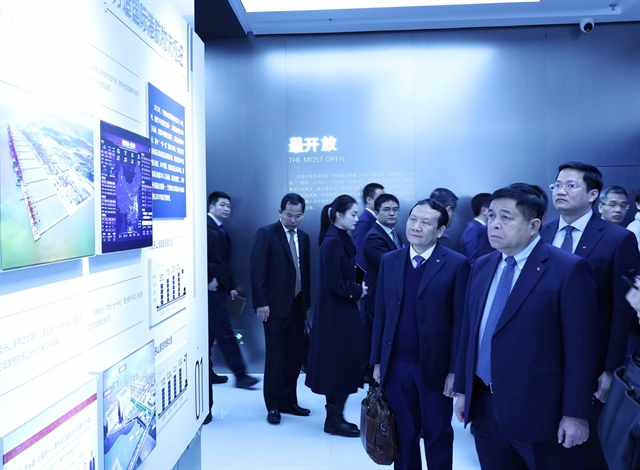
Deputy Prime Minister Nguyễn Chí Dũng visited the free trade zone Ningbo in Shenzhen, China. — VNA/VNS Photo
BEIJING — Vietnamese Deputy Prime Minister Nguyễn Chí Dũng paid a working trip to Guangdong Province’s Shenzhen City on March 18 and 19 as part of his visit to China.
Meeting with Executive Vice Mayor of Shenzhen Tao Yongxin, Dũng expressed his admiration for the city's transformation into a modern and prosperous metropolis, praising its remarkable economic and social achievements under the leadership of the Communist Party of China, headed by Party General Secretary and President Xi Jinping.
Dũng underscored Việt Nam's significant economic and social development achievements during nearly 40 years of Đổi mới (renewal), which have enhanced the country's capabilities and international standing.
He highlighted Việt Nam's ambitious goals to become an upper-middle income country by 2030 and a high-income developed nation by 2045, requiring the country to overcome challenges, particularly achieving double-digit growth rates through digital transformation, scientific-technological advancement, and developing the private economic sector as the most important driver for the country's growth.
Deputy PM Dũng expressed his appreciation for the positive and extensive development of the Việt Nam – China comprehensive strategic cooperative partnership and the community with a shared future that carries strategic significance.
He emphasised that the Vietnamese Party, Government, and people view strengthening and developing friendly relations with China as a consistent policy, an objective requirement, a strategic choice, and a top priority in its foreign policy of independence, self-reliance, multilateralisation and diversification of external relations.
For his part, Tao expressed his gratitude for the support from the Vietnamese Government, ministries, sectors and localities for Shenzhen city.
He highlighted Shenzhen's evolution from a new city established after China's reform and opening-up period to the country's largest industrial and commercial centre, and a symbol of socialism with Chinese characteristics.
The official noted that Việt Nam is the city's largest trading partner in ASEAN and expressed his desire to strengthen practical cooperation between local administrations, businesses, and organisations from both countries, highlighting its focus on four key areas of high-quality development, industry, trade-investment, and tourism.
Dũng agreed with Tao’s proposals while requesting Shenzhen to continue bolstering cooperation and exchanging experiences regarding the private sector's development, ways to strengthen linkages between economic sectors, the role of the State and the market, and special policies for free trade zones and special economic zones.
At working sessions with specialised agencies in Shenzhen, Dũng shared Việt Nam's development priorities in the new era, underscoring the Vietnamese Party and Government's interest in enhancing the private sector's role, improving the business climate, attracting high-quality human resources, and developing free trade zones.
Professor Tao Yitao, Director of the China Special Economic Zone Research Centre of the Shenzhen University, shared Shenzhen's successful development experiences, focusing on international integration, persistence in economic reforms, improvement in the business environment, and development of science-technology and innovation.
Established in 1980 as China's first special economic zone, Shenzhen has grown into a powerhouse with a GDP of US$500 billion in 2024, investing 6.46 per cent of its GDP in research and development.
Billed as "China's silicon valley," it hosts technology giants like Huawei, Tencent, and BYD.
Regarding experiences in developing the private economic sector, leaders from the Shenzhen Bay Science and Technology Ecological Park, and Development and Reform Commission of Shenzhen Municipality stressed that it is necessary to build mechanisms to encourage enterprises to enhance investment in R&D activities, and accelerate the market orientation, the legal framework, and international integration of the business environment.
A representative from the Shenzhen Innovation and Investment Group affirmed the role of the State in identifying the potential of and arrange resources for small firms to operate in strategic areas like science-technology, innovation, smart production, new energy and healthcare.
The Chinese partners pledged to continue sharing experiences, supporting Việt Nam's innovation ecosystem development, expanding investment, and implementing new cooperation models with Vietnamese partners in the spirit of being "both comrades and brothers”. — VNA/VNS
Source: VNS
Related News

BANKING / FINANCE / INSURANCE / TAX
REMITTANCES TO HCM CITY RISE NEARLY 40% IN Q3
Remittances to HCM City reached more than US$2.83 billion in the third quarter of this year, up 39.5 per cent from the previous quarter and 3.6 per cent year-on-year. This was the first quarter showing positive annual growth this year, helping narrow the decline in remittance inflows over the first nine months. According to the State Bank of Vietnam (SBV)’s Regional Branch 2, remittances transferred to HCM City through credit institutions and economic organisations totalled $2.835 billion in Q3, an increase of more than $802 million from the previous quarter.
TECHNOLOGY
TECH SECTOR GROWTH OPENS UP OPPORTUNITIES FOR VIỆT NAM TO GO GLOBAL
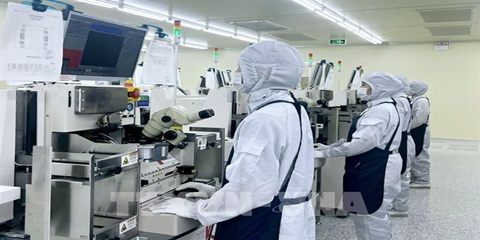
The growth of the electronics, semiconductor and high-tech sectors worldwide is opening up a variety of opportunities for Vietnamese enterprises to integrate more deeply into the global supply chain. However, to become suppliers for these corporations, domestic enterprises must meet rigorous standards regarding quality, technology, productivity and order fulfilment capabilities.
VIETNAM ECONOMY INVESTMENT
FOREIGN INVESTORS SEEKING A SYNCHRONISED MANUFACTURING ECOSYSTEM
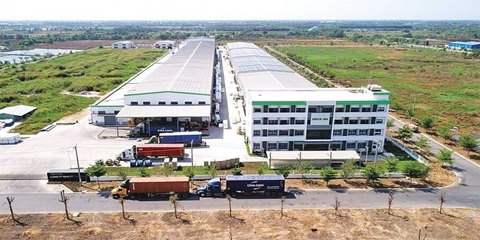
Instead of focusing only on land costs and incentives as usual, foreign investors are seeking a synchronised manufacturing ecosystem, from stable power supply and logistics to shared infrastructure and the convenience of completing residence procedures for experts to serve their long-term investment in the country.
MEMBER CORNER / PROMOTIONS
SENTRYSAFE FHW40200 – PROTECT YOUR VALUABLES, ENJOY PEACE OF MIND!
Looking for a reliable solution to protect your important documents, cash, and valuables from fire and water damage? Genuine SENTRYSAFE - Reliable protection for your valuables and peace of mind! Contact Sen Wai Vietnam for more information and personalized product recommendations.
PROPERTY / INDUSTRIAL ZONE
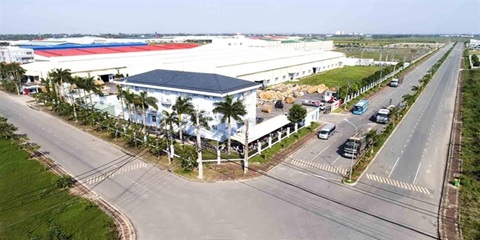
HCM CITY ATTRACTS US$5.7 BILLION INTO EXPORT PROCESSING AND INDUSTRIAL ZONES
HCM City attracted US$5.7 billion in domestic and foreign investment into its export processing and industrial zones during the first nine months of 2026. The figure exceeded the city's full-year target by 31 per cent, highlighting strong momentum in high-quality industrial investment under Resolution No.10-NQ/TW. Total investment reached 131 per cent of the 2026 target of $4.25 billion and represented a 29 per cent increase compared with the same period in 2025, according to the city's Export Processing and Industrial Zones Authority (HEPZA).
INFRASTRUCTURE / CONSTRUCTION / LOGISTIC / PORT
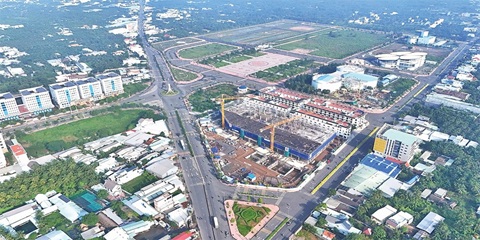
DONG THAP PROVINCE STEPS UP INDUSTRIAL EXPANSION AND INFRASTRUCTURE CONNECTIVITY
Accelerating public investment, strengthening inter-regional connectivity, and expanding industrial land are helping Dong Thap efficiently bolster competitiveness and drive economic growth. Following the 2025 merger of the former Dong Thap and Tien Giang provinces, the expanded Dong Thap province in the Mekong Delta faces mounting pressure to accelerate infrastructure development and strengthen connectivity among local economic zones, urban areas, industrial parks (IPs), and production centres.
Events Sponsors






















