Want to be in the loop?
subscribe to
our notification
Business News
DEPUTY PM DEMANDS REVIEW OF FEE AT PORTS
Deputy Prime Minister Vuong Dinh Hue has asked ministries to review the collection of fees for the use of infrastructure, service facilities and public utilities at all ports in northern Hai Phong City.
The Government Office last weekend sent a document requiring the ministries of Finance, Justice, Industry and Trade, Planning and Investment, Transport, and Viet Nam Chamber of Commerce and Industry (VCCI) to work with the municipal People’s Committee to review the collection of fees and report to the Prime Minister before March 20.
Last week, the municipal People’s Committee released a document affirming that the collection had adequate legal foundation.
It said the fees were much lower than that of Lao Cai (a half for 20-feet container and 62.5 per cent for 40-feet container).
It added that Hai Phong City was the first locality in the country to charge fees at seaports and so, it could not compare its fees with other localities having seaports.
Earlier this month, VCCI submitted a document to the PM, saying that the fees being collected under Resolution No 148 were much higher than the current levels of up to 70 per cent.
VCCI said the fees for the use of infrastructure, service facilities and public utilities at Hai Phong’s seaports were increased for two consecutive years since 2015.
It added that businesses believed the city’s roadmap for an increase of fees had been too short, as the fees were increased thrice within three years.
The Ministry of Finance on January 25 had said the fees being collected should ensure competitiveness and create a favourable investment environment for firms.
The ministry also asked the Government Office to ensure that the charges were in line with the payment ability of enterprises, and transport through the seaports and operations are conducted smoothly.
Source: VIR
Related News
MEMBER CORNER / PROMOTIONS
SENTRYSAFE CHW20201 - EFFECTIVE WATER RESISTANCE, MAXIMUM PROTECTION
In unexpected flooding situations, the most important thing is to keep your valuables dry and intact. SentrySafe CHW20201 is specially designed with superior water-resistant capabilities, helping protect documents, cash, and important belongings even when fully submerged. Proven in real testing: After water submersion, the documents inside remain dry - undamaged.

MEMBER CORNER / PROMOTIONS
AN ELECTRIFYING NIGHT WITH THE "QUEEN OF DANCE" THU MINH AT THE GRAND HO TRAM!
The stage at The Grand Ballroom is set to catch fire as Vietnam’s undisputed "Queen of Dance," Thu Minh, takes the spotlight. Renowned for her powerhouse vocals, magnetic stage presence, and sultry, high-energy performances, Thu Minh promises an evening of pure musical euphoria. The energy escalates with an exclusive appearance by special guest and The Voice champion, Vu Thao My.

HR / LABOUR/ EMPLOYMENT
HIGH-QUALITY HUMAN RESOURCES NEEDED TO ATTRACT NEW TECH INVESTMENT CAPITAL
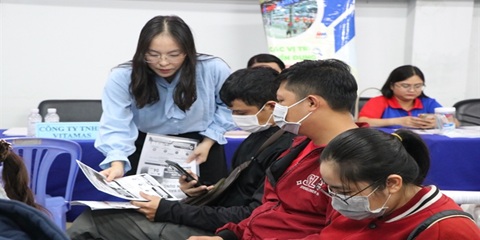
Besides infrastructure, Việt Nam must also rapidly develop a highly skilled workforce to attract investment in AI, semiconductors and advanced manufacturing, experts have said. Don Lam, CEO and co-founder of investment management company VinaCapital, said that global technology investors were increasingly looking at the readiness of the entire ecosystem, with high-quality human resources a decisive factor.
HR / LABOUR/ EMPLOYMENT
HIRING OUTLOOK STRENGTHENS IN Q4 AS SKILLS SHORTAGES PERSIST
Hiring intentions among employers in Việt Nam strengthened in the fourth quarter, with 52 per cent of surveyed companies planning to increase headcount between October and December, according to a ManpowerGroup survey released this week. Việt Nam's hiring outlook was stronger than the Asia Pacific and Middle East (APME) regional average of 33 per cent and the global average of 29 per cent, ranking third in the region and 11th globally among 42 markets surveyed.
BANKING / FINANCE / INSURANCE / TAX
LARGE BANKS FORECAST TO GAIN HIGHER PROFITABILITY IN H2 2026
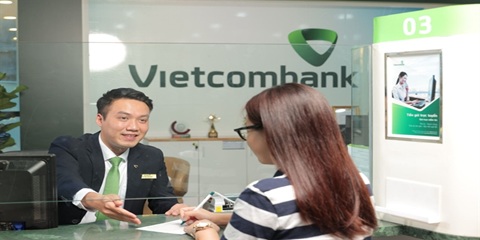
The return on average assets (ROAA) of the banking sector will likely remain stable at around 1.5 per cent in the second half of 2026, but profitability divergence among banks will increase, with large banks outperforming peers on stronger margins and diversified earnings, analysts forecast. In a recent report on the banking sector, analysts from the Vietnam Investors Service Rating said the sector’s ROAA rose by 10 basis points quarter-on-quarter to 1.51 per cent in the first half of this year, driven by net interest margin (NIM) improvements at some State-owned banks and large private banks.
GARMENT / TEXTILE
VIỆT NAM'S FOOTWEAR, BAG EXPORTS TO US TOP $8 BILLION IN EIGHT MONTHS
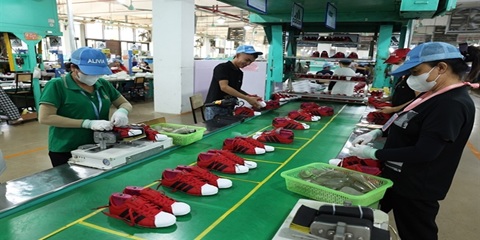
Việt Nam's exports of footwear and handbags to the US exceeded US$8 billion in the first eight months of 2026, as the US and EU remained the country's biggest markets despite sluggish growth in footwear shipments. Exports from Việt Nam's leather and footwear sector reached more than $2.45 billion in August, down 9 per cent from July but up 3 per cent from a year earlier, according to preliminary statistics.
Events Sponsors






















