Want to be in the loop?
subscribe to
our notification
Business News
DECREE 205/2025/ND-CP: NEW DRIVER FOR SUPPORTING INDUSTRY DEVELOPMENT
The Government issued Decree 205/2025/ND-CP on amendments and supplements to Decree 111/2015/ND-CP on accelerating development of supporting industries. Effective from September 1, 2025, the new decree introduces a series of support policies regarding technology, human resources, environment, legal frameworks, and investment, and lays a solid foundation for enhancing the competitiveness of Vietnamese companies. The new policy is expected to help supporting industries integrate more deeply into global supply chains and contribute to Vietnam’s progress toward industrialization and modernization goals.
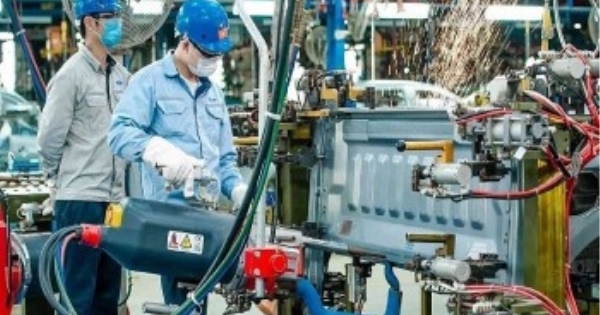
By enhancing professional skills and expertise, Vietnam can move from low-cost manufacturing to high value-added production
Promoting technology transfer
Decree 205/2025/ND-CP focuses on supporting research, development, and technology transfer in supporting industries. Organizations and individuals engaged in the production of prioritized products are entitled to incentives from the National Technology Innovation Fund, the National Foundation for Science and Technology Development, and the Vietnam National High-Tech Development Program. In particular, collaborative projects between businesses and science-technology organizations are eligible for up to 50% support for expenses related to machinery, equipment, prototypes, software, training, consulting, inventions, and intellectual property. Capacity-building activities for experts and technology consulting units can receive up to 70% of total funding.
These incentives enable businesses, especially small and medium-sized enterprises (SMEs), to access advanced technologies to improve product quality and increase competitiveness in international markets. However, to take full advantage of these incentives, they must enhance their technical and financial capabilities. Transparent resource allocation mechanisms are also essential to prevent misdirected support and ensure meaningful impact on supporting industries.
Uplifting human resources
To meet the demand for high-quality labor, the decree provides funding support for domestic and overseas training programs for outstanding students, lecturers, researchers, technicians, and technical workers in supporting industries. Funding is mobilized from the Supporting Industry Development Program and national training programs.
These training policies aim to address the shortage of highly skilled labor - a major barrier preventing many Vietnamese companies from participating in global supply chains. By improving professional skills and expertise, Vietnam can shift from low-cost manufacturing to high value-added production, thus aligning with Industry 4.0 megatrend. Nonetheless, the effectiveness of these policies depends on close coordination among businesses, training institutions, and local authorities in developing practical training programs, as well as implementing talent retention strategies to prevent brain drain.
Environmental protection and quality assurance support
The decree adds three provisions relating to environmental, legal, and quality assurance support, aimed at fostering sustainable industrial development and improving product standards. Development projects for supporting industrial parks or industrial clusters are eligible for environmental protection incentives in accordance with current laws. Manufacturers of prioritized products also receive similar support, proving Vietnam’s commitments to green industrial development.
In terms of quality assurance, businesses are eligible for up to 50% support for such activities as renting of testing laboratories, product testing, inspection of new goods, copyright registration, intellectual property, barcodes, measurement, and measurement calibration. These supports enable businesses to meet international standards - a prerequisite for participating in global supply chains in such industries as electronics, automobile, and precision engineering.
Legal assistance and investment incentives
Legally, SMEs manufacturing prioritized supporting industrial products are entitled to assistance under the Law on Support for SMEs, including legal consulting and simplified administrative procedures. This helps reduce regulatory burdens on small businesses, which often face difficulties in complying with complex legal requirements.
Regarding investment, projects manufacturing prioritized products are eligible for land and water surface rent exemptions or reductions, along with tax incentives in accordance with the law. These policies create a favorable environment to attract both domestic and foreign investment, helping Vietnam compete with Thailand, Indonesia and other countries to become a regional manufacturing hub. However, strict supervision is needed to prevent abuse of incentives and enhance management capacity to effectively support investors.
Despite offering many opportunities, the enforcement of Decree 205/2025/ND-CP may face challenges because businesses, especially SMEs, have limited financial and technical capacity. Transparent resource allocation, clear implementation guidelines, and inter-sector coordination are essential to make sure that policies are effective and reach the right subjects.
The decree provides a foundation for Vietnam’s supporting industries to integrate into global supply chains through policies on support regarding technology, human resources, environment, legal frameworks, and investment. The success of the decree depends on effective implementation and close cooperation among the government, enterprises, and relevant stakeholders, aiming to upgrade supporting industries and facilitating the country’s industrialization and modernization.
Source: VCCI
Related News

CHARITY / EXHIBITION / OTHER EVENTS
INVESTMENT OPPORTUNITIES IN CA MAU PROVINCE: 96 PROJECTS AND 20 STRATEGIC PROJECTS
We are pleased to share with you information on investment projects currently seeking investors in Ca Mau Province. Should your esteemed company or association be interested, we kindly invite you to review the project information and complete the registration form via the links provided. The Ho Chi Minh City Investment and Trade Promotion Centre (ITPC) will consolidate the expressions of interest and facilitate connections with the leadership of Ca Mau Province at a meeting tentatively scheduled for 13 November 2026 in Ho Chi Minh City.

MEMBER CORNER / PROMOTIONS
BẰNG KIỀU LIVESHOW - A SYMPHONY OF LOVE UNDER THE GOLDEN GLOW
A masterclass in live music that takes the audience on a soulful journey through immortal love songs, guided by the peerless artistry and emotive storytelling of renowned singer Bằng Kiều. The highlight of the night is his seamless musical chemistry with special guest Triệu Hồng Ngọc, promising passionate and deeply resonant duets inside the magnificent Grand Ballroom.
INFRASTRUCTURE / CONSTRUCTION / LOGISTIC / PORT
ĐÀ NẴNG GREEN-LIGHTS US$105 MILLION THAI DEVELOPMENT DEAL
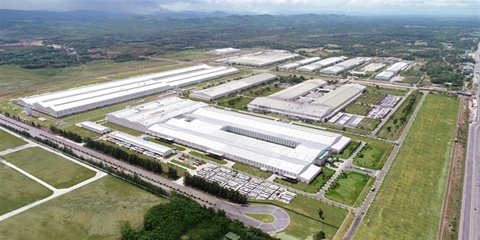
The central city has approved an investment proposal by Thailand’s WHA Group to develop infrastructure for the 400ha WHA Đà Nẵng Industrial Park project on two communes of Thăng Bình and Đồng Dương, with an investment of more than VNĐ2.7 trillion (US$105 million). The city said it approved WHA Industrial Development International's status as an investor in the project, which is expected to take place between 2027 and 2034.
VIETNAM ECONOMY INVESTMENT
MOBILE PHONE EXPORTS RISE 20% TO $51.8 BILLION IN FIRST NINE MONTHS
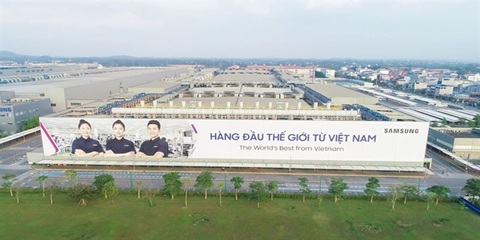
Exports of mobile phones and components rose 20 per cent year-on-year to nearly US$51.8 billion in the first nine months of 2026, with China, the US and Republic of Korea accounting for more than half of the total. Shipments to the three markets reached a combined $26.18 billion, or 50.6 per cent of total exports of the product group during the period, according to data from the Vietnam Department of Customs under the Ministry of Finance.
INFRASTRUCTURE / CONSTRUCTION / LOGISTIC / PORT
VIỆT NAM-CAMBODIA TRADE GATHERS PACE TOWARDS $20 BILLION TARGET
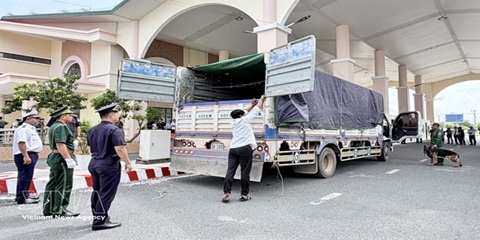
Trade between Việt Nam and Cambodia continues to grow, remaining a bright spot and a key pillar of bilateral cooperation as the two countries aim to raise two-way trade to US$20 billion in the coming years. After setting a record of more than $11.3 billion last year, bilateral trade reached about $8.7 billion in the first eight months of this year, up 8.3 per cent year on year.
VIETNAM ECONOMY INVESTMENT
FRUIT AND VEGETABLE EXPORTS POISED TO HIT $10 BILLION IN 2026
Fruit and vegetable exports are on track to reach nearly US$10 billion in 2026, after rising 19.9 per cent year on year to nearly US$7.4 billion in the first nine months, driven by strong seasonal demand and abundant tropical fruit supplies. The Ministry of Agriculture and Environment said the growth reflected stronger international demand for fresh produce and processed agricultural products.
Events Sponsors






















