Want to be in the loop?
subscribe to
our notification
Business News
DAIRY MARKET REMAINS RIPE FOR NEW EXPANSION
Rising consumer demand, combined with a shift towards premium products and tech innovation, is giving domestic dairy producers an edge to scale up and consolidate their position in the market.
At a conference a fortnight ago on the dairy industry’s development strategy, Assoc. Prof. Dr Tran Quang Trung, chairman of the Vietnam Dairy Association, stated that dairy remains one of the industries maintaining stable growth with ever-increasing consumption demand.
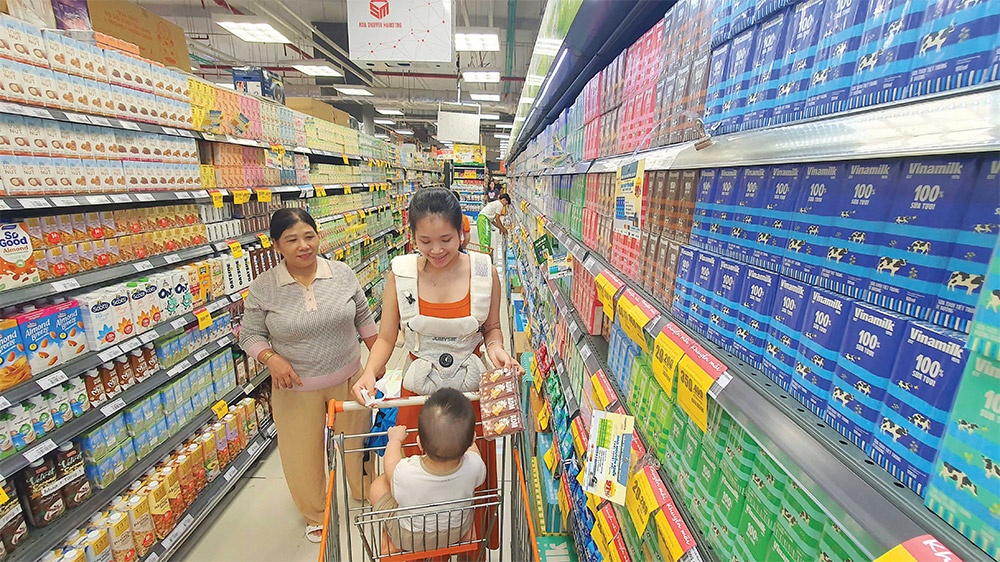
The average milk consumption of Vietnamese people is lower than the likes of Thailand and Singapore, Photo: Le Toan
Vietnam’s average milk consumption is around 27 litres per person per year and is forecast to grow by 7-8 per cent annually. Industry revenue is projected to grow from $5.7 billion in 2024 to $13.37 billion by 2033, with a compound annual growth rate of around 9.5 per cent during the period 2025-2033.
“Although the conditions and potential for development are significant, Vietnam’s dairy industry still relies heavily on imported raw materials, while domestic raw materials only meet about 40 per cent of demand. This is paradoxical for an agricultural country like Vietnam, which relies greatly on dairy ingredients from abroad,” Trung said.
According to figures from the Ministry of Agriculture and Environment (MoAE), Vietnam spent more than $1 billion on importing milk and dairy products in 2024, mostly powdered milk. In the first seven months of 2025 alone, Vietnam spent nearly $2.6 billion importing livestock products, with milk and dairy products accounting for more than $860 million. This dependence, according to experts, not only creates pressure on costs and foreign currency but also poses risks.
Dr. Nguyen Xuan Duong, chairman of the Vietnam Livestock Association, said that Vietnam’s system of standards and technical regulations is still lacking in uniformity, and the management of imported milk is not strict enough, allowing cheap reconstituted powdered milk to easily overshadow fresh domestic milk.
“The average milk consumption of Vietnamese people is about 26-28 litres per person per year, lower than many other markets, such as Thailand at 35 litres, Singapore at 45 litres, and Europe at up to 100 litres per person per year,” he said.
Duong added that the prerequisite for sustainable dairy industry development is to master domestic raw material sources, develop dairy farming linked with value chains, and apply high technology from breeding and care to processing.
“It is necessary to plan pasture areas, be proactive in animal feed sources, and apply a circular economy model with a ‘from grass to glass’ closed-loop management system. This will help improve productivity and product quality, while increasing the competitiveness of domestic milk,” he said.
As of 2024, Vietnam’s total dairy herd had grown by an average of 4.6 per cent per year, reaching 335,000 cows and producing more than 1.2 million tonnes of raw fresh milk, according to data from the MoAE.
The development strategy for the dairy industry to 2030, with a vision to 2045, sets a target of raising the dairy herd to 650,000-700,000 cows by 2030, with fresh milk output reaching 2.6 million tonnes, of which 60 per cent will be raised on high-tech farms meeting Global G.A.P standards, towards carbon neutrality.
By 2045, Vietnam aims for an output of 6.2 million tonnes, being 80-82 per cent self-sufficient in raw materials, with per capita consumption reaching 70 litres per year. In the context of rapid demand growth but limited domestic raw materials, dairy enterprises are pushing product strategies and restructuring market share.
Nguyen Quang Tri, marketing director at Vinamilk, said that actively securing raw material sources not only helps the brand meet growing domestic market demands but also expand strongly in overseas markets.
“Vinamilk has developed lactose-free milk, nut milk, and fermented yoghurt to ensure nutrition and reduce indigestion symptoms for consumers. We are also licensed to export condensed milk products to the Chinese market, opening up growth potential in the largest consumer market in Asia,” Tri said.
Vinamilk’s consolidated revenue in Q2 reached $669.8 million, up $3.1 million from the same period last year. In terms of exports, Vinamilk recorded a record result in Q2 with net revenue reaching $75.4 million, up 8.5 per cent on-year, and continued positive growth for the eighth consecutive quarter.
In traditional markets, Vinamilk is gradually upgrading its product portfolio based on its strengths in the mass segment, in order to enhance export value and brand equity.
Vinamilk remains the giant dominating Vietnam’s dairy market, holding nearly half of the industry’s total market share as of the end of 2024, according to Data Factory VIRAC. The brand is present in almost all segments.
Meanwhile, TH true MILK currently accounts for about 30-45 per cent of Vietnam’s packaged fresh milk market share, positioning its products in the clean, organic, and premium fresh milk segment, with a strong focus on origin and international standards in farming.
Also, FrieslandCampina Vietnam, the Dutch dairy company owning the Dutch Lady brand, currently holds about 25 per cent of Vietnam’s dairy market share.
According to the Vietnam Dairy Association, the country aims for 60 per cent self-sufficiency in raw materials by 2030 and per capita consumption of about 70 to 100 litres of milk per year by 2045.
Source: VIR
Related News

BANKING / FINANCE / INSURANCE / TAX
REMITTANCES TO HCM CITY RISE NEARLY 40% IN Q3
Remittances to HCM City reached more than US$2.83 billion in the third quarter of this year, up 39.5 per cent from the previous quarter and 3.6 per cent year-on-year. This was the first quarter showing positive annual growth this year, helping narrow the decline in remittance inflows over the first nine months. According to the State Bank of Vietnam (SBV)’s Regional Branch 2, remittances transferred to HCM City through credit institutions and economic organisations totalled $2.835 billion in Q3, an increase of more than $802 million from the previous quarter.
TECHNOLOGY
TECH SECTOR GROWTH OPENS UP OPPORTUNITIES FOR VIỆT NAM TO GO GLOBAL
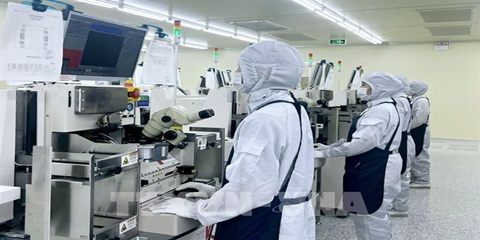
The growth of the electronics, semiconductor and high-tech sectors worldwide is opening up a variety of opportunities for Vietnamese enterprises to integrate more deeply into the global supply chain. However, to become suppliers for these corporations, domestic enterprises must meet rigorous standards regarding quality, technology, productivity and order fulfilment capabilities.
VIETNAM ECONOMY INVESTMENT
FOREIGN INVESTORS SEEKING A SYNCHRONISED MANUFACTURING ECOSYSTEM
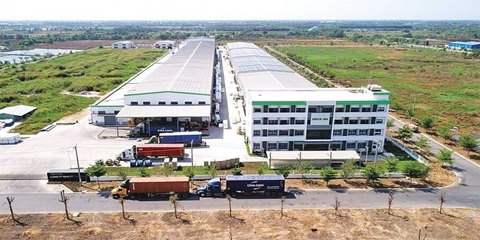
Instead of focusing only on land costs and incentives as usual, foreign investors are seeking a synchronised manufacturing ecosystem, from stable power supply and logistics to shared infrastructure and the convenience of completing residence procedures for experts to serve their long-term investment in the country.
MEMBER CORNER / PROMOTIONS
SENTRYSAFE FHW40200 – PROTECT YOUR VALUABLES, ENJOY PEACE OF MIND!
Looking for a reliable solution to protect your important documents, cash, and valuables from fire and water damage? Genuine SENTRYSAFE - Reliable protection for your valuables and peace of mind! Contact Sen Wai Vietnam for more information and personalized product recommendations.
PROPERTY / INDUSTRIAL ZONE
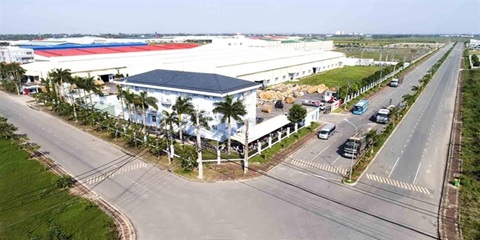
HCM CITY ATTRACTS US$5.7 BILLION INTO EXPORT PROCESSING AND INDUSTRIAL ZONES
HCM City attracted US$5.7 billion in domestic and foreign investment into its export processing and industrial zones during the first nine months of 2026. The figure exceeded the city's full-year target by 31 per cent, highlighting strong momentum in high-quality industrial investment under Resolution No.10-NQ/TW. Total investment reached 131 per cent of the 2026 target of $4.25 billion and represented a 29 per cent increase compared with the same period in 2025, according to the city's Export Processing and Industrial Zones Authority (HEPZA).
INFRASTRUCTURE / CONSTRUCTION / LOGISTIC / PORT
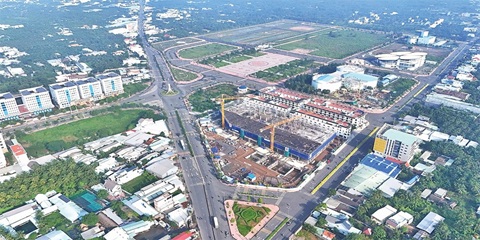
DONG THAP PROVINCE STEPS UP INDUSTRIAL EXPANSION AND INFRASTRUCTURE CONNECTIVITY
Accelerating public investment, strengthening inter-regional connectivity, and expanding industrial land are helping Dong Thap efficiently bolster competitiveness and drive economic growth. Following the 2025 merger of the former Dong Thap and Tien Giang provinces, the expanded Dong Thap province in the Mekong Delta faces mounting pressure to accelerate infrastructure development and strengthen connectivity among local economic zones, urban areas, industrial parks (IPs), and production centres.
Events Sponsors






















