Want to be in the loop?
subscribe to
our notification
Business News
CUT ON AUTOMOBILE REGISTRATION FEES TO FACILITATE AUTO INDUSTRY
The Ministry of Industry and Trade supporting the reduction of automobile registration fees is considered to have a positive effect on the auto industry in the context of the automobile market facing many difficulties.
A report by the Ministry of Industry and Trade showed that, in the first four months of 2023, automobile production decreased by 19.3 per cent compared to the same period last year. Besides, car inventory in recent years has also been quite high.
Nguyễn Ngọc Thanh, Deputy Director of the Department of Industry under the Ministry of Industry and Trade, said that many reasons greatly affected the consumption of automotive products such as difficult access to bank capital, high interest rates, high exchange rates and inflation, leading to high inventory of auto products in recent years.
According to the Vietnam Automobile Manufacturers Association (VAMA), domestic car production sharply declined in the first four months of this year. Car sales were also on a downward trend. This caused concern among many manufacturing enterprises. In some localities, there might be a deficit in budget revenue, and workers have lost their jobs.
Sales of the whole market in April 2023 only reached 22,409 vehicles, including 15,748 passenger cars, 6,487 commercial vehicles and 174 special-purpose vehicles. All segments had a sharp decrease compared to March 2023 such as passenger cars down 27 per cent, commercial vehicles down 19 per cent and special-purpose vehicles down 51 per cent.
The cause of this decline is believed to be the cessation of the registration tax reduction policy. Many domestic automobile enterprises are also facing fierce competition for market share.
The above difficulties are most clearly reflected in the business results of the first three months of the automobile enterprises.
Vietnam Engine and Agricultural Machinery Corporation - JSC (VEA) reported a profit after tax of nearly VNĐ1.37 trillion (US$58.3 million) in the first quarter, down 7 per cent over the same period last year.
VEAM's profits mainly came from joint ventures and associates such as Honda, Toyota, and Ford. Meanwhile, selling and administrative expenses were almost unchanged in the first three months of this year.
Not only manufacturers, automobile distributors also recorded a dismal first quarter of 2023.
Savico (SVC), a distributor of many brands such as Toyota, Ford, Honda, Hyundai, Mitsubishi, and Volvo, recorded a profit after tax of only VNĐ14.7 billion, down nearly 85 per cent compared to the same period in 2022, and decreased more than 11 times compared to the previous quarter. The amount of inventory of the enterprise exceeded VNĐ2 trillion.
Haxaco (HAX), which distributes Mercedes-Benz brand cars, also recorded a revenue decrease of more than 40 per cent, at less than VNĐ1 trillion. Profit before tax was only VNĐ5.6 trillion in the first quarter, down about 92 per cent.
If the Government continues to apply the policy of reducing registration fee by 50 per cent and bank interest rates returning to attractive levels, electric vehicles can create a breakthrough for the auto industry. In Việt Nam, the auto market is forecast to prosper again. At the same time, according to SSI Research, auto stocks will attract cash inflows.
In 2022, along with the strong decline of the VN-Index, the market prices of many auto stocks decreased from 34 per cent to more than 40 per cent.
Since the decree on reducing registration fees took effect on December 1, 2021, automobile stocks, especially those of big car distribution giants in Việt Nam, skyrocketed significantly.
Specifically, in the session on December 1, 2021, three stocks of HAX, SVC and VEA gained to near the ceiling prices.
Notably, SVC shares increased to the ceiling continuously, bringing the market price from VNĐ96,000 per share to VNĐ126,000 per share - the historical peak price - in the morning session of December 7, 2021.
Investors can have faith in auto stocks if the registration tax reduction policy takes effect again, said SSI Research.
SSI said it was too early to assess the impact of electric vehicles on the automobile industry in Việt Nam. Car manufacturers have just begun to test electric vehicle sales to gauge consumer interest. Việt Nam still does not have a strategy to develop charging station infrastructure for electric vehicles. Moreover, the price of electric vehicles is still high compared to petrol versions.
On the other hand, despite the sluggishness, some car manufacturers, such as Toyota, still have plans to increase prices. The reason stems from the risk of global inflation, exchange rate fluctuations, and increased input costs causing car prices to be higher than previously.
Source: VNS
Related News

BANKING / FINANCE / INSURANCE / TAX
REMITTANCES TO HCM CITY RISE NEARLY 40% IN Q3
Remittances to HCM City reached more than US$2.83 billion in the third quarter of this year, up 39.5 per cent from the previous quarter and 3.6 per cent year-on-year. This was the first quarter showing positive annual growth this year, helping narrow the decline in remittance inflows over the first nine months. According to the State Bank of Vietnam (SBV)’s Regional Branch 2, remittances transferred to HCM City through credit institutions and economic organisations totalled $2.835 billion in Q3, an increase of more than $802 million from the previous quarter.

TECHNOLOGY
TECH SECTOR GROWTH OPENS UP OPPORTUNITIES FOR VIỆT NAM TO GO GLOBAL
The growth of the electronics, semiconductor and high-tech sectors worldwide is opening up a variety of opportunities for Vietnamese enterprises to integrate more deeply into the global supply chain. However, to become suppliers for these corporations, domestic enterprises must meet rigorous standards regarding quality, technology, productivity and order fulfilment capabilities.
VIETNAM ECONOMY INVESTMENT
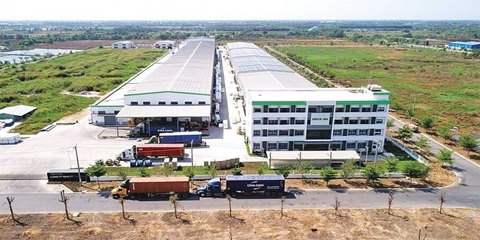
FOREIGN INVESTORS SEEKING A SYNCHRONISED MANUFACTURING ECOSYSTEM
Instead of focusing only on land costs and incentives as usual, foreign investors are seeking a synchronised manufacturing ecosystem, from stable power supply and logistics to shared infrastructure and the convenience of completing residence procedures for experts to serve their long-term investment in the country.
MEMBER CORNER / PROMOTIONS
SENTRYSAFE FHW40200 – PROTECT YOUR VALUABLES, ENJOY PEACE OF MIND!
Looking for a reliable solution to protect your important documents, cash, and valuables from fire and water damage? Genuine SENTRYSAFE - Reliable protection for your valuables and peace of mind! Contact Sen Wai Vietnam for more information and personalized product recommendations.
PROPERTY / INDUSTRIAL ZONE
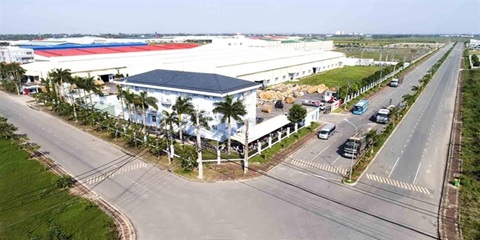
HCM CITY ATTRACTS US$5.7 BILLION INTO EXPORT PROCESSING AND INDUSTRIAL ZONES
HCM City attracted US$5.7 billion in domestic and foreign investment into its export processing and industrial zones during the first nine months of 2026. The figure exceeded the city's full-year target by 31 per cent, highlighting strong momentum in high-quality industrial investment under Resolution No.10-NQ/TW. Total investment reached 131 per cent of the 2026 target of $4.25 billion and represented a 29 per cent increase compared with the same period in 2025, according to the city's Export Processing and Industrial Zones Authority (HEPZA).
INFRASTRUCTURE / CONSTRUCTION / LOGISTIC / PORT
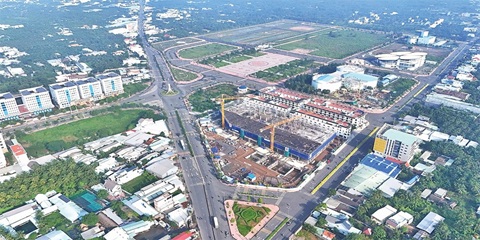
DONG THAP PROVINCE STEPS UP INDUSTRIAL EXPANSION AND INFRASTRUCTURE CONNECTIVITY
Accelerating public investment, strengthening inter-regional connectivity, and expanding industrial land are helping Dong Thap efficiently bolster competitiveness and drive economic growth. Following the 2025 merger of the former Dong Thap and Tien Giang provinces, the expanded Dong Thap province in the Mekong Delta faces mounting pressure to accelerate infrastructure development and strengthen connectivity among local economic zones, urban areas, industrial parks (IPs), and production centres.
Events Sponsors






















