Want to be in the loop?
subscribe to
our notification
Business News
CREDIT GROWTH AND PROFITABILITY IMPROVE AT MANY BANKS
The first half of 2025 witnessed a remarkable transformation in the banking sector, with both credit growth and profitability showing positive momentum.

MB’s pre-tax profit in Q2 2025 is estimated at VND15.75 trillion
Economic bright spot
The common highlight in banks’ reports in the first half of 2025 showed a more stable and sustainable growth cycle in the banking industry. Credit expansion, improved profitability, and tighter control of asset quality are collectively laying a solid foundation for a strong performance in the second half of the year.
According to the State Bank of Vietnam (SBV), as of June 30, 2025, total outstanding credit of the banking system exceeded VND17.2 quadrillion, up 9.9% compared to the end of 2024 and 19.32% year on year. Credit continued to be channeled into production and business sectors, priority areas, and key growth drivers, as directed by the Government, including major and feasible projects. The credit structure aligned with the economic structure and met the credit demand of both individuals and businesses.
Special credit programs continued to be effectively implemented, including VND145 trillion for social housing, worker housing, and renovation of old apartment buildings; VND500 trillion for infrastructure investment and digital technology; and VND100 trillion for agriculture, forestry, and fisheries.
The credit structure shifted positively. Credit to agriculture and rural development expanded by 5.31%, accounting for 23.16% of total outstanding loans. Credit to small and medium-sized enterprises (SMEs) rose by 5.71%, making up 17.51%. Export credit increased by 2.91%, while credit for supporting industries surged 15.69%. Notably, credit for high-tech enterprises grew by 17.59%, reflecting a sound orientation in economic restructuring.
Major state-owned banks such as the Joint Stock Commercial Bank for Foreign Trade of Vietnam (Vietcombank), the Vietnam Bank for Agriculture and Rural Development (Agribank), and the Vietnam Joint Stock Commercial Bank for Industry and Trade (VietinBank) all reported strong credit growth and solid profits. Vietcombank, as the leading bank by scale and performance, reported impressive results. According to Mr. Nguyen Thanh Tung, Chairman of the Board of Directors, as of June 30, the bank's total assets exceeded VND2.1 quadrillion, with credit growing 11.1% from the end of 2024. The non-performing loan (NPL) ratio remained below 1%, the lowest in the sector. The loan loss provision ratio reached a record 219%, the highest in the industry.
VietinBank's outstanding loans also grew by approximately 10% compared to the end of 2024 while deposits climbed over 9%, indicating the economy's improving capacity to absorb capital.
At Agribank, business performance reached its highest level in the past four years since the lender started its restructuring plan tied to bad debt resolution in the 2021-2025 period. Total mobilized capital exceeded VND2.1 quadrillion, up 6.4%, with household deposits playing a key role. Outstanding loans surpassed VND1.85 quadrillion, up 7.6%, including over VND1.13 quadrillion in agricultural and rural credit.
Privately held joint stock banks also boasted remarkable results. Military Commercial Joint Stock Bank (MB) saw 12.5% credit growth in just six months, focusing on priority sectors such as manufacturing, healthcare, and education. MB actively reduced lending rates to support customers. Its NPL ratio was controlled at 1.27%, with full provisioning. Asia Commercial Joint Stock Bank (ACB) reported nearly 19% credit growth, the highest among joint stock banks, concentrating on SMEs, technology, exports, and infrastructure investment. Its NPL ratio remained very low, at just 1.18%. Nam A Commercial Joint Stock Bank (Nam A Bank) posted a pre-tax profit of over VND2.5 trillion in the first half of 2025, up 14% year on year. Its total assets reached nearly VND315 trillion, up over 30% from the beginning of the year. Its outstanding credit amounted to nearly VND193 trillion, up nearly 15%, while its mobilized capital from households and businesses hit nearly VND211 trillion, up over 22%. The NPL ratio was kept under control at 2.63%.
Focus on credit quality
According to SBV Deputy Governor Pham Thanh Ha, credit quality remains a top priority. Credit allocation must align with strategic orientations and directions from the Government, the Prime Minister and the SBV. As credit demand typically rises in the second half of the year, banks must closely manage liquidity to ensure payment capability under all circumstances.
To achieve the 2025 credit growth target of 16% or higher, according to Mr. Pham Chi Quang, Director of the Monetary Policy Department, the SBV has thoroughly analyzed policy response factors and forecasts inflation to remain within 4.5-5% this year. Hence, there is still room to boost credit growth. However, the SBV noted that inflation risks should not be underestimated, and it will continue to monitor price movements closely to make timely policy adjustments.
“If inflation remains under control, credit growth can be expanded healthily, and credit quality and NPLs are effectively managed, the SBV will consider raising credit growth room in 2025 to support economic growth,” he said.
Going forward, SBV Governor Nguyen Thi Hong emphasized that the SBV will continue to manage credit in accordance with macroeconomic trends, inflation, and the economy’s capital absorption capacity. Nonetheless, credit institutions must conduct thorough assessment and analysis to ensure that credit growth is accurate, substantive, and truly contributory to economic development without putting pressure on inflation. System safety must also be guaranteed.
She also asked credit institutions to aggressively implement and strive to fulfill the objectives of the Project “Restructuring Credit Institutions in conjunction with Bad Debt Resolution for the 2021-2025 period”. This includes executing approved restructuring and resolution plans for weak institutions under special supervision, particularly mandatory transfer schemes; accelerating bad debt settlement; enhancing credit quality; and minimizing the emergence of new bad debts.
Governor Hong also called on credit institutions to continue applying comprehensive solutions to promote safe, efficient credit growth, channeling credit into production, priority areas, traditional economic growth drivers, and emerging growth engines. Internal control must be strengthened to ensure operational safety. Additionally, credit institutions should further enhance digital transformation, promote cashless payments, and ensure security, safety, and confidentiality in banking activities. Key information systems must be closely monitored to promptly detect, prevent, and address potential issues and risks, thereby protecting the legitimate rights and interests of customers. Notably, the SBV and banks will continue to collaborate to foster digital literacy for the public in the banking sector.
Source: VCCI
Related News

MEMBER CORNER / PROMOTIONS
AN ELECTRIFYING NIGHT WITH THE "QUEEN OF DANCE" THU MINH AT THE GRAND HO TRAM!
The stage at The Grand Ballroom is set to catch fire as Vietnam’s undisputed "Queen of Dance," Thu Minh, takes the spotlight. Renowned for her powerhouse vocals, magnetic stage presence, and sultry, high-energy performances, Thu Minh promises an evening of pure musical euphoria. The energy escalates with an exclusive appearance by special guest and The Voice champion, Vu Thao My.

HR / LABOUR/ EMPLOYMENT
HIGH-QUALITY HUMAN RESOURCES NEEDED TO ATTRACT NEW TECH INVESTMENT CAPITAL
Besides infrastructure, Việt Nam must also rapidly develop a highly skilled workforce to attract investment in AI, semiconductors and advanced manufacturing, experts have said. Don Lam, CEO and co-founder of investment management company VinaCapital, said that global technology investors were increasingly looking at the readiness of the entire ecosystem, with high-quality human resources a decisive factor.

HR / LABOUR/ EMPLOYMENT
HIRING OUTLOOK STRENGTHENS IN Q4 AS SKILLS SHORTAGES PERSIST
Hiring intentions among employers in Việt Nam strengthened in the fourth quarter, with 52 per cent of surveyed companies planning to increase headcount between October and December, according to a ManpowerGroup survey released this week. Việt Nam's hiring outlook was stronger than the Asia Pacific and Middle East (APME) regional average of 33 per cent and the global average of 29 per cent, ranking third in the region and 11th globally among 42 markets surveyed.

BANKING / FINANCE / INSURANCE / TAX
LARGE BANKS FORECAST TO GAIN HIGHER PROFITABILITY IN H2 2026
The return on average assets (ROAA) of the banking sector will likely remain stable at around 1.5 per cent in the second half of 2026, but profitability divergence among banks will increase, with large banks outperforming peers on stronger margins and diversified earnings, analysts forecast. In a recent report on the banking sector, analysts from the Vietnam Investors Service Rating said the sector’s ROAA rose by 10 basis points quarter-on-quarter to 1.51 per cent in the first half of this year, driven by net interest margin (NIM) improvements at some State-owned banks and large private banks.
GARMENT / TEXTILE
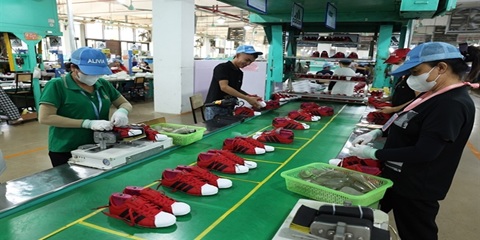
VIỆT NAM'S FOOTWEAR, BAG EXPORTS TO US TOP $8 BILLION IN EIGHT MONTHS
Việt Nam's exports of footwear and handbags to the US exceeded US$8 billion in the first eight months of 2026, as the US and EU remained the country's biggest markets despite sluggish growth in footwear shipments. Exports from Việt Nam's leather and footwear sector reached more than $2.45 billion in August, down 9 per cent from July but up 3 per cent from a year earlier, according to preliminary statistics.

VIETNAM ECONOMY INVESTMENT
LÂM ĐỒNG TARGETS DIGITAL ECONOMY TO ACCOUNT FOR 30 PER CENT OF GRDP BY 2030
Lâm Đồng Province aims to raise the digital economy’s contribution to around 30 per cent of its gross regional domestic product (GRDP) by 2030, as part of a five-year plan to develop digital economy and society issued recently. Under Plan No. 15358/KH-UBND, the province targets more than 60 per cent of small- and medium-sized enterprises (SMEs) to adopt digital technologies by 2030 while increasing the value of cashless payments to 30 times its GRDP.
Events Sponsors






















