Want to be in the loop?
subscribe to
our notification
Business News
CREDIT EVOLVES MORE POSITIVELY
2024 continued to pose a lot of challenges to the global economy, marked by fluctuations in interest rates and geopolitical tensions. However, despite global economic volatility, Vietnam was still considered a bright spot in the regional economic landscape, with important contributions from the banking industry.

Monetary policy was flexibly managed, helping stabilize interest rates in the market
Highlights
In 2024, the Vietnamese economy achieved positive results, featured by macroeconomic stability and a forecast GDP growth of 7%. Inflation was well reined at around 3.7-4%.
The banking industry, as the lifeblood of the economy, made important contributions to maintaining liquidity, supporting businesses and promoting digital transformation. As of December 13, credit in the entire economy expanded 12.5% from the end of 2023. Monetary policy was flexibly managed, helping stabilize interest rates in the market. Lending interest rates slid by about 0.5-1% from the previous year, enabling more businesses to access capital to boost business recovery. Exchange rates were kept stable in a year full of fluctuations in the international financial market. The State Bank of Vietnam (SBV) flexibly managed exchange rates and actively conducted necessary intervention to ensure market stability and investor confidence.
Regarding banking system restructuring, the SBV made important progress in handling weak banks. In 2024, two of the four zero-dong banks were subjected to compulsory transfer. The remaining institutions have already submitted their proposals to the relevant authorities for preliminary approval.
Digital transformation continued to make strong progress. To date, banking transactions via digital channels already exceeded 90% in many credit institutions. In addition, Vietnam made great strides in developing green finance and inclusive finance. The number of credit institutions participating in the green credit sector expanded strongly from 15 to 50, with a total outstanding loan balance of nearly VND665 trillion, accounting for 4.5% of total outstanding loan balance of the entire system. The average green credit growth was 22% a year, higher than the general growth of economic credit.
Mr. Nguyen Quoc Hung, Vice Chairman and General Secretary of the Vietnam Banks Association (VNBA), said that the operations of credit institutions are optimistic, demonstrated by better governance, financial capacity, competitiveness, business performance and credit quality, which will continue to be enhanced. Up to now, the registered capital of the whole banking system has increased from the end of 2023, the capital adequacy ratio (CAR) has reached 12.01%, the ratio of short-term capital for medium and long-term loans is below 30%, and the ratio of outstanding loans to total deposits is about 80%. In addition, State-owned banks are allowed to increase their registered capital enough to ensure safety and credit investment for the economy.
Credit institutions also focused resources on strong digital transformation, the average daily noncash payment transactions reached a record of over 26.2 million transactions with a value of over VND166,000 trillion and QR payments expanded over 200% in volume and value from the end of 2023.
Lingering risks
Despite many positive achievements, credit institutions are facing many risks, including potential bad debts prior to the expiration date of Resolution 42, difficult bad debt collection and many uncooperative customers. Meanwhile, credit institutions cannot use forces to seize assets, and in some cases, customers do not intentionally pay debts. These in combination affect the restructuring and handling of nonperforming loan (NPL). The unfavorable capital is causing medium and long-term capital for the economy to be shifted to bank credits.
In addition, credit institutions are confronting increased cyberattacks, data leaks, and frauds in customer accounts, with increasingly daring and sophisticated tricks. Criminals have good knowledge of information technology and the banking system as well and they frequently change tricks. Although the crime rate has decreased for personal accounts, frauds through corporate accounts still occur.
The Government needs to continue to legalize Resolution 42 of the National Assembly to remove difficulties for credit institutions in debt collection as well as debt purchase, selling and handling and promotes the healthy development of the capital market, he said.
According to Ms. Mariam Sherman, World Bank Country Director for Vietnam, Cambodia and Laos, the banking sector has taken various important measures to build a stronger banking system by amending the Law on Credit Institutions in January 2024. This has helped the SBV address remaining challenges regarding bad debts and weak credit institutions. Going forward, Vietnam can make the most of these efforts to further boost economic growth and maintain financial stability. In particular, the banking sector will need to play an important role in ensuring macroeconomic stability, expanding access to finance, especially in the green transition, and promoting financial inclusion. All of these factors will help realize the goal of making Vietnam a high-income country by 2045.
2025 is the final year of the 2021-2025 Socioeconomic Development Plan, which is of particular importance in preparing for the new Government term. This is a challenging time but also opens up many opportunities for Vietnam to assert its position. Vietnam will enter a new era, "the era of rising", as Party General Secretary To Lam emphasized. This is not only an aspiration but also a responsibility of the entire political, economic and social system.
Against this backdrop, according to Governor Nguyen Thi Hong, the SBV's monetary policy management in the coming time will continue to firmly pursue the goal of stabilizing the currency value, helping macroeconomic stability, ensuring major economic balances. The State Bank will continue to closely follow domestic and international developments to actively, flexibly and effectively manage monetary policy, and closely and synchronously coordinate with fiscal policy and other macroeconomic policies to support economic growth.
At the same time, the SBV will continue to restructure the banking system and handle bad debts, promote innovation and digital transformation, improve the legal framework to approach international standards to enhance the performance and position of the banking industry.
Source: VCCI
Related News

MEMBER CORNER / PROMOTIONS
AN ELECTRIFYING NIGHT WITH THE "QUEEN OF DANCE" THU MINH AT THE GRAND HO TRAM!
The stage at The Grand Ballroom is set to catch fire as Vietnam’s undisputed "Queen of Dance," Thu Minh, takes the spotlight. Renowned for her powerhouse vocals, magnetic stage presence, and sultry, high-energy performances, Thu Minh promises an evening of pure musical euphoria. The energy escalates with an exclusive appearance by special guest and The Voice champion, Vu Thao My.

HR / LABOUR/ EMPLOYMENT
HIGH-QUALITY HUMAN RESOURCES NEEDED TO ATTRACT NEW TECH INVESTMENT CAPITAL
Besides infrastructure, Việt Nam must also rapidly develop a highly skilled workforce to attract investment in AI, semiconductors and advanced manufacturing, experts have said. Don Lam, CEO and co-founder of investment management company VinaCapital, said that global technology investors were increasingly looking at the readiness of the entire ecosystem, with high-quality human resources a decisive factor.

HR / LABOUR/ EMPLOYMENT
HIRING OUTLOOK STRENGTHENS IN Q4 AS SKILLS SHORTAGES PERSIST
Hiring intentions among employers in Việt Nam strengthened in the fourth quarter, with 52 per cent of surveyed companies planning to increase headcount between October and December, according to a ManpowerGroup survey released this week. Việt Nam's hiring outlook was stronger than the Asia Pacific and Middle East (APME) regional average of 33 per cent and the global average of 29 per cent, ranking third in the region and 11th globally among 42 markets surveyed.

BANKING / FINANCE / INSURANCE / TAX
LARGE BANKS FORECAST TO GAIN HIGHER PROFITABILITY IN H2 2026
The return on average assets (ROAA) of the banking sector will likely remain stable at around 1.5 per cent in the second half of 2026, but profitability divergence among banks will increase, with large banks outperforming peers on stronger margins and diversified earnings, analysts forecast. In a recent report on the banking sector, analysts from the Vietnam Investors Service Rating said the sector’s ROAA rose by 10 basis points quarter-on-quarter to 1.51 per cent in the first half of this year, driven by net interest margin (NIM) improvements at some State-owned banks and large private banks.
GARMENT / TEXTILE
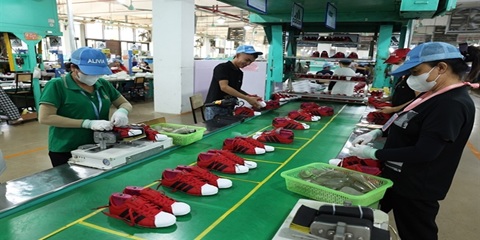
VIỆT NAM'S FOOTWEAR, BAG EXPORTS TO US TOP $8 BILLION IN EIGHT MONTHS
Việt Nam's exports of footwear and handbags to the US exceeded US$8 billion in the first eight months of 2026, as the US and EU remained the country's biggest markets despite sluggish growth in footwear shipments. Exports from Việt Nam's leather and footwear sector reached more than $2.45 billion in August, down 9 per cent from July but up 3 per cent from a year earlier, according to preliminary statistics.

VIETNAM ECONOMY INVESTMENT
LÂM ĐỒNG TARGETS DIGITAL ECONOMY TO ACCOUNT FOR 30 PER CENT OF GRDP BY 2030
Lâm Đồng Province aims to raise the digital economy’s contribution to around 30 per cent of its gross regional domestic product (GRDP) by 2030, as part of a five-year plan to develop digital economy and society issued recently. Under Plan No. 15358/KH-UBND, the province targets more than 60 per cent of small- and medium-sized enterprises (SMEs) to adopt digital technologies by 2030 while increasing the value of cashless payments to 30 times its GRDP.
Events Sponsors






















