Want to be in the loop?
subscribe to
our notification
Business News
CORPORATE BOND ISSUANCE REACHES US$21.8 BILLION IN 2025
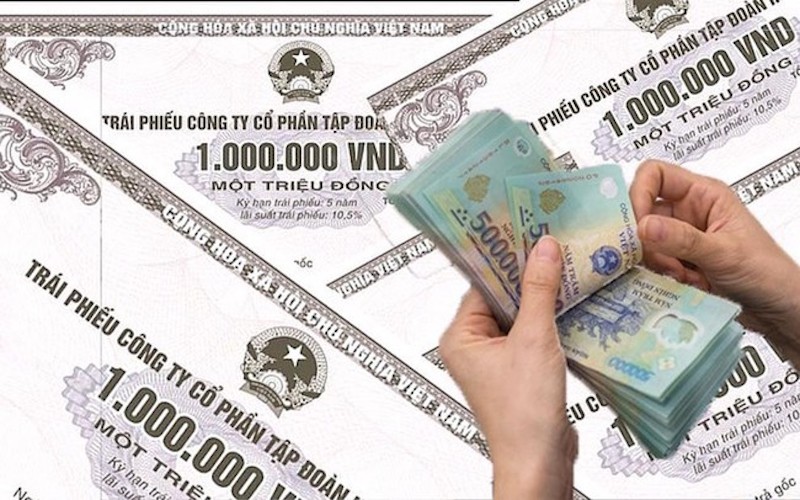
Vietnam’s corporate bond market continued its recovery in 2025, with total issuance estimated at US$21.8 billion - PHOTO: VNA
HCMC – Vietnam’s corporate bond market continued its recovery in 2025, with the total value estimated at US$21.8 billion, driven largely by banks, according to industry data.
Figures compiled by the Vietnam Bond Market Association (VBMA) from the Hanoi Stock Exchange (HNX) and the State Securities Commission show that as of December 26, 2025, there were 55 corporate bond issues done in December alone, worth a combined VND48.5 trillion.
From the start of the year, total bond issuance reached VND575.4 trillion. Private placements dominated the market, accounting for 90.6% of the total. These included 486 issuances valued at VND521.5 trillion.
Overall, the corporate bond market expanded by about 11.3% in 2025, marking a continued recovery, though the pace was slower than the 34.6% growth recorded a year earlier. A notable development was the improvement in both the number and value of public bond offerings.
Banks remained the largest issuers, contributing 67.7% of total issuance value. Real estate firms followed with 22.9%, while securities companies accounted for 2.9%.
Early bond redemptions also stayed active. In December, issuers repurchased VND20.4 trillion worth of bonds ahead of maturity. This brought the total value of bonds redeemed early in 2025 to VND298.9 trillion, up 43.6% from 2024. Banks led this activity, representing nearly 69.6% of the total redemption value.
The year also saw major regulatory changes aimed at improving transparency, tightening risk controls and strengthening investor protection. New rules, effective from mid-2025, focused on stricter conditions for both private placements and public offerings.
Key measures included requirements for non-listed companies issuing bonds via private placement to keep total liabilities below five times equity, based on the latest audited financial statements. Issuance size limits tied to equity levels and mandatory credit ratings were also introduced. In addition, the Ministry of Finance proposed amendments to tighten rules on changes to the use of proceeds after issuance.
Under Vietnam’s securities market development strategy to 2030, corporate bonds are expected to become a key channel for medium- and long-term capital. The strategy targets outstanding corporate bond debt of at least 25% of GDP by 2030.
With Vietnam aiming for GDP growth of 10% or higher in 2026, the capital market is expected to play a central role in channeling funds into the broader economy.
Source: The Saigon Times
Related News

VIETNAM ECONOMY INVESTMENT
FOREIGN INVESTORS SEEKING A SYNCHRONISED MANUFACTURING ECOSYSTEM
Instead of focusing only on land costs and incentives as usual, foreign investors are seeking a synchronised manufacturing ecosystem, from stable power supply and logistics to shared infrastructure and the convenience of completing residence procedures for experts to serve their long-term investment in the country.

INFRASTRUCTURE / CONSTRUCTION / LOGISTIC / PORT
DONG THAP PROVINCE STEPS UP INDUSTRIAL EXPANSION AND INFRASTRUCTURE CONNECTIVITY
Accelerating public investment, strengthening inter-regional connectivity, and expanding industrial land are helping Dong Thap efficiently bolster competitiveness and drive economic growth. Following the 2025 merger of the former Dong Thap and Tien Giang provinces, the expanded Dong Thap province in the Mekong Delta faces mounting pressure to accelerate infrastructure development and strengthen connectivity among local economic zones, urban areas, industrial parks (IPs), and production centres.

PROPERTY / INDUSTRIAL ZONE
HCM CITY ATTRACTS US$5.7 BILLION INTO EXPORT PROCESSING AND INDUSTRIAL ZONES
HCM City attracted US$5.7 billion in domestic and foreign investment into its export processing and industrial zones during the first nine months of 2026. The figure exceeded the city's full-year target by 31 per cent, highlighting strong momentum in high-quality industrial investment under Resolution No.10-NQ/TW. Total investment reached 131 per cent of the 2026 target of $4.25 billion and represented a 29 per cent increase compared with the same period in 2025, according to the city's Export Processing and Industrial Zones Authority (HEPZA).

BANKING / FINANCE / INSURANCE / TAX
REMITTANCES TO HCM CITY RISE NEARLY 40% IN Q3
Remittances to HCM City reached more than US$2.83 billion in the third quarter of this year, up 39.5 per cent from the previous quarter and 3.6 per cent year-on-year. This was the first quarter showing positive annual growth this year, helping narrow the decline in remittance inflows over the first nine months. According to the State Bank of Vietnam (SBV)’s Regional Branch 2, remittances transferred to HCM City through credit institutions and economic organisations totalled $2.835 billion in Q3, an increase of more than $802 million from the previous quarter.

VIETNAM ECONOMY INVESTMENT
LOCALITIES REPORT BREAKTHROUGH RESULTS IN FDI IN FIRST NINE MONTHS
In Ho Chi Minh City, total registered capital reached $17.2 billion in the first nine months, up 4.2 times from the same period last year. The figure included more than $9.35 billion in newly registered capital and over $4.9 billion in additional capital for existing projects. Foreign investors also registered more than $2.9 billion through capital contributions and share purchases.

TECHNOLOGY
TECH SECTOR GROWTH OPENS UP OPPORTUNITIES FOR VIỆT NAM TO GO GLOBAL
The growth of the electronics, semiconductor and high-tech sectors worldwide is opening up a variety of opportunities for Vietnamese enterprises to integrate more deeply into the global supply chain. However, to become suppliers for these corporations, domestic enterprises must meet rigorous standards regarding quality, technology, productivity and order fulfilment capabilities.
Events Sponsors






















