Want to be in the loop?
subscribe to
our notification
Business News
CONSUMER FINANCE LENDING NEEDS A SEPARATE LAW
The Government should issue a separate law for the consumer finance lending, entitled the Financial Consumer Protection Law, to help the sector develop healthily and sustainably, experts propose.
According to the State Bank of Vietnam (SBV)’s Banking Supervision Agency, the Department of Consumer Protection under the Ministry of Industry and Trade can currently handle general content, but it is difficult for the department to promote its role in consumer finance.
There is also a Deposit Insurance Law to protect depositors, but there is no specific regulation for borrowers. Therefore, it is necessary to have regulations dealing with the relationship between financial service providers and borrowers, the experts maintain.
Financial business is based on reputation and mutual trust and to ensure that both lenders and borrowers are to be well protected, it is necessary to have more detailed regulations on consumer finance lending, the agency said.
According to the SBV (outlined in Circular No 18/2019/TT-NHNN) regulating consumer lending by finance companies issued in 2019 currently has limitations. Therefore, there is a need for a code of conduct that covers not only debt recovery, but also agreements made by industry associations. The code must be implemented uniformly to make the market develop healthily.
Consumers need to see clear benefits of borrowing in the official market, in which they will be protected more effectively by law.
Sharing the same opinion, Moon Youngso, General Director of Welcome Debt Trading Company Limited, said there needs to have a code of conduct in debt recovery. This set of rules guides employees, businesses and customers to conduct transactions that meet social standards and comply with legal regulations.
For customers, the code can ensure debt recovery measures are carried out fairly and transparently. For businesses, it can reduce risks, improve debt recovery efficiency and ensure all business activities are within ethical standards and legal frameworks. Besides, the code of conduct helps create an effective, sustainable and safe business environment.
Experts added that it is also necessary to have detailed regulations on online lending of consumer finance companies.
According to the experts, online credit lending activities of financial companies are an inevitable development trend as it brings many benefits to both financial companies and consumers.
Việt Nam’s current laws have regulations on lending activities of credit institutions in general and consumer lending, but nothing referencing lending via technology channels. Therefore, it is necessary to research, develop, amend and supplement legal regulations to clarify the conditions and methods of online lending.
At the same time, it is necessary to research mechanisms to protect the rights of consumers who use online banking services at financial companies in Việt Nam, so they can access information about transparent financial products and make fair financial transactions according to the legal regulations.
New growth cycle
Việt Nam's consumer finance market is forecast to bottom out in 2023 and is entering a new growth cycle amid post-economic challenges, analysts forecast.
Financial and business information service company FiinGroup said Việt Nam's consumer finance market encountered its toughest year in 2023, experiencing a 9.1 per cent year-on-year decline in loan book growth. This downturn was driven by economic slowdowns, reduced credit demand, worsening borrower credit quality, challenges in debt collection and stricter lending practices.
Finance companies saw pre-tax profits plunge by VNĐ3.62 trillion last year, continuing a downward trend which started post pandemic in 2020. The decline was due to reduced interest income and higher provisions for loan losses, reflecting deteriorating borrower quality.
However, FiinGroup’s analysts believe that 2024 will open a new period of credit growth, including consumer credit. After seeing a notable downturn in credit growth driven by deceleration in domestic consumption and slow export-oriented manufacturing last year, a recovery in credit growth will be more evident in the second half of 2024, supported by globally relaxed monetary policies and a domestic environment with lower interest rates, stronger export and import growth, along with improved consumer demand.
According to analysts, lending of consumer financial companies is gradually improving. For example, following restructuring in business operations to optimise operating costs and strengthen risk management control, FE Credit, which is the consumer finance company with the largest market share in Việt Nam, has made advances.
At the end of the first quarter of 2024, FE's credit's disbursement grew positively compared to the average rate in 2023. From that the company is now projecting a profit of VNĐ1.2 trillion and an outstanding loan of more than VNĐ66.5 trillion in 2024 after suffering big loss in 2022 and 2023.
The analysts believe that consumer finance companies will promote caution in disbursement activities with an aim for a sustainable growth this year, instead of the overheated growth seen in years in the past.
According to FiinGroup, despite challenges, Việt Nam's consumer finance market remains highly promising in the long term, driven by low current penetration rates and favourable demographic factors.
Sharing the same view, Nguyễn Đức Vinh, General Director of VPBank (FE Credit's parent bank) said, though Việt Nam has 16 consumer finance companies licensed by the SBV, they still do not fully meet the market's needs. Therefore, Việt Nam is potentially a lucrative market for consumer finance.
In Việt Nam the consumer credit scale is only just over 10 per cent of GDP, much lower than that of many other countries and territories, such as South Korea with more than 40 per cent of GDP and Hong Kong (China) with more than 20 per cent of GDP.
Source: VGP
Related News
VIETNAM ECONOMY INVESTMENT
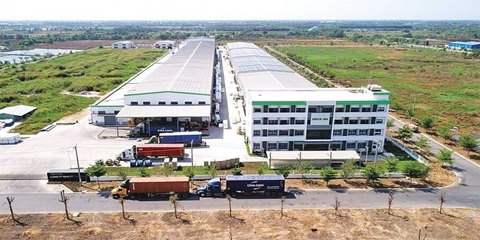
FOREIGN INVESTORS SEEKING A SYNCHRONISED MANUFACTURING ECOSYSTEM
Instead of focusing only on land costs and incentives as usual, foreign investors are seeking a synchronised manufacturing ecosystem, from stable power supply and logistics to shared infrastructure and the convenience of completing residence procedures for experts to serve their long-term investment in the country.

INFRASTRUCTURE / CONSTRUCTION / LOGISTIC / PORT
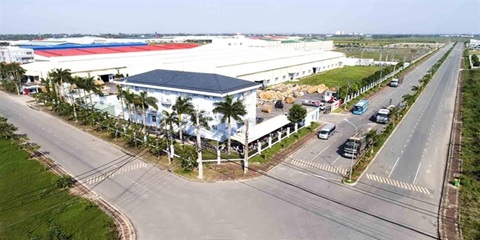
DONG THAP PROVINCE STEPS UP INDUSTRIAL EXPANSION AND INFRASTRUCTURE CONNECTIVITY
Accelerating public investment, strengthening inter-regional connectivity, and expanding industrial land are helping Dong Thap efficiently bolster competitiveness and drive economic growth. Following the 2025 merger of the former Dong Thap and Tien Giang provinces, the expanded Dong Thap province in the Mekong Delta faces mounting pressure to accelerate infrastructure development and strengthen connectivity among local economic zones, urban areas, industrial parks (IPs), and production centres.
PROPERTY / INDUSTRIAL ZONE
HCM CITY ATTRACTS US$5.7 BILLION INTO EXPORT PROCESSING AND INDUSTRIAL ZONES
HCM City attracted US$5.7 billion in domestic and foreign investment into its export processing and industrial zones during the first nine months of 2026. The figure exceeded the city's full-year target by 31 per cent, highlighting strong momentum in high-quality industrial investment under Resolution No.10-NQ/TW. Total investment reached 131 per cent of the 2026 target of $4.25 billion and represented a 29 per cent increase compared with the same period in 2025, according to the city's Export Processing and Industrial Zones Authority (HEPZA).

BANKING / FINANCE / INSURANCE / TAX
REMITTANCES TO HCM CITY RISE NEARLY 40% IN Q3
Remittances to HCM City reached more than US$2.83 billion in the third quarter of this year, up 39.5 per cent from the previous quarter and 3.6 per cent year-on-year. This was the first quarter showing positive annual growth this year, helping narrow the decline in remittance inflows over the first nine months. According to the State Bank of Vietnam (SBV)’s Regional Branch 2, remittances transferred to HCM City through credit institutions and economic organisations totalled $2.835 billion in Q3, an increase of more than $802 million from the previous quarter.

VIETNAM ECONOMY INVESTMENT
LOCALITIES REPORT BREAKTHROUGH RESULTS IN FDI IN FIRST NINE MONTHS
In Ho Chi Minh City, total registered capital reached $17.2 billion in the first nine months, up 4.2 times from the same period last year. The figure included more than $9.35 billion in newly registered capital and over $4.9 billion in additional capital for existing projects. Foreign investors also registered more than $2.9 billion through capital contributions and share purchases.

TECHNOLOGY
TECH SECTOR GROWTH OPENS UP OPPORTUNITIES FOR VIỆT NAM TO GO GLOBAL
The growth of the electronics, semiconductor and high-tech sectors worldwide is opening up a variety of opportunities for Vietnamese enterprises to integrate more deeply into the global supply chain. However, to become suppliers for these corporations, domestic enterprises must meet rigorous standards regarding quality, technology, productivity and order fulfilment capabilities.
Events Sponsors






















