Want to be in the loop?
subscribe to
our notification
Business News
CONDOTEL MARKET FACES GLOOMY PROSPECTS
The condotel market has faced a gloomy period due to low absorption rate while inventory has been on the rise, experts said.
The condotel market has faced a gloomy period due to low absorption rate while inventory has been on the rise, experts said.
Statistics from the HCM City Real Estate Association (HoREA) showed the country now has some 82,900 condotels with a total investment of VND100 trillion (US$4.3 billion), mostly located in localities with strong tourism markets like Ha Noi, HCM City, Da Nang, Thanh Hoa, Binh Dinh, Khanh Hoa, Binh Thuan and Ba Ria - Vung Tau.
However, after five years of rapid growth, the condotel market now has a large inventory.
Figures from real estate distributor DKRA Vietnam Company revealed big cities in Viet Nam are short of apartments while the absorption rate of condotels is low.
Nearly 5,000 condotels from the central province of Thua Thien - Hue to Phu Quoc Island in Kien Giang Province have not been sold. In the second quarter of the year alone, the market had 158 new condotels from two projects on offer, but only 31 were sold, equivalent to 1 per cent in the same period last year.
This meant purchasing power in the condotel market is at a very low rate, to the point of nearly being frozen. Even in localities which used to lead the market such as Binh Thuan, Phu Quoc and Ba Ria - Vung Tau, sales of condotels have also been very low at 30 per cent, 17 per cent and 4 per cent of the total estate transactions in the first half of the year.
Nguyen Hoang, Director of the R&D Department of DKRA Vietnam, said the tourism property segment had been almost hibernating due to previous development consequences and the impact of the COVID-19 pandemic. Without a change in conditions, this segment would remain hibernating for a long time.
According to HoREA, the strong development of condotel projects and resort real estate over the past 10 years has met the surging need of the tourism with the growth of tourist arrivals in recent years, up to about 30 per cent a year for domestic tourists and about 15 per cent a year for international tourists. In 2019, the country's tourism industry served more than 85 million domestic tourists and some 18 million international tourists.
There was a rapid development of condotel projects in recent years but with a lack of transparency, stability and sustainability, leading to “oversupply” in the segment, HoREA said.
Many investors have been mobilising capital and selling condotels to be built in the future to customers and secondary investors, while the Government has not completed a legal framework for this type of real estate.
However, to attract customers, investors often offer high profits, up to 10-12 per cent a year, even up to 15 per cent for 8-12 years, pushing risks onto customers.
The tourism estate segment has not only faced difficulties of oversupply, an unclear legal framework and profits of investors not being guaranteed, it has been also hit by the pandemic. After showing signs of recovering in recent months, COVID-19 has recurred in some localities, especially in the major tourism market of Da Nang. This showed the tourism real estate market would likely continue to struggle.
According to the latest Savills Vietnam market report, the real estate market for the first six months of this year has seen the worst performance ever due to the pandemic. Room occupancy had fallen to 32 per cent while room prices fell 13 per cent year-on-year to US$74 per room per night. The 5-star segment has been most heavily affected by its dependence on international visitors.
According to the HCM City Department of Tourism, the number of international visitors in the city in the first half of the year fell by 69 per cent to 1.3 million.
Legal framework needed
The Ministry of Public Security has proposed not granting ownership certificates to allow condotels, tourist villas and officetels to be turned into residential projects.
Earlier, some localities like Da Nang City and Ba Ria Vung Tau Province proposed changing land use purposes and issuing certificates of ownership for condotels, gradually legalising them into residential apartments.
Le Hoang Chau, HoREA’s chairman agreed with the ministry, saying if the Government allowed the conversion of condotels to residential apartments, infrastructure planning would be destroyed.
This would also increase the pressure on urban infrastructure systems, especially to reduce the value of the whole area planned for tourism development, business services, trade as well as sustainable revenue sources for the Government, Chau said.
He added that planning and adjustment had been strictly and synchronously stipulated in the Planning Law, the Land Law, the Construction Law, and the Urban Planning Law. However, in practice, there are areas that had been planned for tourism development but were no longer suitable, so they could be considered for adjusting land use purposes.
However, the planning adjustment must comply with the law and be based on a scientific and practical basis as well as undergoing a strict approval process.
Deputy head of the Department of Housing Management and Real Estate Market under the Ministry of Construction, Nguyen Manh Khoi said the ministry received many proposals from property developers to converse condotels into residential apartments.
Lawyer Nguyen Duc Hong Son said the concern of the Ministry of Public Security in granting certificates to condotel and officetels was completely grounded as land for construction of such projects is commercial and service land, not residential.
At this time, the only way forward would be to wait for the completion of the legal framework to adjust the type of tourist apartment. This means buyers would be assured their rights are protected and they aren't hurt by a lack of transparency, he added.
Source: VIR
Related News

CHARITY / EXHIBITION / OTHER EVENTS
INVESTMENT OPPORTUNITIES IN CA MAU PROVINCE: 96 PROJECTS AND 20 STRATEGIC PROJECTS
We are pleased to share with you information on investment projects currently seeking investors in Ca Mau Province. Should your esteemed company or association be interested, we kindly invite you to review the project information and complete the registration form via the links provided. The Ho Chi Minh City Investment and Trade Promotion Centre (ITPC) will consolidate the expressions of interest and facilitate connections with the leadership of Ca Mau Province at a meeting tentatively scheduled for 13 November 2026 in Ho Chi Minh City.

MEMBER CORNER / PROMOTIONS
BẰNG KIỀU LIVESHOW - A SYMPHONY OF LOVE UNDER THE GOLDEN GLOW
A masterclass in live music that takes the audience on a soulful journey through immortal love songs, guided by the peerless artistry and emotive storytelling of renowned singer Bằng Kiều. The highlight of the night is his seamless musical chemistry with special guest Triệu Hồng Ngọc, promising passionate and deeply resonant duets inside the magnificent Grand Ballroom.
INFRASTRUCTURE / CONSTRUCTION / LOGISTIC / PORT
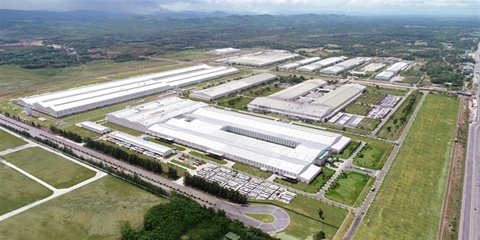
ĐÀ NẴNG GREEN-LIGHTS US$105 MILLION THAI DEVELOPMENT DEAL
The central city has approved an investment proposal by Thailand’s WHA Group to develop infrastructure for the 400ha WHA Đà Nẵng Industrial Park project on two communes of Thăng Bình and Đồng Dương, with an investment of more than VNĐ2.7 trillion (US$105 million). The city said it approved WHA Industrial Development International's status as an investor in the project, which is expected to take place between 2027 and 2034.
VIETNAM ECONOMY INVESTMENT
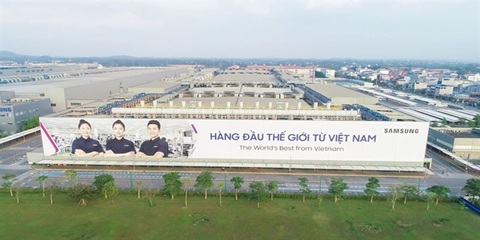
MOBILE PHONE EXPORTS RISE 20% TO $51.8 BILLION IN FIRST NINE MONTHS
Exports of mobile phones and components rose 20 per cent year-on-year to nearly US$51.8 billion in the first nine months of 2026, with China, the US and Republic of Korea accounting for more than half of the total. Shipments to the three markets reached a combined $26.18 billion, or 50.6 per cent of total exports of the product group during the period, according to data from the Vietnam Department of Customs under the Ministry of Finance.

INFRASTRUCTURE / CONSTRUCTION / LOGISTIC / PORT
VIỆT NAM-CAMBODIA TRADE GATHERS PACE TOWARDS $20 BILLION TARGET
Trade between Việt Nam and Cambodia continues to grow, remaining a bright spot and a key pillar of bilateral cooperation as the two countries aim to raise two-way trade to US$20 billion in the coming years. After setting a record of more than $11.3 billion last year, bilateral trade reached about $8.7 billion in the first eight months of this year, up 8.3 per cent year on year.
VIETNAM ECONOMY INVESTMENT
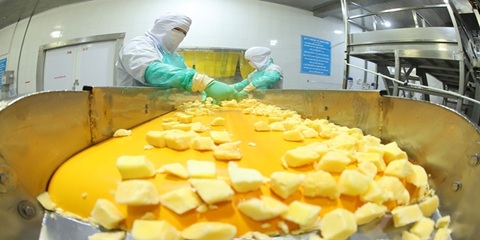
FRUIT AND VEGETABLE EXPORTS POISED TO HIT $10 BILLION IN 2026
Fruit and vegetable exports are on track to reach nearly US$10 billion in 2026, after rising 19.9 per cent year on year to nearly US$7.4 billion in the first nine months, driven by strong seasonal demand and abundant tropical fruit supplies. The Ministry of Agriculture and Environment said the growth reflected stronger international demand for fresh produce and processed agricultural products.
Events Sponsors






















