Want to be in the loop?
subscribe to
our notification
Business News
CHINESE INVESTMENT INFLOW BECOMING STRONGER WITH HIGHER QUALITY: INSIDERS
Vietnam has seen a strong investment inflow from China with the presence of many international corporations in various fields such as technology, electronics, and renewable energy.
Last month, a delegation from China's Sunwoda Group visited the northern province of Bac Giang to seek investment opportunities. Xiang Hai Biao, General Director of the firm said that Sunwoda plans to build a 300-million-USD factory in the locality to produce electronic components. Previously, Sunwoda built a factory in Bac Giang.
Sunwoda is not the only Chinese enterprise to show interest in Vietnam. Last year, a delegation of Chinese businesses came to northern Hai Phong city to discuss projects that they want to invest in.
In early August, within the framework of a trade promotion programme in China, Hai Phong leaders presented investment licences to a series of projects worth nearly 200 million USD. Many memoranda of understanding were also signed for investment cooperation for other large-scale projects.
This reflects the recent trend that investment from China has been pouring into Vietnam, especially since China decided to lift the Zero-COVID policy in early 2023. Statistics from the Ministry of Planning and Investment showed that in 2023, Chinese enterprises registered to invest 4.5 billion USD in Vietnam, a year-on-year increase of nearly 80 per cent.
In the first seven months of this year, the figure hit nearly 1.65 billion USD, which is a positive figure despite a decrease compared to the same period last year. In terms of capital, China ranked fourth among the countries and territories investing in Vietnam in the Jan-Jul period. However, the country topped in the number of new projects which accounted for 29.7 per cent of the total.
Along with traditional areas, over the recent years, Chinese firms, including those from Taiwan and Hong Kong, have invested in large-scale projects in technology and electronics in Vietnam, evidenced by the presence of BYD, Goertek, and Foxconn.
Minister of Planning and Investment Nguyen Chi Dung held that the quality of Chinese investment in Vietnam has been considerably improved. In the past, Chinese-funded projects were mainly in the fields of textiles and footwear, but now they have been expanded to the fields of technology, electricity, and electronics.
Earlier this year, Victory Giant Technology Group decided to invest in a project to research, develop, produce, and trade high-precision circuit boards, with an investment capital of more than 800 million USD in Bac Ninh. Meanwhile, BYD Group is still continuously expanding its investment in electronic component manufacturing. Currently, BYD's Phu Tho factory is producing components and accessories for the Apple.
At the same time, Runergy Group is working on a 440-million-USD project in the production of semiconductor components, including silicon bars and semiconductor wafers in Nghe An. Runergy plans to increase its total investment capital in Vietnam to 1.2-1.4 billion USD. Power China, China Rare Earth Group, and Haosen Electronic Battery Company are also among the Chinese enterprises planning new investment projects in Vietnam in the near future.
Vietnam welcomes Chinese investors in the fields of high technology, renewable energy, supporting industries, electronic components, electric cars, electric batteries, essential infrastructure, international financial centre building, green finance, smart cities, ecological industrial parks, and free trade zones. These are industries that China is strong in and Vietnam has demand and development potential, the minister said at a seminar with Chinese businesses.
In his visit to China in June, Prime Minister Pham Minh Chinh met with many large firms of China and called for their investment in transport infrastructure, urban railway projects, and high-tech projects in Vietnam.
Minister Dung expressed his hope that Chinese firms will promote the technology transfer and help Vietnamese businesses enhance their production capacity and engage more deeply in the global value chain.
The growing Vietnam-China relations is considered a favourable condition for Chinese investment to continue its strong flow into Vietnam with a higher quality.
Source: VIR
Related News
BANKING / FINANCE / INSURANCE / TAX
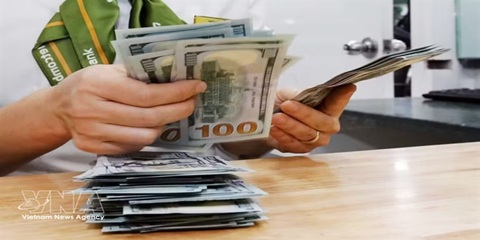
REMITTANCES TO HCM CITY RISE NEARLY 40% IN Q3
Remittances to HCM City reached more than US$2.83 billion in the third quarter of this year, up 39.5 per cent from the previous quarter and 3.6 per cent year-on-year. This was the first quarter showing positive annual growth this year, helping narrow the decline in remittance inflows over the first nine months. According to the State Bank of Vietnam (SBV)’s Regional Branch 2, remittances transferred to HCM City through credit institutions and economic organisations totalled $2.835 billion in Q3, an increase of more than $802 million from the previous quarter.
TECHNOLOGY
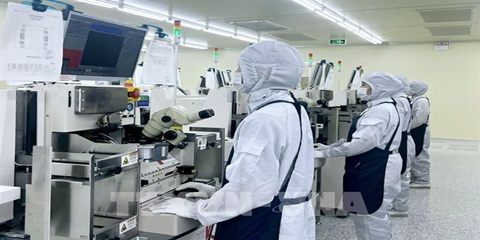
TECH SECTOR GROWTH OPENS UP OPPORTUNITIES FOR VIỆT NAM TO GO GLOBAL
The growth of the electronics, semiconductor and high-tech sectors worldwide is opening up a variety of opportunities for Vietnamese enterprises to integrate more deeply into the global supply chain. However, to become suppliers for these corporations, domestic enterprises must meet rigorous standards regarding quality, technology, productivity and order fulfilment capabilities.
VIETNAM ECONOMY INVESTMENT
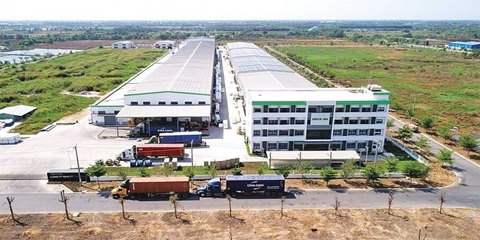
FOREIGN INVESTORS SEEKING A SYNCHRONISED MANUFACTURING ECOSYSTEM
Instead of focusing only on land costs and incentives as usual, foreign investors are seeking a synchronised manufacturing ecosystem, from stable power supply and logistics to shared infrastructure and the convenience of completing residence procedures for experts to serve their long-term investment in the country.
MEMBER CORNER / PROMOTIONS
SENTRYSAFE FHW40200 – PROTECT YOUR VALUABLES, ENJOY PEACE OF MIND!
Looking for a reliable solution to protect your important documents, cash, and valuables from fire and water damage? Genuine SENTRYSAFE - Reliable protection for your valuables and peace of mind! Contact Sen Wai Vietnam for more information and personalized product recommendations.
PROPERTY / INDUSTRIAL ZONE
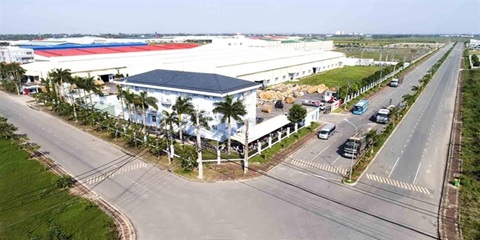
HCM CITY ATTRACTS US$5.7 BILLION INTO EXPORT PROCESSING AND INDUSTRIAL ZONES
HCM City attracted US$5.7 billion in domestic and foreign investment into its export processing and industrial zones during the first nine months of 2026. The figure exceeded the city's full-year target by 31 per cent, highlighting strong momentum in high-quality industrial investment under Resolution No.10-NQ/TW. Total investment reached 131 per cent of the 2026 target of $4.25 billion and represented a 29 per cent increase compared with the same period in 2025, according to the city's Export Processing and Industrial Zones Authority (HEPZA).
INFRASTRUCTURE / CONSTRUCTION / LOGISTIC / PORT
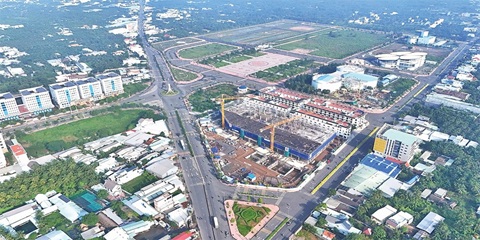
DONG THAP PROVINCE STEPS UP INDUSTRIAL EXPANSION AND INFRASTRUCTURE CONNECTIVITY
Accelerating public investment, strengthening inter-regional connectivity, and expanding industrial land are helping Dong Thap efficiently bolster competitiveness and drive economic growth. Following the 2025 merger of the former Dong Thap and Tien Giang provinces, the expanded Dong Thap province in the Mekong Delta faces mounting pressure to accelerate infrastructure development and strengthen connectivity among local economic zones, urban areas, industrial parks (IPs), and production centres.
Events Sponsors






















