Want to be in the loop?
subscribe to
our notification
Business News
CHANGES DRIVING FOREIGN INVESTOR ACTIVITY IN THE STOCK MARKET
New rules enabling foreign investors and organisations to trade without pre-funding, coupled with the prospect of elevating the stock market to the emerging FTSE index, are drawing foreign investors to the securities group.
Ramp up stock acquisitions
Vietcap Securities JSC (VCI) has just announced a resolution to issue privately 143.6 million shares, equivalent to 25 per cent of the outstanding shares, for VNĐ28,000 per share (US$1.14).
The price is significantly lower than the stock market price of VNĐ36,600 per share on Monday.
The list of prospective investors for the offering includes 66 individuals and organisations. Notably, Pyn Elite Fund, a foreign fund from Finland, is the largest institutional investor with a registered purchase of 21.5 million shares, representing 15 per cent of the total offering, 2.99 per cent of post-issue capital.
In a letter to investors, Petri Deryng, the fund's Managing Director, said that Pyn Elite Fund participated in a private placement of one of Việt Nam's leading brokerage firms at an attractive price compared to market prices.
The issuance of new regulations by the Ministry of Finance (MoF) allowing foreign institutional investors to trade stocks without the need for full payment when placing orders is a significant driver behind this investment decision.
The change will take effect in early November and is likely to significantly boost the activities of institutional investors in the Vietnamese stock market.
Several other foreign funds are actively buying VCI stocks in large quantities.
For example, Apolo Asia Fund from Malaysia is purchasing 12.7 million shares, ACM Global Fund from Singapore is acquiring 8.5 million shares, and VEIL is buying 7.5 million shares.
Foreign investors also increasing their holdings in top brokerage firms, such as SSI Securities Corporation. The second-largest brokerage firm has seen significant foreign buying activity, with foreign investors acquiring shares in nine out of ten recent trading sessions.
Particularly, after the MoF's Circular 68 allowing orders without pre-funding, foreign investors bought over eight million SSI shares, spending approximately VNĐ800 billion (US$32.6 million) over the past ten sessions.
Shares of Hồ Chí Minh City Securities Corporation (HCM) have also been consistently bought by foreign investors since September 18, with a net purchase exceeding VNĐ280 billion ($11.4 million).
Other securities like Saigon - Hanoi Securities JSC (SHS) and MB Securities (MBS) have also attracted foreign investment but with lower net inflows.
Caution on potential risks
Analysts said the change in Circular 68 could elevate Việt Nam's market status and attract foreign net buying.
Securities firms stand to benefit, explaining the recent influx of foreign capital into this stock group despite higher valuations. However, these firms must also brace for increased market volatility and systemic risks due to the new regulations.
Vũ Mạnh Hùng, an analyst at VNDirect Securities Corporation, said that the securities industry stands to gain by catering to more foreign institutional investors, leading to increased brokerage revenue with rising liquidity.
On the other hand, there are underlying risks like delayed settlement due to foreign institutional funds settling post T+2 after purchase, Hùng added.
In response, securities firms must bolster risk management concerning clients, margin ratios, market conditions and appropriate lending ratios.
While these risks are mitigated by the credibility of foreign entities and the long-term investment focus in the domestic stock market, ongoing competitive pressures may elevate these risks.
VNDirect suggests that to attract foreign institutional investors, securities companies can compete based on transaction fees, advance capital ratios (core capital/total purchase value), total value of advance capital and service quality (information and reporting).
Securities companies can provide capital to foreign institutional clients, who will only face transaction fees, while lower advance capital ratios offer a competitive edge.
A firm's equity capital, especially for those with a larger structure, is crucial. This necessitates securities firms to increase equity capital within the 5x debt-to-equity ratio limit.
According to VNDirect, large-scale securities companies with low fees and competitive advance capital ratios will gain from attracting foreign institutional investors.
Source: VNS
Related News
VIETNAM ECONOMY INVESTMENT
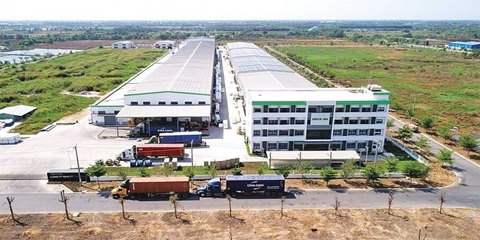
FOREIGN INVESTORS SEEKING A SYNCHRONISED MANUFACTURING ECOSYSTEM
Instead of focusing only on land costs and incentives as usual, foreign investors are seeking a synchronised manufacturing ecosystem, from stable power supply and logistics to shared infrastructure and the convenience of completing residence procedures for experts to serve their long-term investment in the country.
INFRASTRUCTURE / CONSTRUCTION / LOGISTIC / PORT
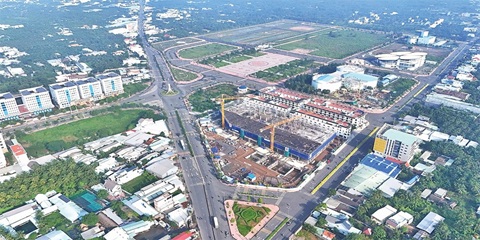
DONG THAP PROVINCE STEPS UP INDUSTRIAL EXPANSION AND INFRASTRUCTURE CONNECTIVITY
Accelerating public investment, strengthening inter-regional connectivity, and expanding industrial land are helping Dong Thap efficiently bolster competitiveness and drive economic growth. Following the 2025 merger of the former Dong Thap and Tien Giang provinces, the expanded Dong Thap province in the Mekong Delta faces mounting pressure to accelerate infrastructure development and strengthen connectivity among local economic zones, urban areas, industrial parks (IPs), and production centres.
PROPERTY / INDUSTRIAL ZONE
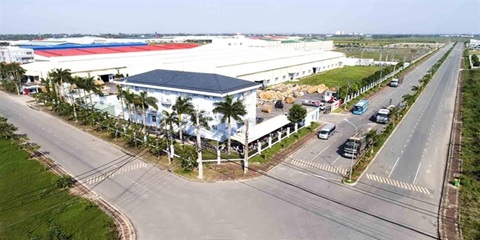
HCM CITY ATTRACTS US$5.7 BILLION INTO EXPORT PROCESSING AND INDUSTRIAL ZONES
HCM City attracted US$5.7 billion in domestic and foreign investment into its export processing and industrial zones during the first nine months of 2026. The figure exceeded the city's full-year target by 31 per cent, highlighting strong momentum in high-quality industrial investment under Resolution No.10-NQ/TW. Total investment reached 131 per cent of the 2026 target of $4.25 billion and represented a 29 per cent increase compared with the same period in 2025, according to the city's Export Processing and Industrial Zones Authority (HEPZA).

BANKING / FINANCE / INSURANCE / TAX
REMITTANCES TO HCM CITY RISE NEARLY 40% IN Q3
Remittances to HCM City reached more than US$2.83 billion in the third quarter of this year, up 39.5 per cent from the previous quarter and 3.6 per cent year-on-year. This was the first quarter showing positive annual growth this year, helping narrow the decline in remittance inflows over the first nine months. According to the State Bank of Vietnam (SBV)’s Regional Branch 2, remittances transferred to HCM City through credit institutions and economic organisations totalled $2.835 billion in Q3, an increase of more than $802 million from the previous quarter.

VIETNAM ECONOMY INVESTMENT
LOCALITIES REPORT BREAKTHROUGH RESULTS IN FDI IN FIRST NINE MONTHS
In Ho Chi Minh City, total registered capital reached $17.2 billion in the first nine months, up 4.2 times from the same period last year. The figure included more than $9.35 billion in newly registered capital and over $4.9 billion in additional capital for existing projects. Foreign investors also registered more than $2.9 billion through capital contributions and share purchases.

TECHNOLOGY
TECH SECTOR GROWTH OPENS UP OPPORTUNITIES FOR VIỆT NAM TO GO GLOBAL
The growth of the electronics, semiconductor and high-tech sectors worldwide is opening up a variety of opportunities for Vietnamese enterprises to integrate more deeply into the global supply chain. However, to become suppliers for these corporations, domestic enterprises must meet rigorous standards regarding quality, technology, productivity and order fulfilment capabilities.
Events Sponsors






















