Want to be in the loop?
subscribe to
our notification
Business News
CAR INDUSTRY REMAINS FLAT
After strong rebound in 2022 driven by pent-up demand, the local car market has been gloomy for the year to date, which is expected to linger until the year-end. Do Tien Dung, chairman of the Board of Directors at Hang Xanh Motors Service JSC (Haxaco), said that the company counted $3.04 million in profit in Q1 last year.
However, they are just trying to break even in Q1 due to a sharp fall in the demand, and the situation may spread until the end of Q2.
Consumers have been cautious due to very high borrowing costs.
In addition, the quiet stock market and real estate market have badly affected people’s purchasing power.
A source from Huyndai Thanh Cong reported that for the year to date, auto dealers have launched diverse incentives to attract buyers, yet demand for autos has dwindled amid surging borrowing cost and lowered incomes.
Saigon General Service Corporation (Savico) commented that the threat of global economic recession, high inflation and shortage of chipsets and semiconductors would result in auto supply volatilities.
Meanwhile, stiff competition persists between dealers, alongside high interest rates and sliding demand.
It might take up to six months for the auto market to reach a sounder footing.
Savico expects a drop of 25 per cent in its post-tax profit in 2023, falling to $19 million compared to 2022.
The Vietnam Automobile Manufacturers Association's (VAMA) figures show that local motor vehicle sales revenue was down 25 per cent on-year in the first two months this year, in whichtourism coaches shed 28 per cent, commercial vehicles were down 10 per cent, and specialised vehicles took a 47 per cent plunge.
The sale revenue of domestic assembled cars went down 38 per cent, and that of imported vehicles slid 3 per cent.
In fact, auto sales began to show signs of going down from late 2022.
Last December, VAMA members sold a total 35,301 units, down 3 per cent compared to the previous month and more than 24 per cent lower on-year.
The Vehicle Importers Vietnam Association assumes that auto makers are struggling to cope with escalating inventory due to an unexpected fall in demand.
Stagnant auto registration in the past two months has also exacerbated the situation, exerting pressure on businesses. All 12 VAMA members face a conundrum with their inventories.
By the end of 2022, the inventory value at Haxaco was at $46.2 million, up 1.8-fold compared to one year ago.
Similarly, Savico saw inventory value reaching $7.83 million, up 1.8-fold, and that of City Auto JSC approximated $20.7 million, up 1.4-fold.
Haxaco chairman Dung has attributed the company’s soaring inventory to two factors. First, Haxaco, the major Mercedes-Benz dealer in Vietnam, imported a big volume of cars to receive a bonus given by the Mercedes-Benz plant. This bonus contributed a large part to the company’s profit picture last year.
Second, many Mercedes-Benz car lines have increased in price from January so that the company has imported a large car volume to drive down the price.
Haxaco aims to lower its inventory value to about $26 million in late Q1.
The Ministry of Finance and the Ministry of Industry and Trade are considering the possibility of a 50 per cent registration fee reduction for domestically assembled and manufactured cars.
Source: VIR
Related News

BANKING / FINANCE / INSURANCE / TAX
REMITTANCES TO HCM CITY RISE NEARLY 40% IN Q3
Remittances to HCM City reached more than US$2.83 billion in the third quarter of this year, up 39.5 per cent from the previous quarter and 3.6 per cent year-on-year. This was the first quarter showing positive annual growth this year, helping narrow the decline in remittance inflows over the first nine months. According to the State Bank of Vietnam (SBV)’s Regional Branch 2, remittances transferred to HCM City through credit institutions and economic organisations totalled $2.835 billion in Q3, an increase of more than $802 million from the previous quarter.
TECHNOLOGY
TECH SECTOR GROWTH OPENS UP OPPORTUNITIES FOR VIỆT NAM TO GO GLOBAL
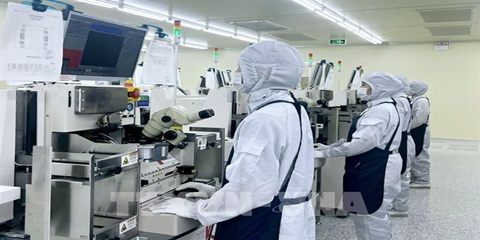
The growth of the electronics, semiconductor and high-tech sectors worldwide is opening up a variety of opportunities for Vietnamese enterprises to integrate more deeply into the global supply chain. However, to become suppliers for these corporations, domestic enterprises must meet rigorous standards regarding quality, technology, productivity and order fulfilment capabilities.
VIETNAM ECONOMY INVESTMENT
FOREIGN INVESTORS SEEKING A SYNCHRONISED MANUFACTURING ECOSYSTEM
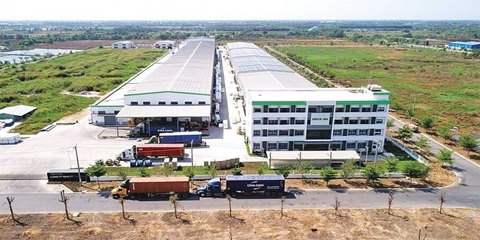
Instead of focusing only on land costs and incentives as usual, foreign investors are seeking a synchronised manufacturing ecosystem, from stable power supply and logistics to shared infrastructure and the convenience of completing residence procedures for experts to serve their long-term investment in the country.
MEMBER CORNER / PROMOTIONS
SENTRYSAFE FHW40200 – PROTECT YOUR VALUABLES, ENJOY PEACE OF MIND!
Looking for a reliable solution to protect your important documents, cash, and valuables from fire and water damage? Genuine SENTRYSAFE - Reliable protection for your valuables and peace of mind! Contact Sen Wai Vietnam for more information and personalized product recommendations.
PROPERTY / INDUSTRIAL ZONE
HCM CITY ATTRACTS US$5.7 BILLION INTO EXPORT PROCESSING AND INDUSTRIAL ZONES
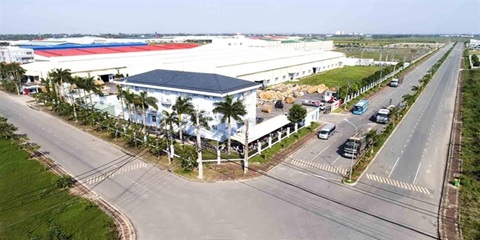
HCM City attracted US$5.7 billion in domestic and foreign investment into its export processing and industrial zones during the first nine months of 2026. The figure exceeded the city's full-year target by 31 per cent, highlighting strong momentum in high-quality industrial investment under Resolution No.10-NQ/TW. Total investment reached 131 per cent of the 2026 target of $4.25 billion and represented a 29 per cent increase compared with the same period in 2025, according to the city's Export Processing and Industrial Zones Authority (HEPZA).
INFRASTRUCTURE / CONSTRUCTION / LOGISTIC / PORT
DONG THAP PROVINCE STEPS UP INDUSTRIAL EXPANSION AND INFRASTRUCTURE CONNECTIVITY
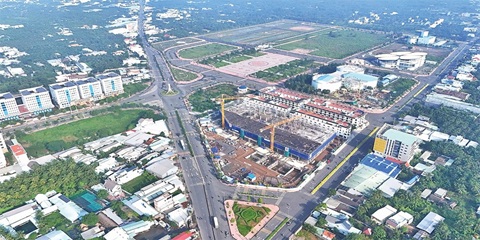
Accelerating public investment, strengthening inter-regional connectivity, and expanding industrial land are helping Dong Thap efficiently bolster competitiveness and drive economic growth. Following the 2025 merger of the former Dong Thap and Tien Giang provinces, the expanded Dong Thap province in the Mekong Delta faces mounting pressure to accelerate infrastructure development and strengthen connectivity among local economic zones, urban areas, industrial parks (IPs), and production centres.
Events Sponsors






















