Want to be in the loop?
subscribe to
our notification
Business News
BUSINESSES FACE MOUNTING HARDSHIPS AMID RATE HIKE
A US Federal Reserve policy meeting is taking place this week on March 20 with the Fed forecast to retain the current base rate to deal with inflation concerns. The move will mean the US dollar remains at a high level, putting pressure on domestic currencies around the world.
Since the start of the year, Vietnam has seen the US dollar selling price inch up slightly from 1.6-1.7 per cent, whereas in other markets, it has risen by as much as nearly 4 per cent.
This has caused a detrimental impact to businesses who deal in large dollar-denominated amounts.
Dang Ngoc Hoa, chairman of Vietnam Airlines, said that if the exchange rate rose by 1 per cent, the company’s expenses could swell an additional $12.5 million.
"Therefore, if the exchange rate jumped 5 per cent, our expenses might increase by more than $62 million, so we need the exchange rate to remain stable with the lowest possible rate hike," said Hoa.
Similarly, Le Manh Hung, chairman of PetroVietnam, noted that the group currently faces VND38 trillion ($1.58 billion) in dollar-denominated outstanding loans.
"A rising exchange rate signifies soaring expenses for the group, creating concern for our production and business efficiency," said Hung.
For businesses in the steel, cashews, and garment and textile sectors, a more costly dollar has increased their imported material expenses.
According to the Vietnam Steel Association, their members are facing a spike in the price of imported materials such as steel scraps, fat coal, and steel ore.
Similar complaints have also come from the Vietnam Association for Seafood Producers and Exporters, and Vietnam Cashew Association (VINACAS).
Tran Huu Hau, vice-secretary of VINACAS, revealed that higher raw cashew cost has driven up prices for consumers, badly affecting their competitiveness.
"Even though exporters are covered when firms collect dollars from export contracts, the rate increase has significantly driven down profits," said Hau.
Than Duc Viet, CEO of Garment 10 Corporation (Garco 10), a significant member of the Vietnam National Textile and Garment Group, believes that the company’s production and business activities have rebounded this year thanks to a growth in order numbers.
"The higher exchange rate has led to a rise in the value of export orders, but we also face cost overruns associated with the import of input materials and machinery," said Viet.
Last year, Garco 10 saw a 21 per cent drop in profits, mostly thanks to the exchange rate, compared to 2022.
Tran Thi Ha My, senior analyst at Viet Dragon Securities JSC, predicts that the impact would be insignificant if the rate hike was in the range of 2-3 per cent, however, if the rake hike hits 4-5 per cent or more, firms could face even more hardship.
"Rate hike pressures could abate in the second half of this year amid abundant forex supply, and the possibility that the Fed might begin to cut interest rates. In addition, the State Bank of Vietnam's policy change on gold market management might also have a positive impact on the exchange rate," said My.
A report from the General Statistics Office shows Vietnam’s export value reached an estimated $24.8 billion in February, while imports were valued at $23.7 billion.
So far this year, domestic businesses have reported a trade deficit of almost $4 billion.
Source: VIR
Related News

BANKING / FINANCE / INSURANCE / TAX
REMITTANCES TO HCM CITY RISE NEARLY 40% IN Q3
Remittances to HCM City reached more than US$2.83 billion in the third quarter of this year, up 39.5 per cent from the previous quarter and 3.6 per cent year-on-year. This was the first quarter showing positive annual growth this year, helping narrow the decline in remittance inflows over the first nine months. According to the State Bank of Vietnam (SBV)’s Regional Branch 2, remittances transferred to HCM City through credit institutions and economic organisations totalled $2.835 billion in Q3, an increase of more than $802 million from the previous quarter.
TECHNOLOGY
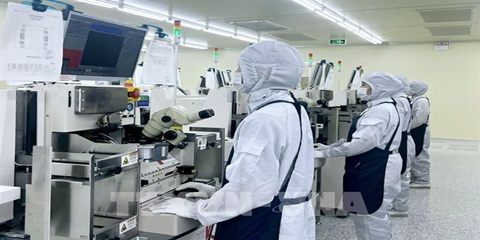
TECH SECTOR GROWTH OPENS UP OPPORTUNITIES FOR VIỆT NAM TO GO GLOBAL
The growth of the electronics, semiconductor and high-tech sectors worldwide is opening up a variety of opportunities for Vietnamese enterprises to integrate more deeply into the global supply chain. However, to become suppliers for these corporations, domestic enterprises must meet rigorous standards regarding quality, technology, productivity and order fulfilment capabilities.
VIETNAM ECONOMY INVESTMENT
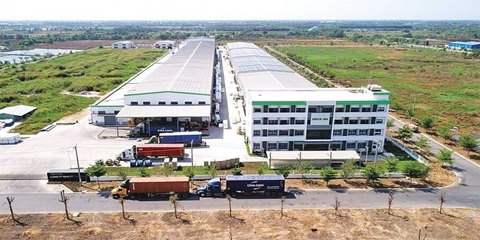
FOREIGN INVESTORS SEEKING A SYNCHRONISED MANUFACTURING ECOSYSTEM
Instead of focusing only on land costs and incentives as usual, foreign investors are seeking a synchronised manufacturing ecosystem, from stable power supply and logistics to shared infrastructure and the convenience of completing residence procedures for experts to serve their long-term investment in the country.
MEMBER CORNER / PROMOTIONS
SENTRYSAFE FHW40200 – PROTECT YOUR VALUABLES, ENJOY PEACE OF MIND!
Looking for a reliable solution to protect your important documents, cash, and valuables from fire and water damage? Genuine SENTRYSAFE - Reliable protection for your valuables and peace of mind! Contact Sen Wai Vietnam for more information and personalized product recommendations.
PROPERTY / INDUSTRIAL ZONE
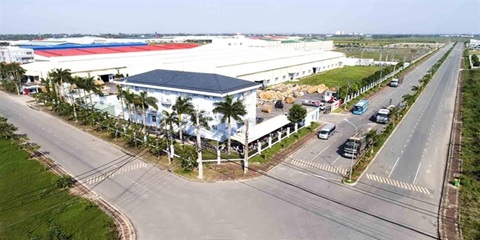
HCM CITY ATTRACTS US$5.7 BILLION INTO EXPORT PROCESSING AND INDUSTRIAL ZONES
HCM City attracted US$5.7 billion in domestic and foreign investment into its export processing and industrial zones during the first nine months of 2026. The figure exceeded the city's full-year target by 31 per cent, highlighting strong momentum in high-quality industrial investment under Resolution No.10-NQ/TW. Total investment reached 131 per cent of the 2026 target of $4.25 billion and represented a 29 per cent increase compared with the same period in 2025, according to the city's Export Processing and Industrial Zones Authority (HEPZA).
INFRASTRUCTURE / CONSTRUCTION / LOGISTIC / PORT
DONG THAP PROVINCE STEPS UP INDUSTRIAL EXPANSION AND INFRASTRUCTURE CONNECTIVITY
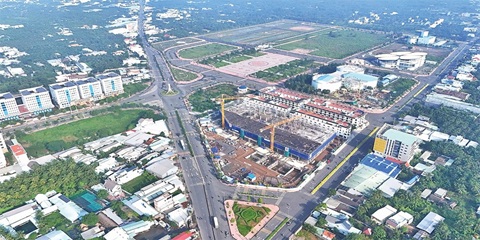
Accelerating public investment, strengthening inter-regional connectivity, and expanding industrial land are helping Dong Thap efficiently bolster competitiveness and drive economic growth. Following the 2025 merger of the former Dong Thap and Tien Giang provinces, the expanded Dong Thap province in the Mekong Delta faces mounting pressure to accelerate infrastructure development and strengthen connectivity among local economic zones, urban areas, industrial parks (IPs), and production centres.
Events Sponsors






















