Want to be in the loop?
subscribe to
our notification
Business News
BUSINESSES CONTINUE TO STRUGGLE WITH PETROL PRICES
While the reduced environmental protection tax lowered petrol prices from April 1, most transport enterprises are struggling.
Retail petrol prices fell by more than VNĐ1,000 per litre following the latest adjustment by the Ministry of Industry and Trade and the Ministry of Finance. Accordingly, the retail price of RON95 bio-fuel dropped by VNĐ1,039 to a maximum of VNĐ28,153 (US$1.23) per litre, while E5RON92 was adjusted down by VNĐ1,021 to no more than VNĐ27,309 per litre.
Meanwhile, diesel 0.05S went up from VNĐ1,447 per litre to VNĐ25,080, and kerosene increased by VNĐ1,519 per litre.
According to the ministry, this was the second decline following seven consecutive hikes in petrol prices in 2022 that caused price increases of over VNĐ6,500 per litre.
“If the environmental protection tax stayed the same, the domestic gasoline price in this operating period would have increase,” a ministry representative said.
Vũ Tuyết Hạnh, a representative of Cường Thắng Transport Company, specialising in transporting goods on the North-South route, said: “Transport enterprises expect gasoline prices to drop more as the adjustment in petrol and oil prices does not help reduce the burden on enterprises. The transport business continues to face difficulties. Many vehicles have had to stop working.”
Nguyễn Ngọc Thành, director of Kim Phát Transport Company, said: “Fuel for container trucks usually accounts for about 40 per cent of the cost of transportation. But from mid-2021, the oil price has increased by about 50 per cent, and businesses cannot increase freight rates by that level.”
Other transport enterprises said if freight rates increased sharply, they would undoubtedly lose customers, but if they didn’t they would continue to lose money.
Nguyễn Hồng Đông, a driver on the Hà Nội - Nội Bài route, told Việt Nam News: “Currently, the price of gasoline is high, and my income is less. I will lose customers if I raise the price. Some of my colleagues have had to give up driving their cars and stay at home because their income is not enough to cover expenses.”
Bùi Danh Liên, an expert at the Hà Nội Transport Association, said the association’s businesses were worried gasoline prices were still too high.
“More cars are in the parking lot, and companies are forced to reduce routes and trips. If gasoline prices continue to stay high, transport enterprises will not be able to hold out,” he said.
“The impact from the COVID-19 pandemic has brought businesses to a standstill, with no revenue, while the cost of driving tests and petrol increased sharply recently, leaving them struggling to survive.”
Liên said many businesses would be forced to sell cars or even go bankrupt.
The aviation industry is also in a bind because of soaring fuel prices. Vietnam Airlines calculates that if the price of jet fuel remains at US$130 per barrel for the whole of 2022, the airline’s cost could increase by VNĐ5.7 trillion. If a barrel goes up to $160 as forecast, costs will rise to VNĐ9.12 trillion, exacerbating the expected loss in 2022.
Experts said sea freight rates to the US and European routes, which increased again from the beginning of the year, were expected to go up again, causing Vietnamese import-export businesses to struggle.
Dương Ngọc Trung, deputy general director of SDS - MP Logistics, said the price of petrol had increased by 30 per cent from last year, raising transportation charges another 5-10 per cent.
Economists said petroleum products were currently subject to many taxes simultaneously. While petrol is not a luxury good, it still has to bear excise tax.
Economist Ngô Trí Long said it was advisable to reduce the special consumption tax on petrol again to ease inflationary pressure and avoid impacting people and businesses further.
Expert Đinh Trọng Thịnh said the special consumption tax should be levied on harmful goods and services and luxury goods, not on petrol, an essential commodity. Moreover, petrol was already subject to an environmental protection tax.
Director of the MoIT’s Domestic Market Department Trần Duy Đông said that if petrol prices continued to rise, it would consider reducing the special consumption tax.
“We still need to calculate longer and have more scenarios,” Đông said. “The ministry will propose a scenario to continue to reduce taxes on petrol, such as the environmental tax, special consumption, VAT and diversification of supply.
Source: VNS
Related News
BANKING / FINANCE / INSURANCE / TAX
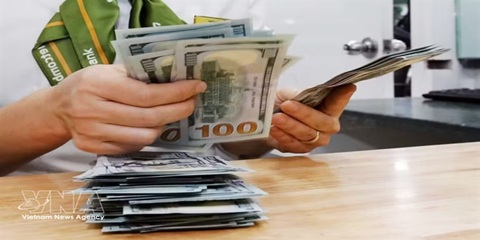
REMITTANCES TO HCM CITY RISE NEARLY 40% IN Q3
Remittances to HCM City reached more than US$2.83 billion in the third quarter of this year, up 39.5 per cent from the previous quarter and 3.6 per cent year-on-year. This was the first quarter showing positive annual growth this year, helping narrow the decline in remittance inflows over the first nine months. According to the State Bank of Vietnam (SBV)’s Regional Branch 2, remittances transferred to HCM City through credit institutions and economic organisations totalled $2.835 billion in Q3, an increase of more than $802 million from the previous quarter.
TECHNOLOGY
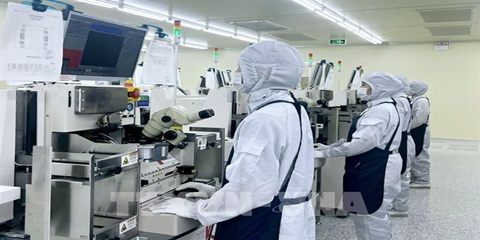
TECH SECTOR GROWTH OPENS UP OPPORTUNITIES FOR VIỆT NAM TO GO GLOBAL
The growth of the electronics, semiconductor and high-tech sectors worldwide is opening up a variety of opportunities for Vietnamese enterprises to integrate more deeply into the global supply chain. However, to become suppliers for these corporations, domestic enterprises must meet rigorous standards regarding quality, technology, productivity and order fulfilment capabilities.
VIETNAM ECONOMY INVESTMENT
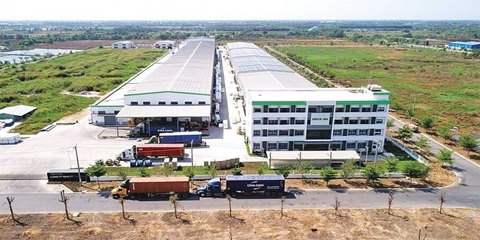
FOREIGN INVESTORS SEEKING A SYNCHRONISED MANUFACTURING ECOSYSTEM
Instead of focusing only on land costs and incentives as usual, foreign investors are seeking a synchronised manufacturing ecosystem, from stable power supply and logistics to shared infrastructure and the convenience of completing residence procedures for experts to serve their long-term investment in the country.
MEMBER CORNER / PROMOTIONS
SENTRYSAFE FHW40200 – PROTECT YOUR VALUABLES, ENJOY PEACE OF MIND!
Looking for a reliable solution to protect your important documents, cash, and valuables from fire and water damage? Genuine SENTRYSAFE - Reliable protection for your valuables and peace of mind! Contact Sen Wai Vietnam for more information and personalized product recommendations.
PROPERTY / INDUSTRIAL ZONE
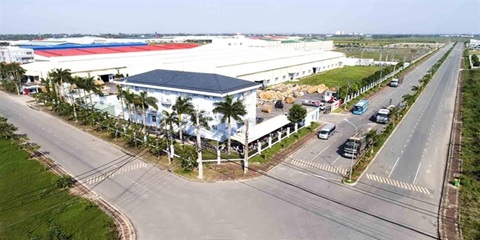
HCM CITY ATTRACTS US$5.7 BILLION INTO EXPORT PROCESSING AND INDUSTRIAL ZONES
HCM City attracted US$5.7 billion in domestic and foreign investment into its export processing and industrial zones during the first nine months of 2026. The figure exceeded the city's full-year target by 31 per cent, highlighting strong momentum in high-quality industrial investment under Resolution No.10-NQ/TW. Total investment reached 131 per cent of the 2026 target of $4.25 billion and represented a 29 per cent increase compared with the same period in 2025, according to the city's Export Processing and Industrial Zones Authority (HEPZA).
INFRASTRUCTURE / CONSTRUCTION / LOGISTIC / PORT
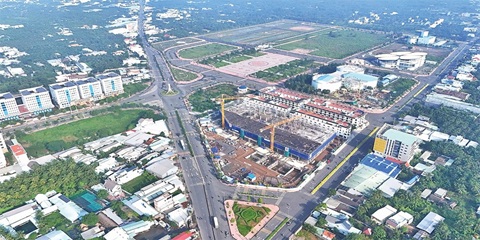
DONG THAP PROVINCE STEPS UP INDUSTRIAL EXPANSION AND INFRASTRUCTURE CONNECTIVITY
Accelerating public investment, strengthening inter-regional connectivity, and expanding industrial land are helping Dong Thap efficiently bolster competitiveness and drive economic growth. Following the 2025 merger of the former Dong Thap and Tien Giang provinces, the expanded Dong Thap province in the Mekong Delta faces mounting pressure to accelerate infrastructure development and strengthen connectivity among local economic zones, urban areas, industrial parks (IPs), and production centres.
Events Sponsors






















