Want to be in the loop?
subscribe to
our notification
Business News
BUILDING BRANDS KEY TO EXPAND PRESENCE IN THE UK MARKET
Vietnamese businesses are advised to better exploit the UK-Việt Nam Free Trade Agreement (UKVFTA) to build and develop brands and expand their presence in the UK market amid stiffer competition driven by the “Global Britain” policy.
After Brexit, Britain is reaching new partners as an independent actor and Việt Nam, together with Singapore, are the two ASEAN countries that have signed a free trade deal with the UK, showing their important position in the UK’s trade policy.
The UKVFTA, which officially came into force in May 2021, has been a key driver for rapid trade growth between the two markets.
Total trade in goods and services (exports plus imports) between the UK and Việt Nam reached £5.7 billion (US$6.6 billion) in the four quarters to the end of Q1 2022, up 15 per cent from the four quarters to the end of Q1 2021, the latest data from the UK’s Department for International Trade showed.
Of this, Việt Nam’s exports to the UK increased 18.3 per cent to £4.8 billion, while total UK exports to Việt Nam amounted to £905 million, up 0.2 per cent.
Despite the growth, ample room is unexploited when Việt Nam is the UK’s 36th largest trading partner, accounting for just 0.4 per cent of total UK trade.
Opportunities from trademark registration
Trần Quang Vũ, head of the Strategy Development and Export of Mr. Cua's Rice, shared the company’s trademark registration story in the UK and other markets with Việt Nam News.
Sóc Trăng-based ST25 fragrant rice, developed over 25 years by Hồ Quang Cua and his colleagues, won the World’s Best Rice title in 2019, marking the first time a Vietnamese variety had claimed the top spot in the contest’s 11-year history.
Vũ said after being awarded, many businesses overseas registered a trademark for ST25 rice in the US, Australia and some European countries, causing difficulties for Vietnamese exporters who want to export this rice to these markets.
Therefore, Hồ Quang Tri Enterprise, the owner of Mr. Cua’s Rice brand, hired international law firm Baker & McKenzie to assist in registering the trademark in overseas markets. To date, the trademark of Mr. Cua's Rice had been approved in the EU, UK, mainland China and Hong Kong. The application was being processed in Australia, the US and Việt Nam.
“Since having the certification, many businesses overseas have actively contacted our company, wanting to be an exclusive distributor,” Vũ said, adding the reputation has given the rice good marketing conditions but having a protected trademark makes both the company and foreign partners more confident when reaching out to the world.
Sharing about the difficulties during the trademark application process, Vũ said Vietnamese companies should hire a professional law firm to do the work as each country has different legal requirements.
“It saves time and even costs,” Vũ said.
In June, more than 23 tonnes of Mr. Cua's rice was exported to the UK under trademark protection.
Vũ said the ST25 and ST24 rice varieties were being processed to add to the list of rice that enjoy preferential tariffs under the UKVFTA.
Denzel Eades, vice president of Britcham Vietnam, said: “Vietnamese brands have a fantastic opportunity to expand market share through a combination of the advantages conferred by the UKVFTA and their ability to distinguish themselves from established brands.”
He said Vietnamese brands and products were becoming increasingly popular in the UK and recommended Vietnamese businesses engage as much as possible with consumers in the UK to understand the market and to assist in building a brand.
“New brands seeking to enter the UK can gain competitive advantage through increasing awareness of UK customer demand and preferences whilst capitalising on the benefits of having been produced in Việt Nam,” Eades said, suggesting Vietnamese enterprises reach out to organisations such as Britcham to understand and access the market.
Currently, to facilitate the importers, Vietnamese enterprises are often willing to allow distributors to use their own brands. For example, Vietnamese rice is sold under UK brands such as Longdan, Golden Lotus, Buffalo, Green Dragon and Red Ant.
The reason is that the exporter has not built their own brand names, so they are not known to local consumers. In addition, local distributors consider their own brands to be more effective in marketing than exporters' brands.
However, Britain is negotiating to join the Comprehensive and Progressive Agreement for Trans-Pacific Partnership and after the deal is signed, the advantages of preferential tariffs that Vietnamese products are enjoying under the UKVFTA will diminish, that’s why Vietnamese enterprises need to soon assert their positions in the UK. Trademark registration can be considered the first and most important step in this strategy.
According to Võ Trí Thành, director of the Institute of Branding and Competition Strategy, the businesses themselves should be active in building their brands, contributing to the growth of the national brand. To do that, it is necessary to invest in market research, thereby creating products that are suitable for local consumers' preferences, especially developing product standards to ensure the transparency of the production process, catching up with the green lifestyle trend.
Source: VNS
Related News

BANKING / FINANCE / INSURANCE / TAX
REMITTANCES TO HCM CITY RISE NEARLY 40% IN Q3
Remittances to HCM City reached more than US$2.83 billion in the third quarter of this year, up 39.5 per cent from the previous quarter and 3.6 per cent year-on-year. This was the first quarter showing positive annual growth this year, helping narrow the decline in remittance inflows over the first nine months. According to the State Bank of Vietnam (SBV)’s Regional Branch 2, remittances transferred to HCM City through credit institutions and economic organisations totalled $2.835 billion in Q3, an increase of more than $802 million from the previous quarter.
TECHNOLOGY
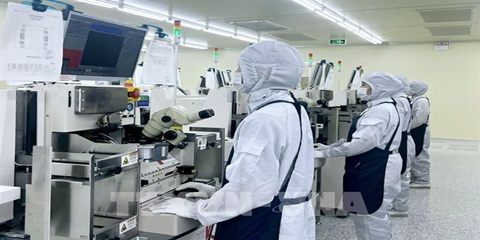
TECH SECTOR GROWTH OPENS UP OPPORTUNITIES FOR VIỆT NAM TO GO GLOBAL
The growth of the electronics, semiconductor and high-tech sectors worldwide is opening up a variety of opportunities for Vietnamese enterprises to integrate more deeply into the global supply chain. However, to become suppliers for these corporations, domestic enterprises must meet rigorous standards regarding quality, technology, productivity and order fulfilment capabilities.
VIETNAM ECONOMY INVESTMENT
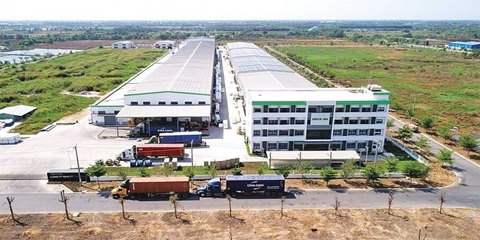
FOREIGN INVESTORS SEEKING A SYNCHRONISED MANUFACTURING ECOSYSTEM
Instead of focusing only on land costs and incentives as usual, foreign investors are seeking a synchronised manufacturing ecosystem, from stable power supply and logistics to shared infrastructure and the convenience of completing residence procedures for experts to serve their long-term investment in the country.
MEMBER CORNER / PROMOTIONS
SENTRYSAFE FHW40200 – PROTECT YOUR VALUABLES, ENJOY PEACE OF MIND!
Looking for a reliable solution to protect your important documents, cash, and valuables from fire and water damage? Genuine SENTRYSAFE - Reliable protection for your valuables and peace of mind! Contact Sen Wai Vietnam for more information and personalized product recommendations.
PROPERTY / INDUSTRIAL ZONE
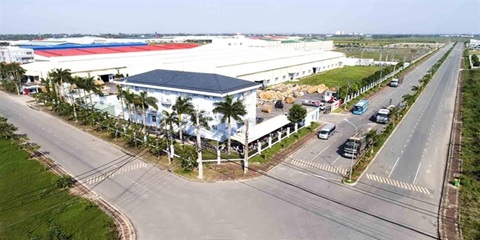
HCM CITY ATTRACTS US$5.7 BILLION INTO EXPORT PROCESSING AND INDUSTRIAL ZONES
HCM City attracted US$5.7 billion in domestic and foreign investment into its export processing and industrial zones during the first nine months of 2026. The figure exceeded the city's full-year target by 31 per cent, highlighting strong momentum in high-quality industrial investment under Resolution No.10-NQ/TW. Total investment reached 131 per cent of the 2026 target of $4.25 billion and represented a 29 per cent increase compared with the same period in 2025, according to the city's Export Processing and Industrial Zones Authority (HEPZA).
INFRASTRUCTURE / CONSTRUCTION / LOGISTIC / PORT
DONG THAP PROVINCE STEPS UP INDUSTRIAL EXPANSION AND INFRASTRUCTURE CONNECTIVITY
Accelerating public investment, strengthening inter-regional connectivity, and expanding industrial land are helping Dong Thap efficiently bolster competitiveness and drive economic growth. Following the 2025 merger of the former Dong Thap and Tien Giang provinces, the expanded Dong Thap province in the Mekong Delta faces mounting pressure to accelerate infrastructure development and strengthen connectivity among local economic zones, urban areas, industrial parks (IPs), and production centres.
Events Sponsors






















