Want to be in the loop?
subscribe to
our notification
Business News
BINH DUONG PLANS TO BECOME FAVOURABLE DESTINATION FOR INVESTORS
Leaders of Binh Duong met on March 11 to appraise provincial planning and agreed that to achieve a higher stature, the province should strive to become a bright spot for innovative technology and join global supply chains.
Binh Duong used to rely heavily on agriculture, but over the last 25 years the province has adopted changes in many fields to become an industrial powerhouse.
Since 2019, Binh Duong's economy has ranked third in the country, only behind Hanoi and Ho Chi Minh City. The province's GRDP per capita in 2023 reached VND172 million ($7,200), 1.7 times higher than the national average, contributing 25 per cent of the southeast region's export turnover and accounting for 10 per cent nationally. Binh Duong's urbanisation rate is among the top in the country at 85 per cent, and the province attracts the second highest amount of foreign direct investment (FDI) in Vietnam.
Deputy Minister of Planning and Investment Tran Quoc Phuong said that in addition to these results, there remain challenges for the province to resolve. They include the middle-income trap, services accounting for a small proportion, labour-intensive production, territorial spatial organisation, overloaded traffic infrastructure, and increasingly fierce intra-regional and domestic competition.
"To develop quickly and sustainably, Binh Duong needs to identify its unique advantages. Planning should take a new approach with an expanded development vision that provides a clear implementation roadmap with a focus based on regional links to create a spillover effect to promote the national economy," Phuong emphasised.
"To achieve the above aspiration, Binh Duong should become a bright spot in innovative technology, and high technology, and deeply participate in global supply chains. It is necessary to define the position and role of Binh Duong in relation to other localities in the southeast, Central Highlands and Mekong Delta regions," he added.
Regarding the development of spatial organisation, the province's economic activities are currently concentrated in the southern region (Thuan An and Di An cities) which has limited urban areas. A shift is needed to expand the development space to the north of the province with roadmaps for infrastructure development, especially the transport network connecting Binh Phuoc and Tay Ninh provinces on the industrial belt associated with Ring Road 4, the Ho Chi Minh City - Chon Thanh Expressway, and the Trans-Asia road through the Moc Bai border gate.
At the meeting, Vo Van Minh, Chairman of Binh Duong People's Committee, emphasised that provincial planning for the 2021-2030 period, with a vision to 2050, has been scientifically, strategically and practically researched. "Binh Duong and other southeast provinces will become the driving force centre for national economic development that reaches an international level," Minh stated.
According to the plan, by 2030, Binh Duong will have transformed its development model towards modern industries and high-quality services based on a complete innovation ecosystem. The development will follow natural conditions, advantages, and current socioeconomic status in harmony with environmental protection. It will focus on social security and justice, improving the material and spiritual lives of the people, and ensuring national defence, security and territorial integrity.
"To transform and continue to make breakthroughs, regional connectivity, sci-tech, human resources, and innovation will be the driving forces towards creating an attractive environment for sci-tech development, investment, and startup activities," the chairman highlighted.
To become an attractive destination for domestic and international investors, Binh Duong will continue to improve its infrastructure, legal environment, production, services, and living infrastructure.
Through cooperation with developed countries in Asia, Europe, and America, Binh Duong will create conditions for the development of key industries following international standards.
This will help Binh Duong lead the region in industrial production, sci-tech, human resources, and smart urban development.
Source: VIR
Related News

BANKING / FINANCE / INSURANCE / TAX
REMITTANCES TO HCM CITY RISE NEARLY 40% IN Q3
Remittances to HCM City reached more than US$2.83 billion in the third quarter of this year, up 39.5 per cent from the previous quarter and 3.6 per cent year-on-year. This was the first quarter showing positive annual growth this year, helping narrow the decline in remittance inflows over the first nine months. According to the State Bank of Vietnam (SBV)’s Regional Branch 2, remittances transferred to HCM City through credit institutions and economic organisations totalled $2.835 billion in Q3, an increase of more than $802 million from the previous quarter.
TECHNOLOGY
TECH SECTOR GROWTH OPENS UP OPPORTUNITIES FOR VIỆT NAM TO GO GLOBAL
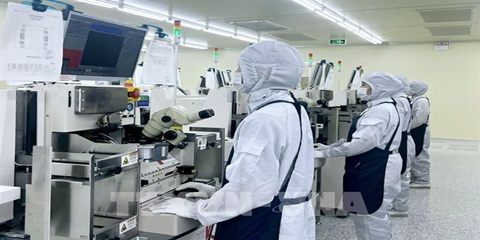
The growth of the electronics, semiconductor and high-tech sectors worldwide is opening up a variety of opportunities for Vietnamese enterprises to integrate more deeply into the global supply chain. However, to become suppliers for these corporations, domestic enterprises must meet rigorous standards regarding quality, technology, productivity and order fulfilment capabilities.
VIETNAM ECONOMY INVESTMENT
FOREIGN INVESTORS SEEKING A SYNCHRONISED MANUFACTURING ECOSYSTEM
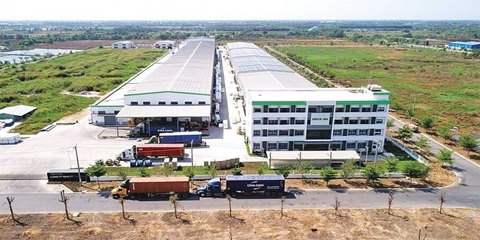
Instead of focusing only on land costs and incentives as usual, foreign investors are seeking a synchronised manufacturing ecosystem, from stable power supply and logistics to shared infrastructure and the convenience of completing residence procedures for experts to serve their long-term investment in the country.
MEMBER CORNER / PROMOTIONS
SENTRYSAFE FHW40200 – PROTECT YOUR VALUABLES, ENJOY PEACE OF MIND!
Looking for a reliable solution to protect your important documents, cash, and valuables from fire and water damage? Genuine SENTRYSAFE - Reliable protection for your valuables and peace of mind! Contact Sen Wai Vietnam for more information and personalized product recommendations.
PROPERTY / INDUSTRIAL ZONE
HCM CITY ATTRACTS US$5.7 BILLION INTO EXPORT PROCESSING AND INDUSTRIAL ZONES
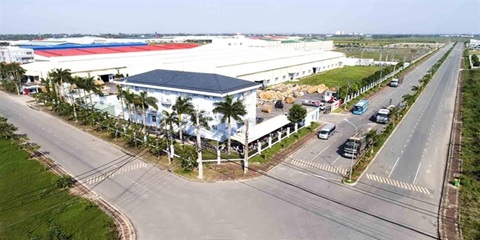
HCM City attracted US$5.7 billion in domestic and foreign investment into its export processing and industrial zones during the first nine months of 2026. The figure exceeded the city's full-year target by 31 per cent, highlighting strong momentum in high-quality industrial investment under Resolution No.10-NQ/TW. Total investment reached 131 per cent of the 2026 target of $4.25 billion and represented a 29 per cent increase compared with the same period in 2025, according to the city's Export Processing and Industrial Zones Authority (HEPZA).
INFRASTRUCTURE / CONSTRUCTION / LOGISTIC / PORT
DONG THAP PROVINCE STEPS UP INDUSTRIAL EXPANSION AND INFRASTRUCTURE CONNECTIVITY
Accelerating public investment, strengthening inter-regional connectivity, and expanding industrial land are helping Dong Thap efficiently bolster competitiveness and drive economic growth. Following the 2025 merger of the former Dong Thap and Tien Giang provinces, the expanded Dong Thap province in the Mekong Delta faces mounting pressure to accelerate infrastructure development and strengthen connectivity among local economic zones, urban areas, industrial parks (IPs), and production centres.
Events Sponsors






















