Want to be in the loop?
subscribe to
our notification
Business News
BANKS REMARKABLY PROPEL ECONOMIC GROWTH
In the previous year, the banking sector of Binh Thuan province adhered to the directives of the Governor of the State Bank of Vietnam (SBV), the Party Committee, and other authorities. This adherence was to execute its designated tasks, ensuring the stability of the banking system and stimulating local economic growth and social security.
A successful year
In 2023, the State Bank of Vietnam - Binh Thuan Branch (SBV Binh Thuan) resolutely and consistently implemented numerous key solutions to increase deposits and loans, based on the analysis, assessment, and forecast of potential difficulties and challenges. Credit institutions concentrated on lending to prioritized sectors and areas, reducing interest rates, and implementing support policies and solutions to alleviate business difficulties. As of October 31, 2023, deposits witnessed a growth of 6.56% to VND56,203.5 billion, and total outstanding loans escalated by 4.67% to VND83,671.7 billion. The credit capital was primarily funneled into production/business fields, constituting approximately 73.73% of total outstanding loans.
The promotion of non-cash payment and electronic payments continued to ensure safety, efficiency, and transparency. The restructuring of credit institutions, in conjunction with the digital transformation in banking operations, was accelerated to guarantee stable local banking development, enhancing the administrative capacity and financial capacity of people’s credit funds.
Mr. Bui Xuan Chinh, Director of SBV Binh Thuan, said that 2023 marked the second year of implementing the socioeconomic recovery and development program in accordance with Government Resolution 11/NQ-CP. To support local companies in overcoming difficulties and facilitating business recovery and development, the local banking sector coordinated with relevant bodies at the onset of 2023. They informed about credit and monetary mechanisms and policies, actively monitored, understood, handled, and advised on the timely resolution of difficulties and obstacles. This facilitated businesses and people to access and benefit from support policies.
Besides, the banking sector seriously directed and facilitated customers in difficulty to restructure their debt repayment periods and keep their debt classifications unchanged according to Circular 02/2023/TT-NHNN; sped up the 2% interest rate support program as per Decree 31/2022/ND-CP to slash the lending interest; coordinated with relevant agencies to launch the credit program of VND120,000 billion (loans for social housing, worker housing, housing repairing and rebuilding according to Resolution 33/NQ-CP) and the credit program of VND15,000 billion (loans for forestry and fisheries sectors as per Official Dispatch 5631/NHNN-TD dated July 14, 2023). The sector seriously implemented low interest rate ceilings for short-term loans in priority areas; applied customer policies on interest exemption and reduction and cut costs to lower lending interest rates; and reviewed and simplified borrowing procedures and processes, improved the effect of customer credit appraisals and ratings, and facilitated businesses and people to access capital credit.
In addition to the support from the banking industry, businesses themselves also had to try to gain trust from banks to have broader access to capital, especially low-interest funds, Chinh said. “Currently, credit institutions have launched credit ratings criteria to companies. Higher rated customers could access more preferential policies (like credit limits, interest rates and security measures). Therefore, to access a low-interest fund, apart from meeting loan conditions according to general regulations, companies needed to review and restructure operations and improve management capacity. They needed to actively grasp customer policies of banks to consider and select credit programs/products. At the same time, they provided full information and ensured financial transparency for credit institutions to apply soft interest rates for prioritized areas of the SBV as well as customer policies of credit institutions,” he recommended.
Actively addressing challenges, improving integration capacity
Nevertheless, the banking sector of Binh Thuan province still faced numerous challenges, especially credit growth and bad debt ratio reduction. To overcome difficulties and challenges, successfully complete political tasks and support local socioeconomic recovery, in the coming time, the sector will inform and promptly carry out monetary, credit, foreign exchange and noncash payment policies in the province. It will focus on closely coordinating with relevant agencies to implement bank-business connection programs; promote the role of professional working groups in grasping and handling difficulties and obstacles and widening access to capital for companies; actively mobilize and speed up focused lending for prioritized business fields and areas according to governmental policies and effectively apply the credit program of VND120,000 billion for social housing loans and the credit program of VND15,000 billion for agricultural loans.
The banking sector will consistently introduce support solutions, facilitate people and companies to access capital and overcome business difficulties. The sector will focus on restructuring loan terms, keeping debt categories unchanged, and providing interest support; seriously apply regulations on deposit and lending interest rate ceilings, carry out policies on interest exemption and reduction and reduce costs to lower lending interest rates. It will collaborate with relevant bodies to apply interest support policies for innovative startups and SMEs according to the province's SME Support Program for the 2024-2026 period; continue to work with competent agencies to restructure the credit institution system and handle non-performing loans, speed up the noncash payment project in the 2021-2025 period; and raise public awareness and vigilance against criminal and fraudulent tricks and acts.
To proactively adapt to Industry 4.0, the banking sector of Binh Thuan province will also take advantage of support from parent banks and the SBV to accelerate digital transformation in banking and develop modern payment services together with the non-cash payment development project for the 2021-2025 period and the bank-to-bank payment project for public services and social security payments. The sector will intensify inspection and internal audit, prevent corruption and crime in banking, especially in high-risk areas, to ensure safe and lawful banking operations; effectively carry out assigned tasks according to the SBV’s public administration reform and administrative procedure control plan and enhance the quality of solved administrative procedures for organizations and individuals.
Source: VCCI
Related News

MEMBER CORNER / PROMOTIONS
AN ELECTRIFYING NIGHT WITH THE "QUEEN OF DANCE" THU MINH AT THE GRAND HO TRAM!
The stage at The Grand Ballroom is set to catch fire as Vietnam’s undisputed "Queen of Dance," Thu Minh, takes the spotlight. Renowned for her powerhouse vocals, magnetic stage presence, and sultry, high-energy performances, Thu Minh promises an evening of pure musical euphoria. The energy escalates with an exclusive appearance by special guest and The Voice champion, Vu Thao My.

HR / LABOUR/ EMPLOYMENT
HIGH-QUALITY HUMAN RESOURCES NEEDED TO ATTRACT NEW TECH INVESTMENT CAPITAL
Besides infrastructure, Việt Nam must also rapidly develop a highly skilled workforce to attract investment in AI, semiconductors and advanced manufacturing, experts have said. Don Lam, CEO and co-founder of investment management company VinaCapital, said that global technology investors were increasingly looking at the readiness of the entire ecosystem, with high-quality human resources a decisive factor.

HR / LABOUR/ EMPLOYMENT
HIRING OUTLOOK STRENGTHENS IN Q4 AS SKILLS SHORTAGES PERSIST
Hiring intentions among employers in Việt Nam strengthened in the fourth quarter, with 52 per cent of surveyed companies planning to increase headcount between October and December, according to a ManpowerGroup survey released this week. Việt Nam's hiring outlook was stronger than the Asia Pacific and Middle East (APME) regional average of 33 per cent and the global average of 29 per cent, ranking third in the region and 11th globally among 42 markets surveyed.

BANKING / FINANCE / INSURANCE / TAX
LARGE BANKS FORECAST TO GAIN HIGHER PROFITABILITY IN H2 2026
The return on average assets (ROAA) of the banking sector will likely remain stable at around 1.5 per cent in the second half of 2026, but profitability divergence among banks will increase, with large banks outperforming peers on stronger margins and diversified earnings, analysts forecast. In a recent report on the banking sector, analysts from the Vietnam Investors Service Rating said the sector’s ROAA rose by 10 basis points quarter-on-quarter to 1.51 per cent in the first half of this year, driven by net interest margin (NIM) improvements at some State-owned banks and large private banks.
GARMENT / TEXTILE
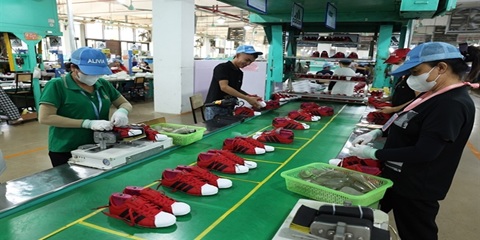
VIỆT NAM'S FOOTWEAR, BAG EXPORTS TO US TOP $8 BILLION IN EIGHT MONTHS
Việt Nam's exports of footwear and handbags to the US exceeded US$8 billion in the first eight months of 2026, as the US and EU remained the country's biggest markets despite sluggish growth in footwear shipments. Exports from Việt Nam's leather and footwear sector reached more than $2.45 billion in August, down 9 per cent from July but up 3 per cent from a year earlier, according to preliminary statistics.
VIETNAM ECONOMY INVESTMENT
LÂM ĐỒNG TARGETS DIGITAL ECONOMY TO ACCOUNT FOR 30 PER CENT OF GRDP BY 2030
Lâm Đồng Province aims to raise the digital economy’s contribution to around 30 per cent of its gross regional domestic product (GRDP) by 2030, as part of a five-year plan to develop digital economy and society issued recently. Under Plan No. 15358/KH-UBND, the province targets more than 60 per cent of small- and medium-sized enterprises (SMEs) to adopt digital technologies by 2030 while increasing the value of cashless payments to 30 times its GRDP.
Events Sponsors






















