Want to be in the loop?
subscribe to
our notification
Business News
BANKING SUCCESSES AMID MOUNTING PRESSURES
In 2024, the Vietnamese banking industry faced continuing headwinds with flexible policies on sectoral administration and inflation control and strong restructuring steps designed for the 2021-2025 phase.

Several monetary policy solutions have been adopted to overcome challenges and drive stronger economic growth than global and regional averages
Overcoming challenges in multitarget administration
According to Governor of the State Bank of Vietnam (SBV) Nguyen Thi Hong, in 2024, the world economy continued to confront many complicated and unpredictable fluctuations. Although global growth showed signs of recovery, the pace remained slow. World inflation subsided but rates remained higher than expected in many countries.
As a highly open economy, Vietnam is strongly affected by these ebbs and flows. The domestic economy markedly recovered but internal weaknesses still needed more time to be addressed. Especially for the banking sector, developments in property and corporate bond markets alongside public concerns over skyrocketing gold prices also exerted a strong impact on banking activities.
This posed a major challenge for the SBV in running monetary policies and banking administration. The SBV had to rein in inflation and support economic growth at the same time, while having to ensure banking safety, slash interest rates and stabilize exchange rates.
Governor Hong emphasized that, led by strong directions of the Government and the Prime Minister plus the close coordination with central and local agencies and the support of businesses and people, 2024 was a successful year of the banking system.
Accordingly, effective monetary policies helped control inflation at 3.63% in 2024. Monetary policy also managed solutions to tackle difficulties and supported higher economic growth than other countries in the world and the region. To facilitate credit institutions to provide credit for robust economic growth, from the beginning of the year, the SBV assigned the entire credit growth target of 15% in 2024. On August 28, 2024, the SBV actively issued a document stating revised credit growth target for 2024 to credit institutions. Credit growth was slow in the first months of the year, but gradually improved towards the end of the year, driven by economic recovery and stronger demand and capital absorption capacity. Annual credit growth reached 15.08% in 2024 compared to the previous year. This truly depicted flexible and effective credit growth management, aimed to promptly provide credit for the economy and support production and business development.
In the meantime, lending rates dipped 0.96% from the end of 2023. The exchange rate was stable despite strong volatility in the international market. International organizations highly appreciate Vietnam's monetary and banking policy management.
Regarding banking system restructuring, the central bank made important progress in handling ailing banks. In 2024, two out of four zero-dong banks were forced to be handed over, CB Bank to Vietcombank and OceanBank to MBBank in September.
The two remaining, GP Bank and Dong A Bank, are also being urged by the SBV for forced transfer in the near future. In addition, the central bank is finalizing a handling plan for SCB for submission to the Government. According to Governor Hong, this marks a very difficult and unprecedented process, requiring close coordination of relevant agencies.
Notably, the additional State investment in State-owned banks was aimed to meet mandatory minimum capital adequacy ratios and help them to carry out state policies and support the economy such as credit policies for agricultural and rural development, rate cut support policies and fiscal obligations. Accordingly, in 2024, the National Assembly (NA) allowed Vietcombank to raise its registered capital by VND20,695 billion by issuing stock dividends to state shareholders, sourced by the remaining accumulated profit to the end of 2018 and the remaining profit in 2021. Before Vietcombank, Agribank also completed hiking its registered capital, sourced from the State budget as per the previously approved policy. The SBV also said that it will submit the registered capital increase plans for BIDV and VietinBank to the National Assembly for consideration and approval. This move will enable State-owned banks to further edge up their competitiveness and fulfill their business targets and tasks.
In payment and digital transformation, in 2024, the banking industry reaffirmed its pioneering role and gained high appreciation from the National Steering Committee on Digital Transformation. In addition, other aspects of SBV's operations also achieved positive results.
Renewed financing solutions to support business and economic development
2025 is the year of acceleration and breakthrough to achieve the highest possible goals and targets in the 5-year Socioeconomic Development Plan from 2021 to 2025, said Standing Deputy Governor of the SBV Dao Minh Tu. Given headwinds and tailwinds intertwined, the SBV will closely follow the goals and orientations of the Party and Government to quickly complete reviewing and streamlining its apparatus and organizational structure; adopt credit solutions based on macroeconomic development, inflation and credit needs of the economy; direct credit institutions to grow credit safely and effectively, and channel credit into manufacturing and trading sectors. Specific credit programs and policies continue to be implemented for a number of sectors and fields under the direction of the Government and the Prime Minister.
At the same time, the SBV will also continue to improve the banking legal system, create a consistent and favorable legal basis for monetary policy management and banking operations; drastically adopt administrative reforms, improve the investment and business environment, and create favorable conditions for people and businesses; and enhance the credit rating and trust of people and businesses in banking mechanisms, policies and operations. In particular, the central bank will step up inspection, examination and supervision of the operations of credit institutions; probe potentially risky areas; detect and strictly handle risks, problems and violations committed by credit institutions so as to ensure security and discipline in monetary and banking markets.
According to Deputy Prime Minister Ho Duc Phoc, to successfully achieve the goals and tasks of the socioeconomic development plan in 2025, the banking sector needs to uphold its dynamism, innovation and creativity, and strive to outperform its assigned functions and tasks. For its part, the State Bank of Vietnam will continue to closely track world economic situations to prepare timely, appropriate and effective management solutions; coordinate monetary policy, fiscal policy and other policies to warrant the safety of the banking system, reduce bad debt, and provide capital to boost economic development.
The arrangement and streamlining of the SBV’s apparatus must ensure the normal operation of the banking system to serve socioeconomic development without interruption.
Particularly, the SBV and credit institutions will continue to effectively implement capital support solutions for businesses, especially small and medium-sized enterprises, in the spirit of "win-win"; strengthen security and ensure safety in banking payment; promote the development of digital banking, electronic payment and enhance customer convenience; implement renewed capital support measures for green development, green production, green consumption, clean energy; handle bad debts; and restructure weak banks.
What's more, the SBV will continue stable and reasonable monetary, interest rate and exchange rate policies, control inflation well, and appropriately manage credit to support development; reinforce anti-money laundering; improve the institutional system in the banking sector; and promptly apply measures to support customers exposed to risks due to natural disasters and epidemics. The central bank needs to see the Vietnam Bank for Social Policies as an important tool to ensure social security in order to have appropriate and effective investment measures.
Source: VCCI
Related News
VIETNAM ECONOMY INVESTMENT
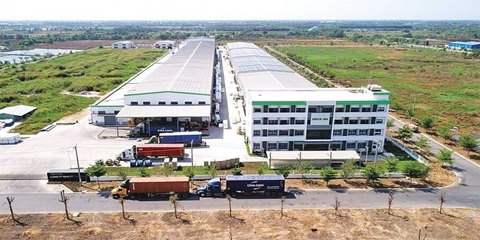
FOREIGN INVESTORS SEEKING A SYNCHRONISED MANUFACTURING ECOSYSTEM
Instead of focusing only on land costs and incentives as usual, foreign investors are seeking a synchronised manufacturing ecosystem, from stable power supply and logistics to shared infrastructure and the convenience of completing residence procedures for experts to serve their long-term investment in the country.
INFRASTRUCTURE / CONSTRUCTION / LOGISTIC / PORT
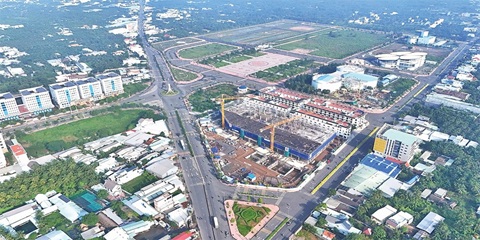
DONG THAP PROVINCE STEPS UP INDUSTRIAL EXPANSION AND INFRASTRUCTURE CONNECTIVITY
Accelerating public investment, strengthening inter-regional connectivity, and expanding industrial land are helping Dong Thap efficiently bolster competitiveness and drive economic growth. Following the 2025 merger of the former Dong Thap and Tien Giang provinces, the expanded Dong Thap province in the Mekong Delta faces mounting pressure to accelerate infrastructure development and strengthen connectivity among local economic zones, urban areas, industrial parks (IPs), and production centres.
PROPERTY / INDUSTRIAL ZONE
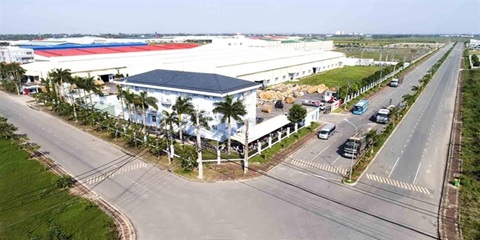
HCM CITY ATTRACTS US$5.7 BILLION INTO EXPORT PROCESSING AND INDUSTRIAL ZONES
HCM City attracted US$5.7 billion in domestic and foreign investment into its export processing and industrial zones during the first nine months of 2026. The figure exceeded the city's full-year target by 31 per cent, highlighting strong momentum in high-quality industrial investment under Resolution No.10-NQ/TW. Total investment reached 131 per cent of the 2026 target of $4.25 billion and represented a 29 per cent increase compared with the same period in 2025, according to the city's Export Processing and Industrial Zones Authority (HEPZA).

BANKING / FINANCE / INSURANCE / TAX
REMITTANCES TO HCM CITY RISE NEARLY 40% IN Q3
Remittances to HCM City reached more than US$2.83 billion in the third quarter of this year, up 39.5 per cent from the previous quarter and 3.6 per cent year-on-year. This was the first quarter showing positive annual growth this year, helping narrow the decline in remittance inflows over the first nine months. According to the State Bank of Vietnam (SBV)’s Regional Branch 2, remittances transferred to HCM City through credit institutions and economic organisations totalled $2.835 billion in Q3, an increase of more than $802 million from the previous quarter.

VIETNAM ECONOMY INVESTMENT
LOCALITIES REPORT BREAKTHROUGH RESULTS IN FDI IN FIRST NINE MONTHS
In Ho Chi Minh City, total registered capital reached $17.2 billion in the first nine months, up 4.2 times from the same period last year. The figure included more than $9.35 billion in newly registered capital and over $4.9 billion in additional capital for existing projects. Foreign investors also registered more than $2.9 billion through capital contributions and share purchases.

TECHNOLOGY
TECH SECTOR GROWTH OPENS UP OPPORTUNITIES FOR VIỆT NAM TO GO GLOBAL
The growth of the electronics, semiconductor and high-tech sectors worldwide is opening up a variety of opportunities for Vietnamese enterprises to integrate more deeply into the global supply chain. However, to become suppliers for these corporations, domestic enterprises must meet rigorous standards regarding quality, technology, productivity and order fulfilment capabilities.
Events Sponsors






















