Want to be in the loop?
subscribe to
our notification
Business News
BANANA EXPORTS POISED TO REACH $4 BILLION IN NEAR FUTURE
Bananas are becoming a rising star in Việt Nam’s fruit export sector, now covering approximately 161,000ha hectares out of the country’s more than 1.3 million hectares of fruit-growing land.
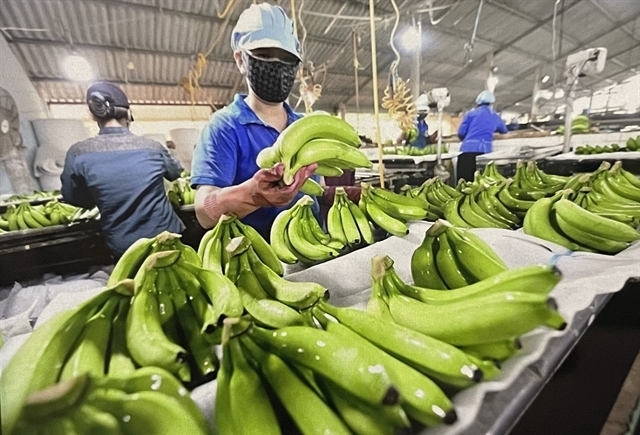
Packaging bananas for exports at a factory in Đồng Nai Province. — VNA/VNS Photo Hồng Nhung
HÀ NỘI — Việt Nam's banana industry has the potential to achieve an export value of US$4 billion, according to Phạm Quốc Liêm, Chairman of U&I Agriculture Corporation (Unifarm).
He noted that this figure would translate to a minimum production value of US$20,000 per hectare, nearly 10 times higher than the current average.
Bananas are becoming a rising star in Việt Nam’s fruit export sector, now covering approximately 161,000 hectares of the country’s more than 1.3 million hectares of fruit-growing land. In 2024 alone, banana exports brought in nearly $380 million, securing Việt Nam a spot among the world’s top 10 banana-exporting nations.
Vietnamese bananas are now present in major international markets, including China, South Korea, Japan, Australia, Canada, the EU and the US, demonstrating both their quality and competitiveness.
As Việt Nam’s durian exports, once a billion-dollar commodity, face headwinds in the first half of 2025 and dragon fruit export revenue falls below the $1 billion mark, the agricultural sector is urgently seeking new growth drivers.
With strong export potential and high adaptability to various climates, bananas are increasingly viewed as the next key pillar of Việt Nam’s fruit industry, experts have said.
In support of the ambitious goal of turning bananas into a major export commodity, Liêm told thoibaonganhang.vn that Unifarm will continue to uphold a unified and rigorous set of quality standards across its entire production chain - from seed selection and cultivation to harvesting and traceability.
Rather than adapting to each market’s certification standards, such as VietGAP or GlobalGAP, Unifarm is implementing a standardised, comprehensive process. This approach, Liêm said, ensures consistency, scalability, and long-term sustainability.
Unifarm’s vision, he added, extends beyond profitability. The company is committed to working alongside Việt Nam’s agricultural sector and farmers to build a globally recognised and reputable Vietnamese banana brand.
Restructuring for sustainable development
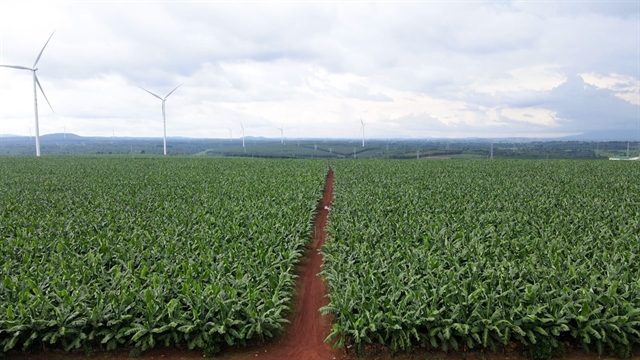
The banana cultivation area of the Hùng Sơn Company in Gia Lai Province. — VNA/VNS Photo Hoài Nam
Despite the growing potential of Việt Nam’s fruit sector, including bananas, Deputy Minister of Agriculture and Environment Trần Thanh Nam said comprehensive restructuring is essential to ensure its long-term sustainability.
Key priorities include the development of concentrated raw material zones linked with purchasing enterprises, improvements in crop varieties and farming techniques, and reductions in input costs.
Modernising processing facilities, strengthening logistics infrastructure, building strong brand identities, and promoting official export channels should also be included, he said.
Nam also highlighted the need to reorganise the entire value chain, underscoring the critical role of businesses and cooperatives, not only in production but also in shaping market strategy and advancing the processing industry.
Võ Quan Huy, dubbed the ‘Banana King’, director of Huy Long An Company, said that in an increasingly competitive fresh banana market, developing processed banana products and by-products is essential for Việt Nam to elevate its banana industry and reduce reliance on a few traditional export markets.
Currently, the majority of Vietnamese bananas are exported fresh, primarily to China, South Korea, Japan, and some Middle Eastern countries. Meanwhile, higher-value products such as dried bananas, banana chips, banana wine, banana cakes, and green banana powder are still produced only on a small and fragmented scale, Huy spoke to thoibaonganhang.vn.
To tap into this potential, Huy proposed policies prioritising the development of the banana processing industry, including support for businesses in accessing capital, technology, and both domestic and international markets. He also emphasised the need for research and technology transfer programs to fully utilise banana waste and by-products, currently often discarded, causing waste and environmental pollution.
Nguyễn Như Cương, deputy director of the Department of Science and Technology under the Ministry of Agriculture and Environment, said that effective management of banana varieties remains a critical issue for Việt Nam’s banana sector. Although bananas are classified among the country’s main crops, alongside rice, corn, coffee, oranges and grapefruit, the number of businesses registering for variety testing remains very low.
Cương said the ministry is currently considering limiting official variety registration to just two primary crops - rice and corn - while other crops, including bananas, would move to a self-declaration system. Under this model, businesses would bear full legal responsibility for the quality of their seed varieties.
This shift calls on banana producers to enhance their research and variety selection capabilities, while also increasing awareness of intellectual property rights related to seed production - a vital but often overlooked factor in the competitive market.— VNS
Source: VNS
Related News

BANKING / FINANCE / INSURANCE / TAX
REMITTANCES TO HCM CITY RISE NEARLY 40% IN Q3
Remittances to HCM City reached more than US$2.83 billion in the third quarter of this year, up 39.5 per cent from the previous quarter and 3.6 per cent year-on-year. This was the first quarter showing positive annual growth this year, helping narrow the decline in remittance inflows over the first nine months. According to the State Bank of Vietnam (SBV)’s Regional Branch 2, remittances transferred to HCM City through credit institutions and economic organisations totalled $2.835 billion in Q3, an increase of more than $802 million from the previous quarter.
TECHNOLOGY
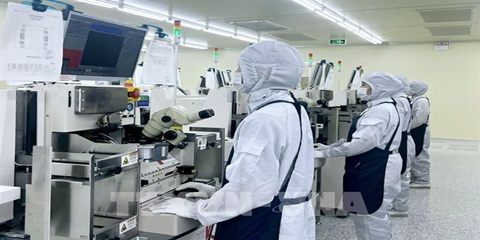
TECH SECTOR GROWTH OPENS UP OPPORTUNITIES FOR VIỆT NAM TO GO GLOBAL
The growth of the electronics, semiconductor and high-tech sectors worldwide is opening up a variety of opportunities for Vietnamese enterprises to integrate more deeply into the global supply chain. However, to become suppliers for these corporations, domestic enterprises must meet rigorous standards regarding quality, technology, productivity and order fulfilment capabilities.
VIETNAM ECONOMY INVESTMENT
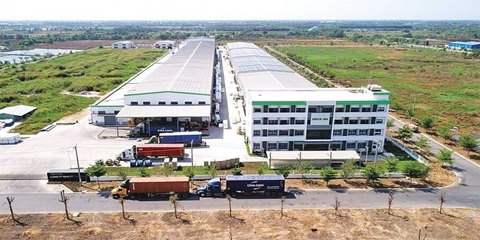
FOREIGN INVESTORS SEEKING A SYNCHRONISED MANUFACTURING ECOSYSTEM
Instead of focusing only on land costs and incentives as usual, foreign investors are seeking a synchronised manufacturing ecosystem, from stable power supply and logistics to shared infrastructure and the convenience of completing residence procedures for experts to serve their long-term investment in the country.
MEMBER CORNER / PROMOTIONS
SENTRYSAFE FHW40200 – PROTECT YOUR VALUABLES, ENJOY PEACE OF MIND!
Looking for a reliable solution to protect your important documents, cash, and valuables from fire and water damage? Genuine SENTRYSAFE - Reliable protection for your valuables and peace of mind! Contact Sen Wai Vietnam for more information and personalized product recommendations.
PROPERTY / INDUSTRIAL ZONE
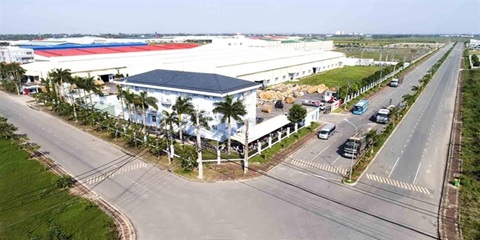
HCM CITY ATTRACTS US$5.7 BILLION INTO EXPORT PROCESSING AND INDUSTRIAL ZONES
HCM City attracted US$5.7 billion in domestic and foreign investment into its export processing and industrial zones during the first nine months of 2026. The figure exceeded the city's full-year target by 31 per cent, highlighting strong momentum in high-quality industrial investment under Resolution No.10-NQ/TW. Total investment reached 131 per cent of the 2026 target of $4.25 billion and represented a 29 per cent increase compared with the same period in 2025, according to the city's Export Processing and Industrial Zones Authority (HEPZA).
INFRASTRUCTURE / CONSTRUCTION / LOGISTIC / PORT
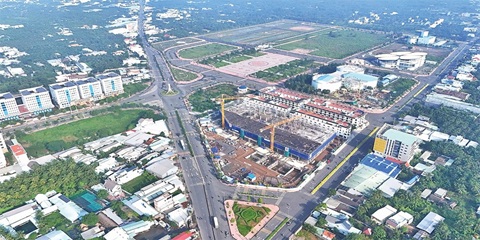
DONG THAP PROVINCE STEPS UP INDUSTRIAL EXPANSION AND INFRASTRUCTURE CONNECTIVITY
Accelerating public investment, strengthening inter-regional connectivity, and expanding industrial land are helping Dong Thap efficiently bolster competitiveness and drive economic growth. Following the 2025 merger of the former Dong Thap and Tien Giang provinces, the expanded Dong Thap province in the Mekong Delta faces mounting pressure to accelerate infrastructure development and strengthen connectivity among local economic zones, urban areas, industrial parks (IPs), and production centres.
Events Sponsors






















