Want to be in the loop?
subscribe to
our notification
Business News
AVIATION INDUSTRY FORECAST TO FACE A HARD YEAR IN 2021
Despite a recovery in the final months of this year, the aviation industry is forecast to face further difficulties in 2021.
The recent recovery was thanks to a complete restoration of domestic routes and the continued good performance of freight transport.
As of November, the total number of flights decreased by 23 per cent compared to the same period last year but strongly recovered from a decrease of 92 per cent in April.
The most effective route was HCM City - Ha Noi with 540 flights per week, reaching an occupancy rate of about 90 per cent.
However, commenting on the prospects of the aviation industry, Mirae Asset Securities Vietnam Co (MASVN) believes 2021 will still be a difficult year for the industry as it has no room for further recovery until international flights are reopened.
MASVN explained the current low fares are helping push up the demand for air travel on domestic routes. However, airlines can’t further cut the fares as they are too low. If airlines continue to reduce fares, it will be difficult to make profits.
"In the context of a fiercely competitive domestic market, we believe that the business situation of Vietnamese airlines will hardly improve further until the international routes are reopened," MASVN experts told vietnamfinance.vn.
With only domestic routes operating, the competition in the aviation industry next year will be fiercer. All aircraft are now converging on domestic routes to improve cash flow. Meanwhile, Vietjet Air has received 11 new aircraft, bringing the total number of aircraft in operation to 88. Bamboo Airways reduced two A320s but received four small aircraft E195, bringing its fleet to 26.
In addition, the aviation industry also has to compete against other transportation means like passenger cars and trains which have also applied fare discounts from 15 per cent to 50 per cent.
MASVN experts estimated it would take about four months to vaccinate 30 per cent of the US population and it was the minimum rate required to fight the COVID-19 pandemic. For other countries less developed than the US, the time to hit 30 per cent will be longer.
"International flights are likely to reopen as soon as the pandemic is repelled and the transport of international passengers will begin to recover gradually from that time. However, we expect the recovery rate will be slow, caused by isolation rules and restricted tourism demands in the wake of difficulties due to the pandemic,” the experts said.
Source: VIR
Related News

MEMBER CORNER / PROMOTIONS
AN ELECTRIFYING NIGHT WITH THE "QUEEN OF DANCE" THU MINH AT THE GRAND HO TRAM!
The stage at The Grand Ballroom is set to catch fire as Vietnam’s undisputed "Queen of Dance," Thu Minh, takes the spotlight. Renowned for her powerhouse vocals, magnetic stage presence, and sultry, high-energy performances, Thu Minh promises an evening of pure musical euphoria. The energy escalates with an exclusive appearance by special guest and The Voice champion, Vu Thao My.
HR / LABOUR/ EMPLOYMENT
HIGH-QUALITY HUMAN RESOURCES NEEDED TO ATTRACT NEW TECH INVESTMENT CAPITAL
Besides infrastructure, Việt Nam must also rapidly develop a highly skilled workforce to attract investment in AI, semiconductors and advanced manufacturing, experts have said. Don Lam, CEO and co-founder of investment management company VinaCapital, said that global technology investors were increasingly looking at the readiness of the entire ecosystem, with high-quality human resources a decisive factor.

HR / LABOUR/ EMPLOYMENT
HIRING OUTLOOK STRENGTHENS IN Q4 AS SKILLS SHORTAGES PERSIST
Hiring intentions among employers in Việt Nam strengthened in the fourth quarter, with 52 per cent of surveyed companies planning to increase headcount between October and December, according to a ManpowerGroup survey released this week. Việt Nam's hiring outlook was stronger than the Asia Pacific and Middle East (APME) regional average of 33 per cent and the global average of 29 per cent, ranking third in the region and 11th globally among 42 markets surveyed.

BANKING / FINANCE / INSURANCE / TAX
LARGE BANKS FORECAST TO GAIN HIGHER PROFITABILITY IN H2 2026
The return on average assets (ROAA) of the banking sector will likely remain stable at around 1.5 per cent in the second half of 2026, but profitability divergence among banks will increase, with large banks outperforming peers on stronger margins and diversified earnings, analysts forecast. In a recent report on the banking sector, analysts from the Vietnam Investors Service Rating said the sector’s ROAA rose by 10 basis points quarter-on-quarter to 1.51 per cent in the first half of this year, driven by net interest margin (NIM) improvements at some State-owned banks and large private banks.
GARMENT / TEXTILE
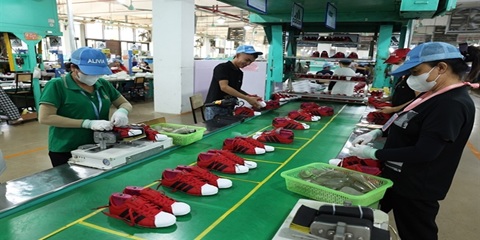
VIỆT NAM'S FOOTWEAR, BAG EXPORTS TO US TOP $8 BILLION IN EIGHT MONTHS
Việt Nam's exports of footwear and handbags to the US exceeded US$8 billion in the first eight months of 2026, as the US and EU remained the country's biggest markets despite sluggish growth in footwear shipments. Exports from Việt Nam's leather and footwear sector reached more than $2.45 billion in August, down 9 per cent from July but up 3 per cent from a year earlier, according to preliminary statistics.
VIETNAM ECONOMY INVESTMENT
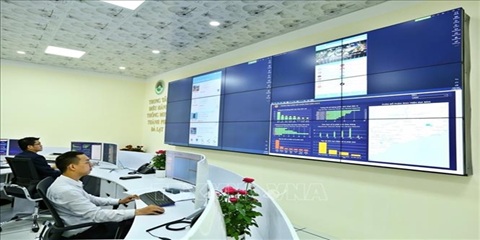
LÂM ĐỒNG TARGETS DIGITAL ECONOMY TO ACCOUNT FOR 30 PER CENT OF GRDP BY 2030
Lâm Đồng Province aims to raise the digital economy’s contribution to around 30 per cent of its gross regional domestic product (GRDP) by 2030, as part of a five-year plan to develop digital economy and society issued recently. Under Plan No. 15358/KH-UBND, the province targets more than 60 per cent of small- and medium-sized enterprises (SMEs) to adopt digital technologies by 2030 while increasing the value of cashless payments to 30 times its GRDP.
Events Sponsors






















