Want to be in the loop?
subscribe to
our notification
Business News
AVIATION ECONOMY SEEN AS CATALYST FOR BREAKTHROUGH GROWTH IN VIETNAM
Vietnam is embracing the concept of an aviation economy, expanding the role of airports from transport infrastructure into integrated economic ecosystems.
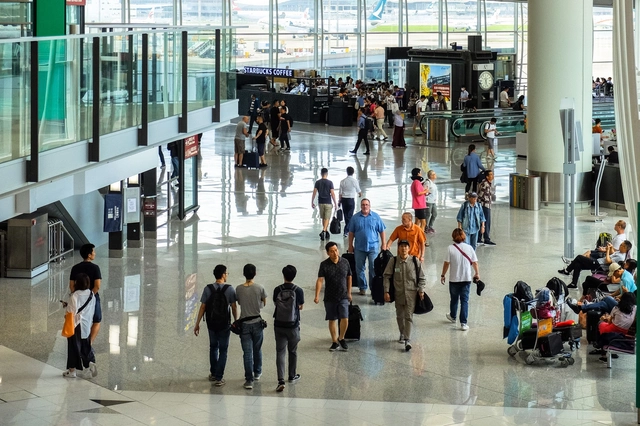
Aviation economy is emerging as a comprehensive ecosystem driving growth in Vietnam. Photo: Masteri
This shift is expected to drive growth by combining passenger and cargo transport with tourism, services, and urban development.
The Vietnamese government’s recent directives linked to major infrastructure projects, including the Gia Binh International Airport project in Bac Ninh Province, have highlighted the new approach.
Located at Vietnam's northern gateway, Gia Binh International Airport is positioned close to downtown Hanoi, with direct connections to major economic corridors as well as the country's logistics and industrial networks.
Unlike conventional airports, Gia Binh International Airport is designed around three core pillars, including high-standard aviation infrastructure serving as the operational hub; a logistics-commerce ecosystem that creates added value; and urban, service, and lifestyle developments designed to attract investment and skilled talent.
The project also reflects the growing role of the private sector in shaping new economic structures.
Masterise Aviation Infrastructure JSC, a member of Masterise Group, is the investor of Gia Binh International Airport, demonstrating the company's ability to undertake large-scale integrated infrastructure developments.
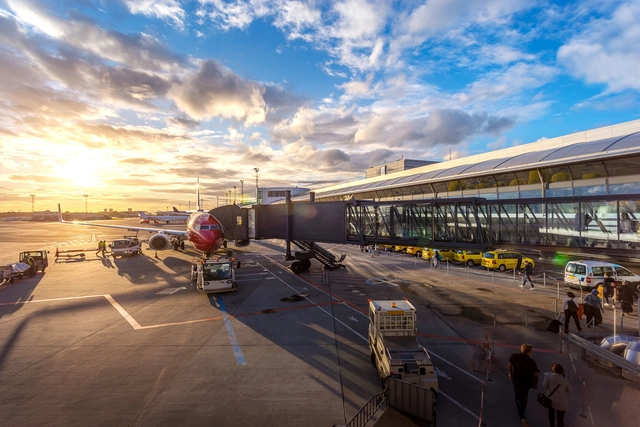
About 80 percent of international visitors to Vietnam arrive in the country by air. Photo: Masteri
According to the Civil Aviation Authority of Vietnam, about 80 percent of international visitors to Vietnam arrive in the country by air, while tourists make up roughly 70 percent of the total passenger traffic handled by domestic carriers.
In the first quarter, Vietnam welcomed 24.1 million visitors, up over 16 percent year on year, with international arrivals rising more than 19 percent to reach nearly 14 million.
Uong Viet Dung, head of the Civil Aviation Authority of Vietnam, recently emphasized the strategic link between aviation and tourism, calling it vital for socio-economic development and global integration.
Alongside passenger transport, air cargo is expanding rapidly, driven by e-commerce and high-tech exports that are turning aviation logistics into a fast-growing business segment.
Vietnam aims to handle 1.6 million metric tons of air cargo in 2026, up 15 percent versus last year.
Bui Doan Ne, vice-chairman of the Vietnam Aviation Business Association, said Vietnam still has significant room to expand its air cargo market.
He stressed that future airport and transport network planning should strengthen connectivity among different transport modes to improve cargo collection and distribution.
Studies show that every aviation job can create 24 indirect jobs in related sectors, and every US$1 invested in airports can generate more than $300 in economic value.
The airport city model, in which aviation services serve as the foundation for broader economic clusters, has been successfully implemented at airports such as Frankfurt in Germany, London Heathrow in the United Kingdom, and Changi in Singapore.
By adopting an industrial ecosystem approach, next-generation airports maximize operational efficiency while stimulating regional economic growth.
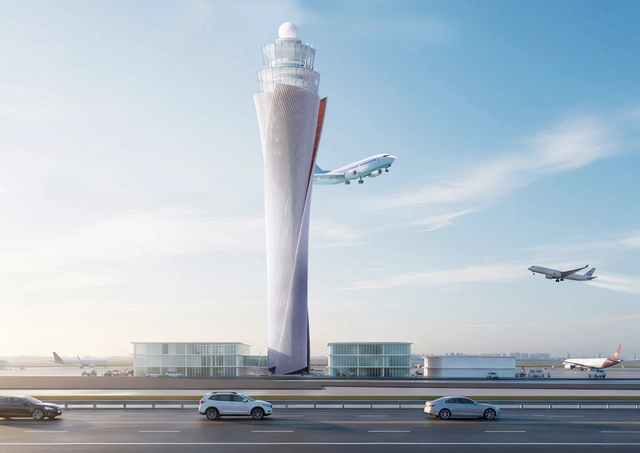
Airports expand non-aviation revenues through retail, real estate, and parking services. Photo: Masteri
Many airports worldwide are now embracing this model, developing diversified industrial ecosystems spanning infrastructure, logistics and high-margin commercial services that generate substantially greater economic value than passenger transport alone.
American management consulting firm McKinsey & Company said airports are creating sustainable new revenue streams by transforming from static infrastructure assets into smart commercial and logistics ecosystems.
The company added that airports can boost earnings before interest, tax, depreciation, and amortization (EBITDA) by 6-8 percent through digital transformation, AI, and automation.
Non-aviation revenues such as retail and property development also provide higher margins, while airports act as magnets for foreign investment and cross-border e-commerce.
Airports Council International (ACI World) echoed this view, saying that non-aviation revenues have become an increasingly important contributor to airport financial performance during the industry's recovery, thanks to their higher profit margins.
Source: Tuổi Trẻ News
Related News

BANKING / FINANCE / INSURANCE / TAX
REMITTANCES TO HCM CITY RISE NEARLY 40% IN Q3
Remittances to HCM City reached more than US$2.83 billion in the third quarter of this year, up 39.5 per cent from the previous quarter and 3.6 per cent year-on-year. This was the first quarter showing positive annual growth this year, helping narrow the decline in remittance inflows over the first nine months. According to the State Bank of Vietnam (SBV)’s Regional Branch 2, remittances transferred to HCM City through credit institutions and economic organisations totalled $2.835 billion in Q3, an increase of more than $802 million from the previous quarter.
TECHNOLOGY
TECH SECTOR GROWTH OPENS UP OPPORTUNITIES FOR VIỆT NAM TO GO GLOBAL
The growth of the electronics, semiconductor and high-tech sectors worldwide is opening up a variety of opportunities for Vietnamese enterprises to integrate more deeply into the global supply chain. However, to become suppliers for these corporations, domestic enterprises must meet rigorous standards regarding quality, technology, productivity and order fulfilment capabilities.
VIETNAM ECONOMY INVESTMENT
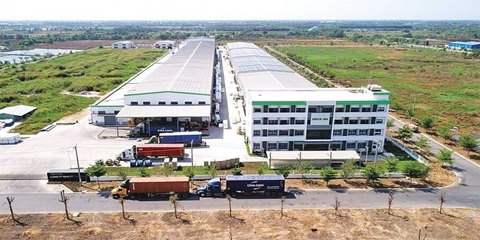
FOREIGN INVESTORS SEEKING A SYNCHRONISED MANUFACTURING ECOSYSTEM
Instead of focusing only on land costs and incentives as usual, foreign investors are seeking a synchronised manufacturing ecosystem, from stable power supply and logistics to shared infrastructure and the convenience of completing residence procedures for experts to serve their long-term investment in the country.
MEMBER CORNER / PROMOTIONS
SENTRYSAFE FHW40200 – PROTECT YOUR VALUABLES, ENJOY PEACE OF MIND!
Looking for a reliable solution to protect your important documents, cash, and valuables from fire and water damage? Genuine SENTRYSAFE - Reliable protection for your valuables and peace of mind! Contact Sen Wai Vietnam for more information and personalized product recommendations.
PROPERTY / INDUSTRIAL ZONE
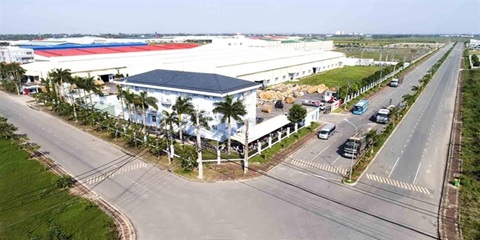
HCM CITY ATTRACTS US$5.7 BILLION INTO EXPORT PROCESSING AND INDUSTRIAL ZONES
HCM City attracted US$5.7 billion in domestic and foreign investment into its export processing and industrial zones during the first nine months of 2026. The figure exceeded the city's full-year target by 31 per cent, highlighting strong momentum in high-quality industrial investment under Resolution No.10-NQ/TW. Total investment reached 131 per cent of the 2026 target of $4.25 billion and represented a 29 per cent increase compared with the same period in 2025, according to the city's Export Processing and Industrial Zones Authority (HEPZA).
INFRASTRUCTURE / CONSTRUCTION / LOGISTIC / PORT
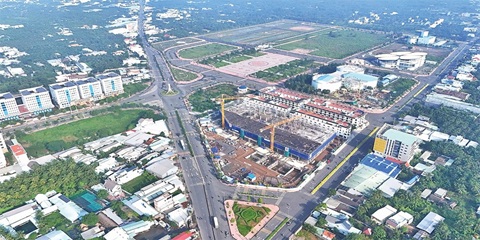
DONG THAP PROVINCE STEPS UP INDUSTRIAL EXPANSION AND INFRASTRUCTURE CONNECTIVITY
Accelerating public investment, strengthening inter-regional connectivity, and expanding industrial land are helping Dong Thap efficiently bolster competitiveness and drive economic growth. Following the 2025 merger of the former Dong Thap and Tien Giang provinces, the expanded Dong Thap province in the Mekong Delta faces mounting pressure to accelerate infrastructure development and strengthen connectivity among local economic zones, urban areas, industrial parks (IPs), and production centres.
Events Sponsors






















