Want to be in the loop?
subscribe to
our notification
Business News
APPLYING TECHNOLOGY FOR ECONOMIC TRANSFORMATION
Having completed its new rural development program, Hanoi is shifting its focus toward improving development quality and building smart, sustainable rural areas. The transformation of Dong La orchid-growing village in An Khanh, a western commune of Hanoi, shows how digital technology is becoming a driver of production, market expansion, and higher incomes for local residents.
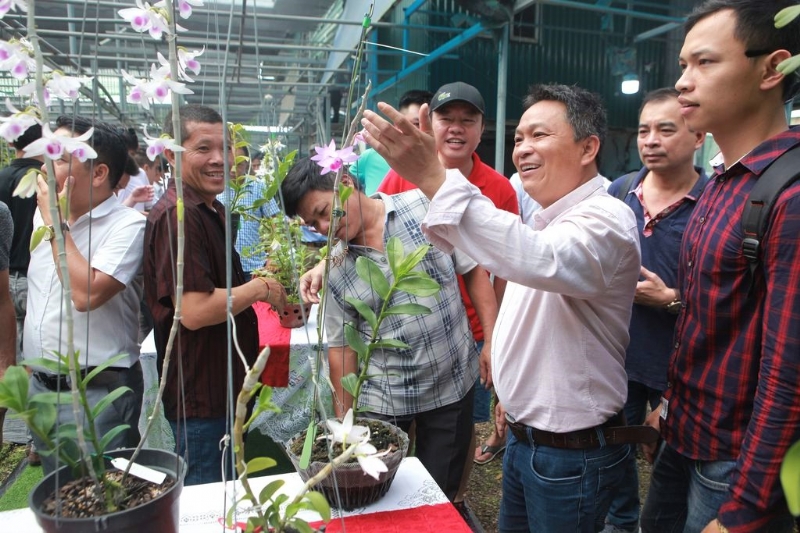
Dong La orchid-growing village in the western suburbs of Hanoi generates high economic value through high-tech cultivation
Elevating Rural Quality Standards
After more than a decade of implementing the National Target Program on New Rural Development, the rural areas on the outskirts of Hanoi have changed significantly. Transport networks, schools, healthcare facilities, and cultural institutions have received investment, while landscapes and living conditions have steadily improved. In June 2025, the Prime Minister recognized Hanoi as having completed its new rural development program for 2024.
This achievement serves as an important foundation rather than a final endpoint. According to Nguyen Dinh Hoa, Deputy Director of the Hanoi Department of Agriculture and Environment, Hanoi is one of 13 provinces and cities to have completed provincial-level new rural development. It also ranks among the country's leaders in the One Commune One Product (OCOP) program, with more than 3,300 evaluated and recognized products. This provides a valuable foundation for the city to develop its rural economy by generating value from distinctive local products, traditional craft villages, and local knowledge.
For the 2026-2030 period, Hanoi aims to build a modern rural economy grounded in science, technology, innovation, and digital transformation, while strengthening linkages from production and processing to consumption. According to Ngo Van Ngon, Deputy Chief of the Hanoi Coordination Office for National Target Programs, the city aims for 80% of its communes to meet new rural development standards and 20% to meet modern new rural development standards by 2030, while steadily raising rural incomes.
The transformation of the Dong La orchid-growing village in An Khanh Commune serves as a concrete example of this effort to improve the quality of new rural development.
Technology Opens New Markets
Dong La is known as one of Hanoi's long-established orchid-growing areas. Building on the experience of several local households, orchid farming gradually developed into a livelihood, creating jobs and generating income for many families. Small gardens expanded into large-scale growing operations, turning orchids into a distinctive local product.
However, orchid cultivation has also experienced significant ups and downs. Market fluctuations have prompted Dong La growers to return to the underlying value of their products. To adapt, they have embraced digital technology as a tool to change how they reach customers and reduce their reliance on traditional sales channels.
In late August 2026, a livestream titled "Orchids - Essence of Color, Spreading Beauty" was held at an orchid garden in Dong Nhan Village, An Khanh Commune, with the broadcast conducted directly from the growing facility. Bui Thu Huong, Vice Chairwoman of the An Khanh Commune People's Committee, personally participated in introducing the products. Viewers could observe individual orchid plants, learn about different varieties, and discuss cultivation techniques, pricing, packaging, and transportation directly with growers.
This event illustrates how support for rural economic development is evolving. Rather than limiting their role to infrastructure investment or technical training, local authorities are working alongside residents to promote local products, enhance digital skills, and expand markets. According to Ta Cong Hop, Deputy Director of the An Khanh Commune General Services Center, online platforms allow growers to introduce their products to customers in different localities directly from their growing sites.
Technology is also being integrated directly into production. Some growers have invested in automated irrigation systems, smart growing structures, and mobile-controlled equipment. Standardizing production processes further enhances product consistency and reduces risks associated with weather.
However, digital transformation cannot be measured merely by counting livestream sessions or installed devices. Technology must help residents reduce costs, improve quality, expand markets, and increase incomes. To achieve this, growers need to standardize product information, clearly display prices and transportation conditions, and improve the management of orders, payments, packaging, and customer service.
Making the Rural Economy a Driver of Development
The Dong La experience shows that new rural development at this stage must focus on economic development and strengthening residents' capabilities.
For the Dong La orchid industry to develop sustainably, the local authorities must build an integrated value chain rather than supporting individual households in isolation. Clubs, cooperatives, or cooperative groups can connect growers, establish quality standards, organize training, share market information, and protect a common brand. By standardizing products, each grower not only sells an individual plant but also helps build the reputation of the entire growing area.
Local authorities and specialized agencies must continue assisting residents with digital skills, brand development, intellectual property protection, product traceability, and access to e-commerce channels. Training programs should directly address practical needs, ranging from product presentation and order management to payments, transportation, and customer feedback.
The Dong La story demonstrates that modern new rural development does not mean losing rural identity. Technology cannot replace the experience of orchid growers, but it can help standardize processes, improve quality, and bring local products to broader markets.
This special section is presented in collaboration with the Hanoi Coordination Office for National Target Programs
Source: VCCI
Related News
VIETNAM ECONOMY INVESTMENT
FOREIGN INVESTORS SEEKING A SYNCHRONISED MANUFACTURING ECOSYSTEM
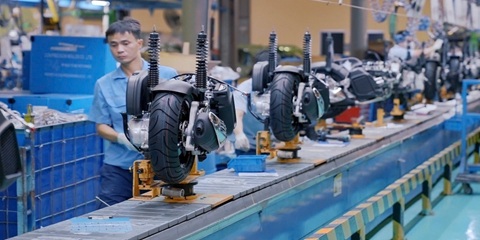
Instead of focusing only on land costs and incentives as usual, foreign investors are seeking a synchronised manufacturing ecosystem, from stable power supply and logistics to shared infrastructure and the convenience of completing residence procedures for experts to serve their long-term investment in the country.
INFRASTRUCTURE / CONSTRUCTION / LOGISTIC / PORT
DONG THAP PROVINCE STEPS UP INDUSTRIAL EXPANSION AND INFRASTRUCTURE CONNECTIVITY
Accelerating public investment, strengthening inter-regional connectivity, and expanding industrial land are helping Dong Thap efficiently bolster competitiveness and drive economic growth. Following the 2025 merger of the former Dong Thap and Tien Giang provinces, the expanded Dong Thap province in the Mekong Delta faces mounting pressure to accelerate infrastructure development and strengthen connectivity among local economic zones, urban areas, industrial parks (IPs), and production centres.
PROPERTY / INDUSTRIAL ZONE
HCM CITY ATTRACTS US$5.7 BILLION INTO EXPORT PROCESSING AND INDUSTRIAL ZONES
HCM City attracted US$5.7 billion in domestic and foreign investment into its export processing and industrial zones during the first nine months of 2026. The figure exceeded the city's full-year target by 31 per cent, highlighting strong momentum in high-quality industrial investment under Resolution No.10-NQ/TW. Total investment reached 131 per cent of the 2026 target of $4.25 billion and represented a 29 per cent increase compared with the same period in 2025, according to the city's Export Processing and Industrial Zones Authority (HEPZA).

BANKING / FINANCE / INSURANCE / TAX
REMITTANCES TO HCM CITY RISE NEARLY 40% IN Q3
Remittances to HCM City reached more than US$2.83 billion in the third quarter of this year, up 39.5 per cent from the previous quarter and 3.6 per cent year-on-year. This was the first quarter showing positive annual growth this year, helping narrow the decline in remittance inflows over the first nine months. According to the State Bank of Vietnam (SBV)’s Regional Branch 2, remittances transferred to HCM City through credit institutions and economic organisations totalled $2.835 billion in Q3, an increase of more than $802 million from the previous quarter.
VIETNAM ECONOMY INVESTMENT
LOCALITIES REPORT BREAKTHROUGH RESULTS IN FDI IN FIRST NINE MONTHS
In Ho Chi Minh City, total registered capital reached $17.2 billion in the first nine months, up 4.2 times from the same period last year. The figure included more than $9.35 billion in newly registered capital and over $4.9 billion in additional capital for existing projects. Foreign investors also registered more than $2.9 billion through capital contributions and share purchases.
TECHNOLOGY
TECH SECTOR GROWTH OPENS UP OPPORTUNITIES FOR VIỆT NAM TO GO GLOBAL
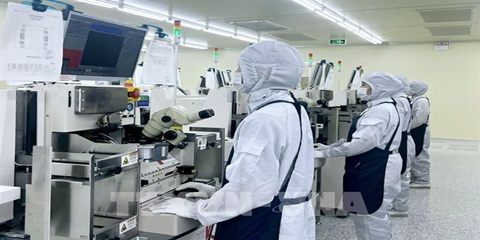
The growth of the electronics, semiconductor and high-tech sectors worldwide is opening up a variety of opportunities for Vietnamese enterprises to integrate more deeply into the global supply chain. However, to become suppliers for these corporations, domestic enterprises must meet rigorous standards regarding quality, technology, productivity and order fulfilment capabilities.
Events Sponsors






















