Want to be in the loop?
subscribe to
our notification
Business News
APPAREL EXPORTS DOWN, LEATHER FOOTWEAR SHIPMENTS UP
While the country saw a year-on-year decline of 20% in textile and garment export orders in the January-November period, the shipment of leather footwear edged up 8%-10% during the 11-month period.
Although the revenue from apparel exports over the period amounted to an estimated US$29.9 billion, up 7.8% year-on-year, the number of orders shipped to foreign countries tumbled, equal to 80% of the figure seen in the same period last year, according to a report by the Ministry of Industry and Trade.
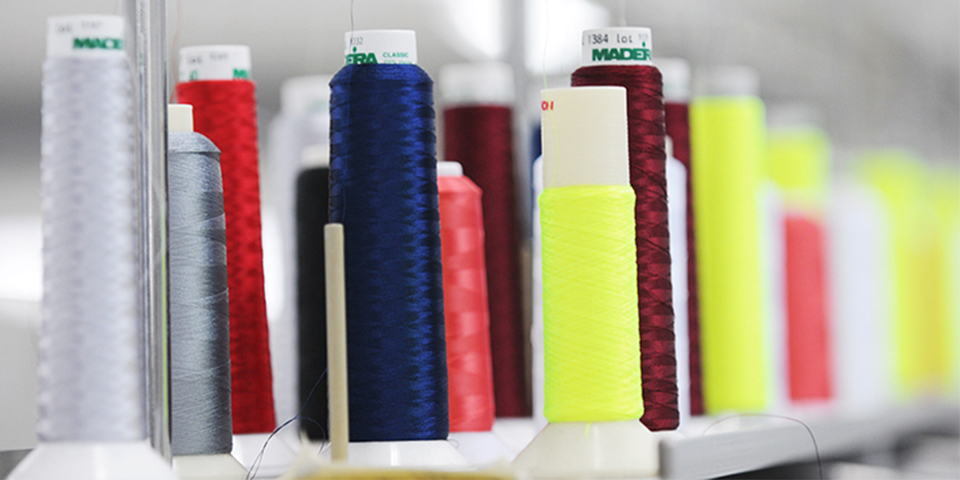
In the past, at the end of the fourth quarter, local apparel exporters received many orders for the following year, but this year, the number of orders was modest.
Several firms have yet to secure long-term export orders and have received only a few short-term orders.
Besides this, local apparel firms are facing harsh competition with some large rivals from China, India and Bangladesh.
The fall in the number of orders also resulted from the rising movement of orders to African countries emerging in the sector, piling pressure on Vietnam’s apparel industry.
Apart from this, China tends to place its orders in countries that offer preferential tariffs, such as Bangladesh and Cambodia, instead of Vietnam.
The Ministry of Industry and Trade suggested local apparel firms proactively seek orders to ensure their production during the weeks leading up to the end of the year. Aside from enhancing their connection with customers to form a close production chain, the apparel firms must follow regulations on labeling and origin to attract more orders in the coming days.
Unlike the apparel sector, which is facing a slowdown due to the decline in orders, Vietnam’s leather and footwear exports are on the rise, with multiple positive signs for the rest of the year.
The footwear sector has successfully expanded its importing markets, while maintaining its stable growth in some major markets, including Europe, the United States, Japan and South Korea.
In the January-November period, most local footwear firms saw the number of orders rise by 10% year-on-year. Stable prices of materials contributed to the hike.
The United States’ recent removal of preferential policies for footwear exports from China and India has created opportunities for Vietnamese footwear exporters.
China is continuing to reduce its focus on the leather-footwear industry and boost high-tech industries instead, so orders of footwear and handbags will be transferred from China to Vietnam.
Vietnam earned US$16.5 billion from footwear exports over the 11-month period, a year-on-year rise of 12.5%. Leather and footwear production in 2019 is expected to pick up by 10% against last year.
Source: The Saigon Times
Related News
VIETNAM ECONOMY INVESTMENT
FOREIGN INVESTORS SEEKING A SYNCHRONISED MANUFACTURING ECOSYSTEM
Instead of focusing only on land costs and incentives as usual, foreign investors are seeking a synchronised manufacturing ecosystem, from stable power supply and logistics to shared infrastructure and the convenience of completing residence procedures for experts to serve their long-term investment in the country.
INFRASTRUCTURE / CONSTRUCTION / LOGISTIC / PORT
DONG THAP PROVINCE STEPS UP INDUSTRIAL EXPANSION AND INFRASTRUCTURE CONNECTIVITY
Accelerating public investment, strengthening inter-regional connectivity, and expanding industrial land are helping Dong Thap efficiently bolster competitiveness and drive economic growth. Following the 2025 merger of the former Dong Thap and Tien Giang provinces, the expanded Dong Thap province in the Mekong Delta faces mounting pressure to accelerate infrastructure development and strengthen connectivity among local economic zones, urban areas, industrial parks (IPs), and production centres.
PROPERTY / INDUSTRIAL ZONE
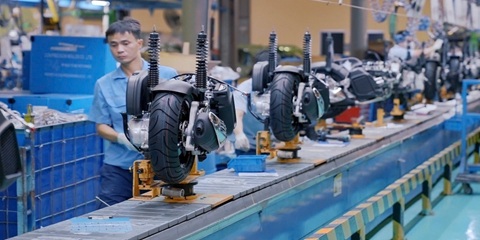
HCM CITY ATTRACTS US$5.7 BILLION INTO EXPORT PROCESSING AND INDUSTRIAL ZONES
HCM City attracted US$5.7 billion in domestic and foreign investment into its export processing and industrial zones during the first nine months of 2026. The figure exceeded the city's full-year target by 31 per cent, highlighting strong momentum in high-quality industrial investment under Resolution No.10-NQ/TW. Total investment reached 131 per cent of the 2026 target of $4.25 billion and represented a 29 per cent increase compared with the same period in 2025, according to the city's Export Processing and Industrial Zones Authority (HEPZA).
BANKING / FINANCE / INSURANCE / TAX
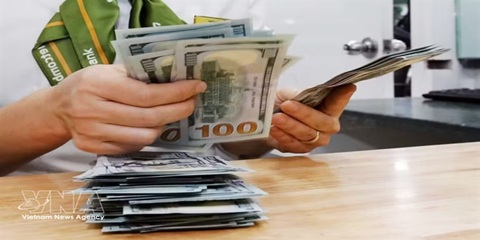
REMITTANCES TO HCM CITY RISE NEARLY 40% IN Q3
Remittances to HCM City reached more than US$2.83 billion in the third quarter of this year, up 39.5 per cent from the previous quarter and 3.6 per cent year-on-year. This was the first quarter showing positive annual growth this year, helping narrow the decline in remittance inflows over the first nine months. According to the State Bank of Vietnam (SBV)’s Regional Branch 2, remittances transferred to HCM City through credit institutions and economic organisations totalled $2.835 billion in Q3, an increase of more than $802 million from the previous quarter.
VIETNAM ECONOMY INVESTMENT
LOCALITIES REPORT BREAKTHROUGH RESULTS IN FDI IN FIRST NINE MONTHS
In Ho Chi Minh City, total registered capital reached $17.2 billion in the first nine months, up 4.2 times from the same period last year. The figure included more than $9.35 billion in newly registered capital and over $4.9 billion in additional capital for existing projects. Foreign investors also registered more than $2.9 billion through capital contributions and share purchases.
TECHNOLOGY
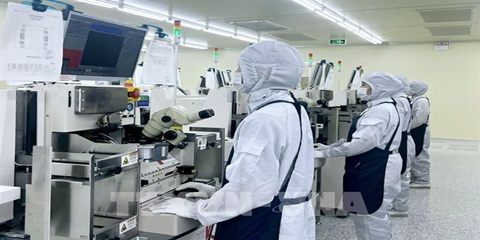
TECH SECTOR GROWTH OPENS UP OPPORTUNITIES FOR VIỆT NAM TO GO GLOBAL
The growth of the electronics, semiconductor and high-tech sectors worldwide is opening up a variety of opportunities for Vietnamese enterprises to integrate more deeply into the global supply chain. However, to become suppliers for these corporations, domestic enterprises must meet rigorous standards regarding quality, technology, productivity and order fulfilment capabilities.
Events Sponsors






















