Want to be in the loop?
subscribe to
our notification
Business News
AI BECOMES LOGISTICS GAME-CHANGER
Vietnam’s logistics sector must contend with the application of AI and other critical factors shaping the industry’s future.
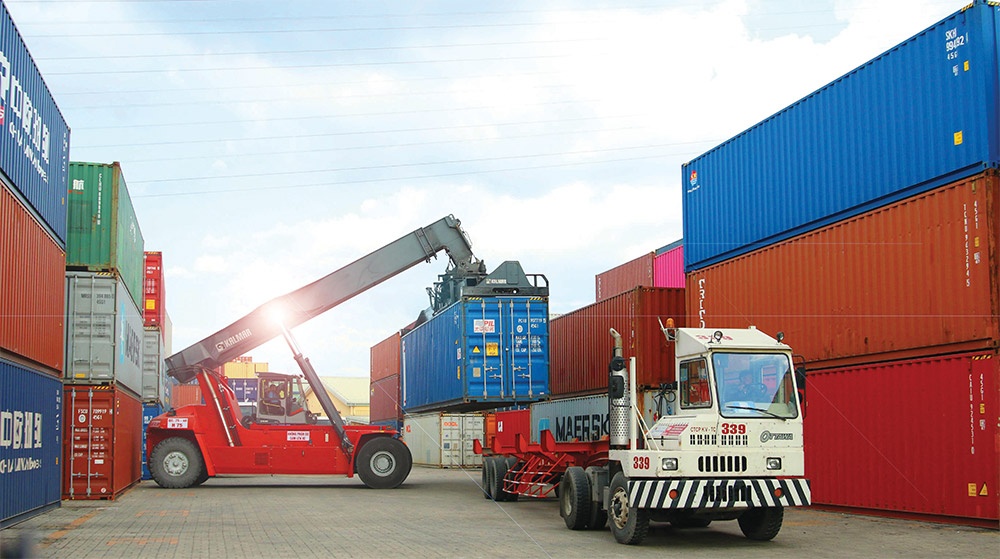
Various operational aspects are being transformed with tech upgrades such as AI, photo Le Toan
At a seminar on sustainable development of logistics in the 4.0 era in Hanoi at the end of April, organised by the Ministry of Industry and Trade (MoIT), Vu Khac Anh, director of cross-border e-commerce company Pervasel, said that his business currently processes around one million orders in the US market.
“With a global operational scale, technology is indispensable in all aspects of management. From human resource management, advertising, logistics, to customer service, everything must be digitised,” explained Anh.
Currently, Pervasel uses AI to operate 24/7 automated response systems in multiple countries, significantly reducing labour costs. At the same time, it is training AI to forecast fashion trends in different countries, allowing the company to develop products tailored to each market, Anh added.
“The utilisation of big data and AI not only shortens product development time for Pervasel, but also significantly enhances operational efficiency and responsiveness to market fluctuations,” Anh said.
Dr. Nguyen Tien Minh, an expert in logistics, told VIR that using AI is a necessity for the logistics industry. It enables businesses to forecast demand, optimise warehouse operations, and coordinate transportation more efficiently, he said.
“However, implementing it requires substantial investment and a digitally skilled workforce, something many small and medium-sized enterprises still lack,” Minh explained. “The second half of the year is a pivotal time for Vietnam’s logistics sector to transform. Businesses must act quickly, invest in technology and people, and form strategic partnerships to overcome challenges and seize growth opportunities.”
Dr. Nguyen Thi Xuan Hoa, deputy head of Research at the Vietnam Association for Logistics Manpower Development, believes that AI is an effective tool when used properly.
“In our research, we use AI tools like Google Notebook to process and analyse big data. When used correctly, AI can significantly boost productivity and accuracy,” Hoa noted. “However, as powerful as it is, it still requires human oversight, leadership, and validation.”
Meanwhile Tran Thanh Hai, who is deputy director of the Foreign Trade Agency under the MoIT, said that the logistics industry must transform and capitalise on economic recovery and tech advancement.
“However, for sustainable development, businesses need to proactively adapt, invest in technology and human resources, and collaborate closely with partners to overcome challenges and capture opportunities,” Hai said.
To encourage the application of AI in the logistics industry, Hai emphasised that logistics enterprises need to develop a digital transformation strategy, clearly define digital transformation goals, and establish a roadmap tailored to their own operations.
“Within this strategy, businesses must identify specific technological applications, including AI, across various aspects of their operations,” he added.
In addition, the choice of a technology application model within the enterprise should be carefully researched. “Enterprises should foster strong internal connections within the logistics sector and seek advice from digital transformation service providers to help determine the most suitable approach,” Hai said.
Finally, businesses must ensure that the transition to technology-based operations is carried out steadily, following a roadmap that aligns with each company’s actual capabilities.
“Companies should also clearly define the objectives of software applications, with a primary focus on enhancing customer experience, ensuring accurate, real-time information retrieval, and supporting internal management operations,” he added.
Vietnam’s logistics market in the second half of 2025 is expected to continue its strong growth. According to the MoIT, the country currently has over 40,000 enterprises operating in the logistics sector, with an average annual growth rate of 12–14 per cent. The market size has surpassed $60 billion, making logistics a key pillar in Vietnam’s integration and economic development strategy.
Source: VIR
Related News

MEMBER CORNER / PROMOTIONS
AN ELECTRIFYING NIGHT WITH THE "QUEEN OF DANCE" THU MINH AT THE GRAND HO TRAM!
The stage at The Grand Ballroom is set to catch fire as Vietnam’s undisputed "Queen of Dance," Thu Minh, takes the spotlight. Renowned for her powerhouse vocals, magnetic stage presence, and sultry, high-energy performances, Thu Minh promises an evening of pure musical euphoria. The energy escalates with an exclusive appearance by special guest and The Voice champion, Vu Thao My.

HR / LABOUR/ EMPLOYMENT
HIGH-QUALITY HUMAN RESOURCES NEEDED TO ATTRACT NEW TECH INVESTMENT CAPITAL
Besides infrastructure, Việt Nam must also rapidly develop a highly skilled workforce to attract investment in AI, semiconductors and advanced manufacturing, experts have said. Don Lam, CEO and co-founder of investment management company VinaCapital, said that global technology investors were increasingly looking at the readiness of the entire ecosystem, with high-quality human resources a decisive factor.

HR / LABOUR/ EMPLOYMENT
HIRING OUTLOOK STRENGTHENS IN Q4 AS SKILLS SHORTAGES PERSIST
Hiring intentions among employers in Việt Nam strengthened in the fourth quarter, with 52 per cent of surveyed companies planning to increase headcount between October and December, according to a ManpowerGroup survey released this week. Việt Nam's hiring outlook was stronger than the Asia Pacific and Middle East (APME) regional average of 33 per cent and the global average of 29 per cent, ranking third in the region and 11th globally among 42 markets surveyed.

BANKING / FINANCE / INSURANCE / TAX
LARGE BANKS FORECAST TO GAIN HIGHER PROFITABILITY IN H2 2026
The return on average assets (ROAA) of the banking sector will likely remain stable at around 1.5 per cent in the second half of 2026, but profitability divergence among banks will increase, with large banks outperforming peers on stronger margins and diversified earnings, analysts forecast. In a recent report on the banking sector, analysts from the Vietnam Investors Service Rating said the sector’s ROAA rose by 10 basis points quarter-on-quarter to 1.51 per cent in the first half of this year, driven by net interest margin (NIM) improvements at some State-owned banks and large private banks.
GARMENT / TEXTILE
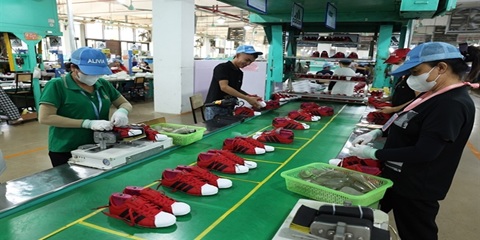
VIỆT NAM'S FOOTWEAR, BAG EXPORTS TO US TOP $8 BILLION IN EIGHT MONTHS
Việt Nam's exports of footwear and handbags to the US exceeded US$8 billion in the first eight months of 2026, as the US and EU remained the country's biggest markets despite sluggish growth in footwear shipments. Exports from Việt Nam's leather and footwear sector reached more than $2.45 billion in August, down 9 per cent from July but up 3 per cent from a year earlier, according to preliminary statistics.
VIETNAM ECONOMY INVESTMENT
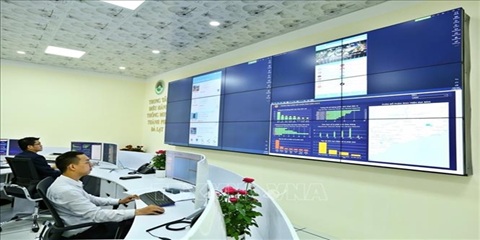
LÂM ĐỒNG TARGETS DIGITAL ECONOMY TO ACCOUNT FOR 30 PER CENT OF GRDP BY 2030
Lâm Đồng Province aims to raise the digital economy’s contribution to around 30 per cent of its gross regional domestic product (GRDP) by 2030, as part of a five-year plan to develop digital economy and society issued recently. Under Plan No. 15358/KH-UBND, the province targets more than 60 per cent of small- and medium-sized enterprises (SMEs) to adopt digital technologies by 2030 while increasing the value of cashless payments to 30 times its GRDP.
Events Sponsors






















