Want to be in the loop?
subscribe to
our notification
Business News
AGRICULTURAL LAND TAX EXEMPTION MOTIVATES BUSINESS
Extending exemptions for agricultural land use tax is expected to create motivation for businesses to expand and renovate their investments in Vietnam.
The government has proposed that agricultural land use continue to be exempted from taxation through to 2030, according to a draft resolution on the issue submitted in mid-May to the National Assembly (NA).
The draft resolution, compiled by the Ministry of Finance (MoF), follows positive results of the exemption scheme having been applied since 2021.
“The continued exemption of agricultural land use tax until the end of 2030 will not reduce revenue, as this policy is already being implemented in practice. With the proposal to extend the exemption until the end of 2030, as per current regulations, the exempted agricultural land use tax is estimated at VND7.5 trillion ($300 million) per year,” the MoF stated in the draft.
The MoF’s proposal in the draft has received support from agricultural enterprises and NA deputies.
If the policy is approved, agricultural enterprises will benefit from reduced production costs and enhanced competitiveness, a representative of a domestic dairy firm in Vietnam told VIR.
“For large corporations with projects typically involving land areas ranging from hundreds to thousands of hectares, this exemption will help them reduce financial burdens, particularly those operating in crop cultivation, livestock farming, aquaculture, and agricultural product processing,” he said. “The exempted tax amount will enable enterprises to invest in expanding production, improving infrastructure, or adopting new technologies.”
Furthermore, the mechanism will encourage investment in agriculture, particularly in the production of high-quality agricultural products and high-tech agriculture, the representative said.
According to statistics from the MoF, the number of businesses investing in agriculture accounts for only about 5.5 per cent of the total number of enterprises nationwide in 2024, of which approximately 96 per cent were micro- and small enterprises. Compared to the potential and proportion of the agriculture sector in the economy, the current number of enterprises is minimal, with limited scale, and does not meet the requirements for agricultural development in the context of international economic integration.
“To contribute to achieving the goal of increasing the number of businesses engaged in agricultural investment by 2030 and accelerating the growth rate of agricultural, forestry, and aquatic product output by about 3 per cent per year, the MoF proposes to implement the agricultural land use tax exemption policy for organisations directly using agricultural land for agricultural production. This is one of the effective support solutions,” Minister of Finance Nguyen Van Thang said.
The total amount of agricultural land use tax exempted and reduced over the past 20 years has tended to increase gradually, with an average of about $131 million per year in 2003-2010, rising to $252 million per year in 2011-2016, reaching about $298 million per year in 2017-2020, and maintaining at around $300 million per year in 2021-2023.
Hoang Van Cuong, an NA deputy representing Hanoi, said that the agricultural land use tax exemption is one of the tax policies that has been implemented for many years, clearly demonstrating Vietnam’s consistent policy in developing agriculture, farmers, and rural areas.
“In production, any cost affects the price and income. Although the agricultural land use tax rate is not high, the tax exemption is very meaningful for farmers,” Cuong said.
“Therefore, this policy not only demonstrates the deep concern of the Party and the state for the agricultural production force but also serves as a practical source of encouragement and motivation to help people feel secure in sticking to their land and fields,” he added.
Source: VIR
Related News
VIETNAM ECONOMY INVESTMENT
FOREIGN INVESTORS SEEKING A SYNCHRONISED MANUFACTURING ECOSYSTEM
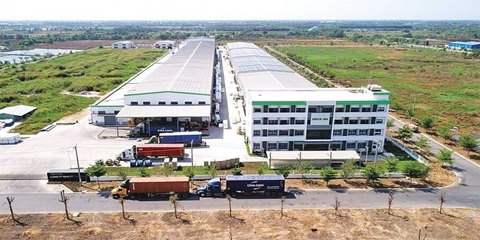
Instead of focusing only on land costs and incentives as usual, foreign investors are seeking a synchronised manufacturing ecosystem, from stable power supply and logistics to shared infrastructure and the convenience of completing residence procedures for experts to serve their long-term investment in the country.
INFRASTRUCTURE / CONSTRUCTION / LOGISTIC / PORT
DONG THAP PROVINCE STEPS UP INDUSTRIAL EXPANSION AND INFRASTRUCTURE CONNECTIVITY
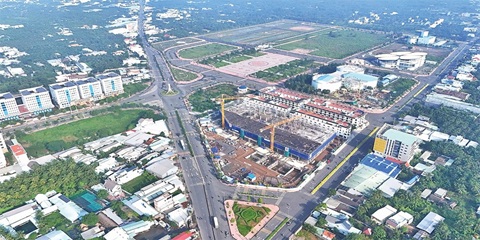
Accelerating public investment, strengthening inter-regional connectivity, and expanding industrial land are helping Dong Thap efficiently bolster competitiveness and drive economic growth. Following the 2025 merger of the former Dong Thap and Tien Giang provinces, the expanded Dong Thap province in the Mekong Delta faces mounting pressure to accelerate infrastructure development and strengthen connectivity among local economic zones, urban areas, industrial parks (IPs), and production centres.
PROPERTY / INDUSTRIAL ZONE
HCM CITY ATTRACTS US$5.7 BILLION INTO EXPORT PROCESSING AND INDUSTRIAL ZONES
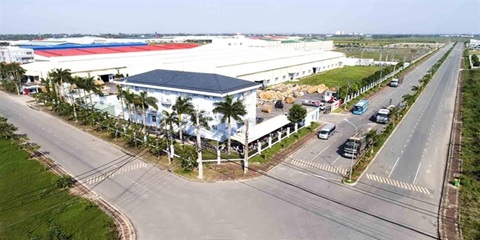
HCM City attracted US$5.7 billion in domestic and foreign investment into its export processing and industrial zones during the first nine months of 2026. The figure exceeded the city's full-year target by 31 per cent, highlighting strong momentum in high-quality industrial investment under Resolution No.10-NQ/TW. Total investment reached 131 per cent of the 2026 target of $4.25 billion and represented a 29 per cent increase compared with the same period in 2025, according to the city's Export Processing and Industrial Zones Authority (HEPZA).

BANKING / FINANCE / INSURANCE / TAX
REMITTANCES TO HCM CITY RISE NEARLY 40% IN Q3
Remittances to HCM City reached more than US$2.83 billion in the third quarter of this year, up 39.5 per cent from the previous quarter and 3.6 per cent year-on-year. This was the first quarter showing positive annual growth this year, helping narrow the decline in remittance inflows over the first nine months. According to the State Bank of Vietnam (SBV)’s Regional Branch 2, remittances transferred to HCM City through credit institutions and economic organisations totalled $2.835 billion in Q3, an increase of more than $802 million from the previous quarter.

VIETNAM ECONOMY INVESTMENT
LOCALITIES REPORT BREAKTHROUGH RESULTS IN FDI IN FIRST NINE MONTHS
In Ho Chi Minh City, total registered capital reached $17.2 billion in the first nine months, up 4.2 times from the same period last year. The figure included more than $9.35 billion in newly registered capital and over $4.9 billion in additional capital for existing projects. Foreign investors also registered more than $2.9 billion through capital contributions and share purchases.

TECHNOLOGY
TECH SECTOR GROWTH OPENS UP OPPORTUNITIES FOR VIỆT NAM TO GO GLOBAL
The growth of the electronics, semiconductor and high-tech sectors worldwide is opening up a variety of opportunities for Vietnamese enterprises to integrate more deeply into the global supply chain. However, to become suppliers for these corporations, domestic enterprises must meet rigorous standards regarding quality, technology, productivity and order fulfilment capabilities.
Events Sponsors






















