Want to be in the loop?
subscribe to
our notification
Business News
ACCENTURE COMPLETES ACQUISITION OF LINKBYNET FOR CLOUD FIRST SERVICES
PARIS; July 9, 2021 – Accenture (NYSE: ACN) has completed its acquisition of Linkbynet, a leading cloud services provider headquartered in France, specializing in cloud optimization and managed services, cloud transformation and cloud security. Accenture announced its intent to acquire Linkbynet on May 11, 2021. Terms of the transaction were not disclosed.
Founded in 2000, Linkbynet is based in Saint-Denis, France, with additional offices in Belgium, Canada, China, France, Luxembourg, Mauritius, Singapore and Vietnam. The company’s team of more than 900 highly skilled professionals holds 400 certifications from major cloud providers such as Alibaba, Amazon, Google and Microsoft.
Linkbynet will further enhance the global capabilities of Accenture Cloud First. Powered by 70,000 cloud professionals and a $3 billion investment over the next three years, Accenture Cloud First group brings together unmatched depth and breadth of cloud expertise, industry cloud solutions, ecosystem partner capabilities, and assets that help clients realize greater value from cloud at speed and scale.
About Accenture
Accenture is a global professional services company with leading capabilities in digital, cloud and security. Combining unmatched experience and specialized skills across more than 40 industries, we offer Strategy and Consulting, Interactive, Technology and Operations services — all powered by the world’s largest network of Advanced Technology and Intelligent Operations centers. Our 569,000 people deliver on the promise of technology and human ingenuity every day, serving clients in more than 120 countries. We embrace the power of change to create value and shared success for our clients, people, shareholders, partners and communities.
Visit us at www.accenture.com
Forward-Looking Statements
Except for the historical information and discussions contained herein, statements in this news release may constitute forward-looking statements within the meaning of the Private Securities Litigation Reform Act of 1995. Words such as “may,” “will,” “should,” “likely,” “anticipates,” “expects,” “intends,” “plans,” “projects,” “believes,” “estimates,” “positioned,” “outlook” and similar expressions are used to identify these forward-looking statements. These statements involve a number of risks, uncertainties and other factors that could cause actual results to differ materially from those expressed or implied. Many of the following risks, uncertainties and other factors identified below are, and will be, amplified by the COVID-19 pandemic. These risks include, without limitation, risks that: the transaction might not achieve the anticipated benefits for Accenture; Accenture’s results of operations have been significantly adversely affected and could in the future be materially adversely impacted by the COVID-19 pandemic; Accenture’s results of operations have been, and may in the future be, adversely affected by volatile, negative or uncertain economic and political conditions and the effects of these conditions on the company’s clients’ businesses and levels of business activity; Accenture’s business depends on generating and maintaining ongoing, profitable client demand for the company’s services and solutions including through the adaptation and expansion of its services and solutions in response to ongoing changes in technology and offerings, and a significant reduction in such demand or an inability to respond to the evolving technological environment could materially affect the company’s results of operations; if Accenture is unable to keep its supply of skills and resources in balance with client demand around the world and attract and retain professionals with strong leadership skills, the company’s business, the utilization rate of the company’s professionals and the company’s results of operations may be materially adversely affected; Accenture could face legal, reputational and financial risks if the company fails to protect client and/or company data from security incidents or cyberattacks; the markets in which Accenture operates are highly competitive, and Accenture might not be able to compete effectively; Accenture’s profitability could materially suffer if the company is unable to obtain favorable pricing for its services and solutions, if the company is unable to remain competitive, if its cost-management strategies are unsuccessful or if it experiences delivery inefficiencies or fail to satisfy certain agreed-upon targets or specific service levels; changes in Accenture’s level of taxes, as well as audits, investigations and tax proceedings, or changes in tax laws or in their interpretation or enforcement, could have a material adverse effect on the company’s effective tax rate, results of operations, cash flows and financial condition; Accenture’s ability to attract and retain business and employees may depend on its reputation in the marketplace; as a result of Accenture’s geographically diverse operations and its growth strategy to continue to expand in its key markets around the world, the company is more susceptible to certain risks; Accenture’s business could be materially adversely affected if the company incurs legal liability; Accenture’s work with government clients exposes the company to additional risks inherent in the government contracting environment; Accenture’s results of operations could be materially adversely affected by fluctuations in foreign currency exchange rates; if Accenture is unable to manage the organizational challenges associated with its size, the company might be unable to achieve its business objectives; if Accenture does not successfully manage and develop its relationships with key alliance partners or fails to anticipate and establish new alliances in new technologies, the company’s results of operations could be adversely affected; Accenture might not be successful at acquiring, investing in or integrating businesses, entering into joint ventures or divesting businesses; if Accenture is unable to protect or enforce its intellectual property rights or if Accenture’s services or solutions infringe upon the intellectual property rights of others or the company loses its ability to utilize the intellectual property of others, its business could be adversely affected; Accenture’s results of operations and share price could be adversely affected if it is unable to maintain effective internal controls; changes to accounting standards or in the estimates and assumptions Accenture makes in connection with the preparation of its consolidated financial statements could adversely affect its financial results; Accenture might be unable to access additional capital on favorable terms or at all and if the company raises equity capital, it may dilute its shareholders’ ownership interest in the company; Accenture may be subject to criticism and negative publicity related to its incorporation in Ireland; as well as the risks, uncertainties and other factors discussed under the “Risk Factors” heading in Accenture plc’s most recent Annual Report on Form 10-K and other documents filed with or furnished to the Securities and Exchange Commission. Statements in this news release speak only as of the date they were made, and Accenture undertakes no duty to update any forward-looking statements made in this news release or to conform such statements to actual results or changes in Accenture’s expectations.
Contact :
Ophélie TRONCHET
+33148135650
o.tronchet@linkbynet.com
Related News

CHARITY / EXHIBITION / OTHER EVENTS
INVESTMENT OPPORTUNITIES IN CA MAU PROVINCE: 96 PROJECTS AND 20 STRATEGIC PROJECTS
We are pleased to share with you information on investment projects currently seeking investors in Ca Mau Province. Should your esteemed company or association be interested, we kindly invite you to review the project information and complete the registration form via the links provided. The Ho Chi Minh City Investment and Trade Promotion Centre (ITPC) will consolidate the expressions of interest and facilitate connections with the leadership of Ca Mau Province at a meeting tentatively scheduled for 13 November 2026 in Ho Chi Minh City.

MEMBER CORNER / PROMOTIONS
BẰNG KIỀU LIVESHOW - A SYMPHONY OF LOVE UNDER THE GOLDEN GLOW
A masterclass in live music that takes the audience on a soulful journey through immortal love songs, guided by the peerless artistry and emotive storytelling of renowned singer Bằng Kiều. The highlight of the night is his seamless musical chemistry with special guest Triệu Hồng Ngọc, promising passionate and deeply resonant duets inside the magnificent Grand Ballroom.
INFRASTRUCTURE / CONSTRUCTION / LOGISTIC / PORT
ĐÀ NẴNG GREEN-LIGHTS US$105 MILLION THAI DEVELOPMENT DEAL
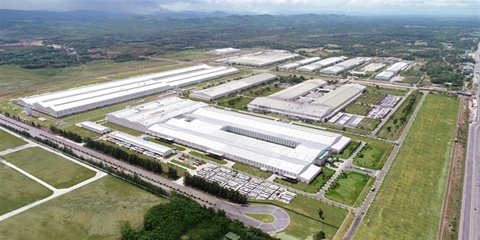
The central city has approved an investment proposal by Thailand’s WHA Group to develop infrastructure for the 400ha WHA Đà Nẵng Industrial Park project on two communes of Thăng Bình and Đồng Dương, with an investment of more than VNĐ2.7 trillion (US$105 million). The city said it approved WHA Industrial Development International's status as an investor in the project, which is expected to take place between 2027 and 2034.
VIETNAM ECONOMY INVESTMENT
MOBILE PHONE EXPORTS RISE 20% TO $51.8 BILLION IN FIRST NINE MONTHS
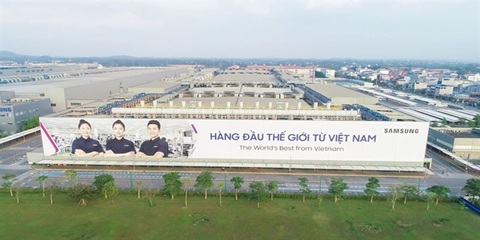
Exports of mobile phones and components rose 20 per cent year-on-year to nearly US$51.8 billion in the first nine months of 2026, with China, the US and Republic of Korea accounting for more than half of the total. Shipments to the three markets reached a combined $26.18 billion, or 50.6 per cent of total exports of the product group during the period, according to data from the Vietnam Department of Customs under the Ministry of Finance.

INFRASTRUCTURE / CONSTRUCTION / LOGISTIC / PORT
VIỆT NAM-CAMBODIA TRADE GATHERS PACE TOWARDS $20 BILLION TARGET
Trade between Việt Nam and Cambodia continues to grow, remaining a bright spot and a key pillar of bilateral cooperation as the two countries aim to raise two-way trade to US$20 billion in the coming years. After setting a record of more than $11.3 billion last year, bilateral trade reached about $8.7 billion in the first eight months of this year, up 8.3 per cent year on year.

VIETNAM ECONOMY INVESTMENT
FRUIT AND VEGETABLE EXPORTS POISED TO HIT $10 BILLION IN 2026
Fruit and vegetable exports are on track to reach nearly US$10 billion in 2026, after rising 19.9 per cent year on year to nearly US$7.4 billion in the first nine months, driven by strong seasonal demand and abundant tropical fruit supplies. The Ministry of Agriculture and Environment said the growth reflected stronger international demand for fresh produce and processed agricultural products.
Events Sponsors






















