Want to be in the loop?
subscribe to
our notification
Business News
ACCELERATING DIGITAL TRANSFORMATION WITH PIONEERING TELECOM INFRASTRUCTURE
Vietnam’s telecommunications sector will continue to play a key role in driving the digital economy, especially as technologies like AI, 5G, cloud computing and quantum computing become essential components of national development strategies. At the same time, building modern, green-certified data centers is among the top priorities.
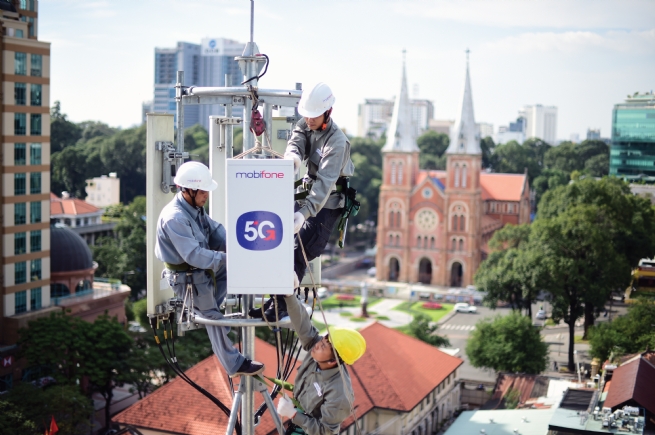
MobiFone is actively expanding 5G coverage and commercializing its services
Optimizing 5G with AI and Blockchain
Speaking at the World Mobile Broadband, Cloud & AI Summit 2025 recently held in Hanoi, Dr. Tran Duc Lai, Chairman of the Radio and Electronics Association of Vietnam (REV), said that 2024 marked significant achievements for Vietnam’s telecommunications industry. Total service revenue reached approximately VND147 trillion, an increase of 3.49% from 2023, demonstrating its stable growth. Notably, the adoption rate of the Resource Public Key Infrastructure (RPKI) standard reached 88%, illustrating the industry’s innovation capabilities.
Viettel, VNPT and MobiFone are actively expanding coverage and commercializing 5G services, he added. This technology is projected to contribute 7.3-7.4% to national GDP in 2025. The Party and the State established a solid legal framework with Resolution 57-NQ/TW on “Breakthrough development in science, technology, innovation and national digital transformation.” Resolution 57 underlines the advocacy for infrastructure development, particularly digital and technological infrastructure, based on principles of modernity, synchronicity, security, safety, efficiency and economy.
Additionally, Decree 147/2024/ND-CP on internet service management and Decree 163/2024/ND-CP on telecommunications law have improved the regulatory framework, optimized frequency resources, created regulatory space for small and medium-sized telecom enterprises, and supported a healthy competitive environment.
Highlighting the importance of radio spectrum, Mr. Le Thai Hoa, Deputy Director of the Authority of Radio Frequency Management, said that spectrum is considered a strategic resource and the lifeblood of telecom development in Vietnam. In 2024, Vietnam successfully organized its first-ever spectrum auction for 5G mobile networks. This event not only marked the beginning of the 5G era in Vietnam but also contributed to commercialization, entrepreneurship and innovation, providing momentum for the country’s sustainable development.
5G networks feature significant advantages over previous generations, including high transmission speeds, low latency and connectivity to a vast number of devices simultaneously. Hence, 5G has become a core foundation for digital transformation and supported the development needs of other sectors such as digital healthcare, digital education, smart transportation, maritime management, e-government, and public services.
“Vietnam is on a national digital transformation journey involving multiple sectors and regions. Developing 5G services is a strategic mission, closely tied to major national digital transformation goals to 2030,” he said.
Ensuring inclusiveness, connectivity, and sustainable transformation
Ms. Atsuko Okuda, Regional Director of the ITU Regional Office for Asia and the Pacific at the International Telecommunication Union (ITU), said that the world is at a critical crossroads where humans must be placed at the center of all technological progress. The deployment of 5G must ensure inclusiveness, tight connectivity and sustainable transformation.
“We are not only building global telecom networks but also shaping digital ecosystems, from smart cities to rural communities, helping drive sustainable economic and social growth,” Okuda emphasized. However, these advancements depend not only on technology but also on robust infrastructure, close cooperation and a dynamic innovation ecosystem.
As of the first quarter of 2025, Vietnam ranked among Top 20 countries with the highest mobile internet speeds in the world. Vietnam’s 5G development strategy also sets a goal of reaching an average transmission speed of 100 Mbps in 2025 and nationwide 5G coverage by 2030. By the end of 2025, 5G networks are expected to cover 50% of the population.
To achieve these goals, Vietnam has adopted two core policies: Licensing spectrum through auctions to select capable bidders and providing financial support for companies to accelerate commercialization and service development, said Hoa. Qualified businesses will be required to deploy quickly, ensuring a minimum of 20,000 5G base transceiver stations are built in 2025.
According to IDG Vietnam, Vietnam’s telecom industry will continue to play a crucial role in advancing the digital economy, particularly when AI, 5G, cloud computing and quantum computing become inseparable from national development strategies. In parallel, building green-certified modern data centers that meet energy efficiency metrics is also a top priority.
Vietnam is also preparing for 6G technology. Research is already underway, focusing on suitable spectrum bands for both terrestrial and space-based networks, ensuring the efficient use of spectrum resources.
These efforts will not only improve infrastructure readiness but also ensure cybersecurity, support national data centers, stimulate innovation in specific industries, and foster the digital economy and digital society while helping Vietnam attract investment in high-tech sectors in general.
Source: VCCI
Related News

MEMBER CORNER / PROMOTIONS
AN ELECTRIFYING NIGHT WITH THE "QUEEN OF DANCE" THU MINH AT THE GRAND HO TRAM!
The stage at The Grand Ballroom is set to catch fire as Vietnam’s undisputed "Queen of Dance," Thu Minh, takes the spotlight. Renowned for her powerhouse vocals, magnetic stage presence, and sultry, high-energy performances, Thu Minh promises an evening of pure musical euphoria. The energy escalates with an exclusive appearance by special guest and The Voice champion, Vu Thao My.

HR / LABOUR/ EMPLOYMENT
HIGH-QUALITY HUMAN RESOURCES NEEDED TO ATTRACT NEW TECH INVESTMENT CAPITAL
Besides infrastructure, Việt Nam must also rapidly develop a highly skilled workforce to attract investment in AI, semiconductors and advanced manufacturing, experts have said. Don Lam, CEO and co-founder of investment management company VinaCapital, said that global technology investors were increasingly looking at the readiness of the entire ecosystem, with high-quality human resources a decisive factor.

HR / LABOUR/ EMPLOYMENT
HIRING OUTLOOK STRENGTHENS IN Q4 AS SKILLS SHORTAGES PERSIST
Hiring intentions among employers in Việt Nam strengthened in the fourth quarter, with 52 per cent of surveyed companies planning to increase headcount between October and December, according to a ManpowerGroup survey released this week. Việt Nam's hiring outlook was stronger than the Asia Pacific and Middle East (APME) regional average of 33 per cent and the global average of 29 per cent, ranking third in the region and 11th globally among 42 markets surveyed.

BANKING / FINANCE / INSURANCE / TAX
LARGE BANKS FORECAST TO GAIN HIGHER PROFITABILITY IN H2 2026
The return on average assets (ROAA) of the banking sector will likely remain stable at around 1.5 per cent in the second half of 2026, but profitability divergence among banks will increase, with large banks outperforming peers on stronger margins and diversified earnings, analysts forecast. In a recent report on the banking sector, analysts from the Vietnam Investors Service Rating said the sector’s ROAA rose by 10 basis points quarter-on-quarter to 1.51 per cent in the first half of this year, driven by net interest margin (NIM) improvements at some State-owned banks and large private banks.
GARMENT / TEXTILE
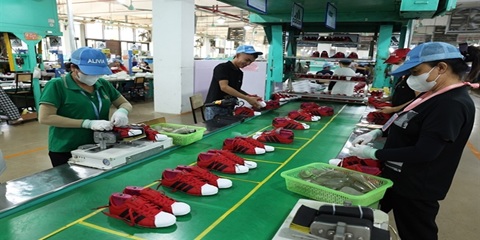
VIỆT NAM'S FOOTWEAR, BAG EXPORTS TO US TOP $8 BILLION IN EIGHT MONTHS
Việt Nam's exports of footwear and handbags to the US exceeded US$8 billion in the first eight months of 2026, as the US and EU remained the country's biggest markets despite sluggish growth in footwear shipments. Exports from Việt Nam's leather and footwear sector reached more than $2.45 billion in August, down 9 per cent from July but up 3 per cent from a year earlier, according to preliminary statistics.
VIETNAM ECONOMY INVESTMENT
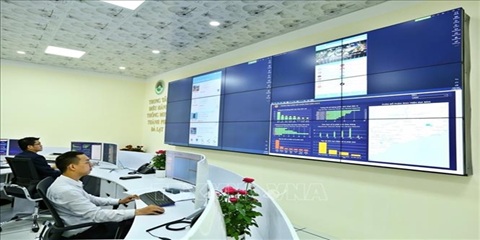
LÂM ĐỒNG TARGETS DIGITAL ECONOMY TO ACCOUNT FOR 30 PER CENT OF GRDP BY 2030
Lâm Đồng Province aims to raise the digital economy’s contribution to around 30 per cent of its gross regional domestic product (GRDP) by 2030, as part of a five-year plan to develop digital economy and society issued recently. Under Plan No. 15358/KH-UBND, the province targets more than 60 per cent of small- and medium-sized enterprises (SMEs) to adopt digital technologies by 2030 while increasing the value of cashless payments to 30 times its GRDP.
Events Sponsors






















