Want to be in the loop?
subscribe to
our notification
Business News
14 SOCIO-ECONOMIC DEVELOPMENT TARGETS MET OR EXCEDED THIS YEAR
Only one of 15 social-economic development targets are not expected to be met or exceeded this year.
Gross Domestic Product (GDP) growth is estimated to reach 8 per cent this year, about 2-2.5 per cent higher than the target.
The data was revealed in a report at the National Assembly's (NA) Committee for Economic Affairs on Tuesday morning. Assessments were made based on Government reports on the implementation of the socio-economic development plan, the State budget estimate in 2022, and the socio-economic development plan in 2023.
Under the assessments, economic recovery took place evenly among localities; 44 out of 63 provinces and cities have the Gross Regional Domestic Product (GRDP) increasing by over 6 per cent.
The number of newly established businesses has been on the rise, and sectors hit hard by the COVID-19 pandemic have recovered strongly. As a result, the major balances of the economy are ensured while inflation is controlled.
It is estimated that the whole year Consumer Price Index (CPI) will increase by about 4 per cent, and the State budget revenue will be higher than the estimate. Mobilisation of investment capital from the whole society reached about 34 per cent of GDP. Total import and export turnover continued to increase at a high level.
Việt Nam is the only country in the Asia-Pacific region and one of four countries in the world that have had their credit rating upgraded by Moody's since the beginning of the year.
National Assembly's Committee for Economic Affairs chairman Vũ Hồng Thanh said Việt Nam had achieved many encouraging results despite facing many difficulties and challenges in the world economy.
Don't neglect
However, paying attention to and evaluating several issues more closely would be necessary. For example, Thanh said the social labour productivity growth rate was lower than the target.
The implementation of the socio-economic recovery and development programme was still low; the implementation of support packages was also slow; the interest-rate support package through the commercial banking system had a very low disbursement rate; and export activities showed signs of slowing down, he added.
Some other issues also needed to be considered and clarified, such as Việt Nam's tourism competitiveness, the number of international tourists entering the country, and the bidding for the procurement of public property had caused damage to the State budget capital, he said.
Speaking at the session, Head of Delegation Affairs Nguyễn Thị Thanh said that although economic growth was high and inflation was reasonably controlled, negligence should be discouraged.
Risk factors for global economic slowdown and financial instability were still present, including the possibility of a COVID-19 resurgence.
In addition, there were other risks, such as monkeypox disease, instability of trade and global financial markets, monetary tightening of the banks in the world, and energy and food crisis, she said.
Giving the conclusion of the session, National Assembly Vice Chairman Nguyễn Khắc Định ordered the Government's report to add more experience in realising the dual goals of preventing and controlling the pandemic while maintaining economic stability. The report should also analyse the causes of the results that Việt Nam achieved over the past time.
He also told the Government to focus on planning and removing obstacles in public investment to promote growth and economic development.
Permanent Vice Chairman of the National Assembly Trần Thanh Mẫn asked the Government to clarify internal and external reasons further and propose solutions to the problems, including failure to meet the target on social labour productivity and public investment; difficulties in connecting domestic enterprises with foreign investment; improving the quality of Foreign Direct Investment (FDI) projects, and attracting high technology, source technology and technology transfer.
Mẫn also said that next year the Government must focus on forecasting, offer appropriate solutions to arising problems, and concentrate on solving difficult and urgent problems to ensure the achievement of the socio-economic development goals.
Risks remain
At the session, the assessments also showed that the stock and corporate bond markets had been developing rapidly, but there were many fluctuations and potential risks.
Giving examples for the above assessments, the NA's Committee for Economic Affairs said by the end of the session on October 7, 2022, Việt Nam's stock market fell 484 points, equivalent to 31.8 per cent from the peak (on January 6, 2022). This was was believed to be the market with the strongest decline in the world that day. VN-Index was currently at the lowest level since December 10, 2020. HNX-Index and UPCoM-Index were also recording the lowest point in nearly two years.
Besides, the violations related to An Đông Company and some other recent cases related to the bond market caused many consequences for the sustainable development of the capital market, leading to a loss of confidence in investors.
The committee also said that the risk among the capital market, the system of credit institutions and the real estate market increased.
Source: VNS
Related News
BANKING / FINANCE / INSURANCE / TAX
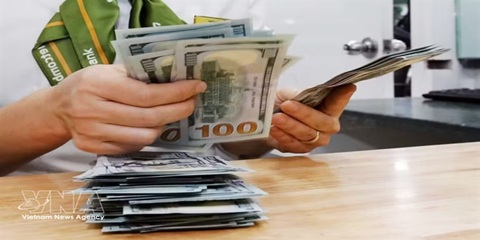
REMITTANCES TO HCM CITY RISE NEARLY 40% IN Q3
Remittances to HCM City reached more than US$2.83 billion in the third quarter of this year, up 39.5 per cent from the previous quarter and 3.6 per cent year-on-year. This was the first quarter showing positive annual growth this year, helping narrow the decline in remittance inflows over the first nine months. According to the State Bank of Vietnam (SBV)’s Regional Branch 2, remittances transferred to HCM City through credit institutions and economic organisations totalled $2.835 billion in Q3, an increase of more than $802 million from the previous quarter.
TECHNOLOGY
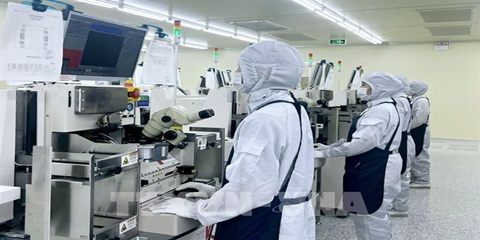
TECH SECTOR GROWTH OPENS UP OPPORTUNITIES FOR VIỆT NAM TO GO GLOBAL
The growth of the electronics, semiconductor and high-tech sectors worldwide is opening up a variety of opportunities for Vietnamese enterprises to integrate more deeply into the global supply chain. However, to become suppliers for these corporations, domestic enterprises must meet rigorous standards regarding quality, technology, productivity and order fulfilment capabilities.
VIETNAM ECONOMY INVESTMENT
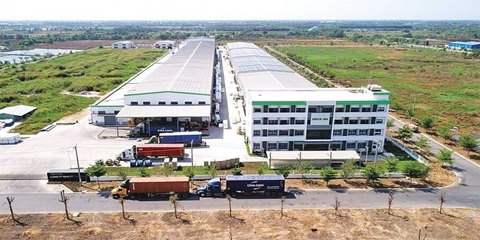
FOREIGN INVESTORS SEEKING A SYNCHRONISED MANUFACTURING ECOSYSTEM
Instead of focusing only on land costs and incentives as usual, foreign investors are seeking a synchronised manufacturing ecosystem, from stable power supply and logistics to shared infrastructure and the convenience of completing residence procedures for experts to serve their long-term investment in the country.
MEMBER CORNER / PROMOTIONS
SENTRYSAFE FHW40200 – PROTECT YOUR VALUABLES, ENJOY PEACE OF MIND!
Looking for a reliable solution to protect your important documents, cash, and valuables from fire and water damage? Genuine SENTRYSAFE - Reliable protection for your valuables and peace of mind! Contact Sen Wai Vietnam for more information and personalized product recommendations.
PROPERTY / INDUSTRIAL ZONE
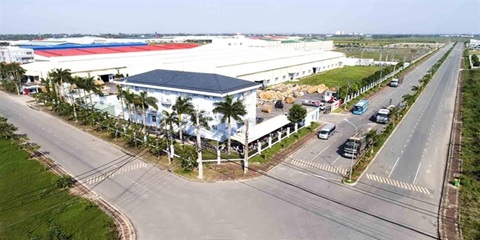
HCM CITY ATTRACTS US$5.7 BILLION INTO EXPORT PROCESSING AND INDUSTRIAL ZONES
HCM City attracted US$5.7 billion in domestic and foreign investment into its export processing and industrial zones during the first nine months of 2026. The figure exceeded the city's full-year target by 31 per cent, highlighting strong momentum in high-quality industrial investment under Resolution No.10-NQ/TW. Total investment reached 131 per cent of the 2026 target of $4.25 billion and represented a 29 per cent increase compared with the same period in 2025, according to the city's Export Processing and Industrial Zones Authority (HEPZA).
INFRASTRUCTURE / CONSTRUCTION / LOGISTIC / PORT
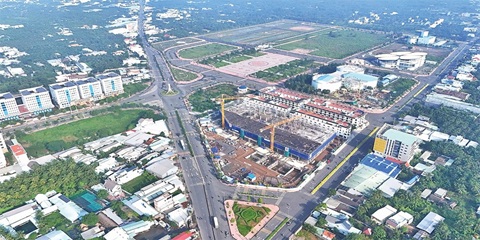
DONG THAP PROVINCE STEPS UP INDUSTRIAL EXPANSION AND INFRASTRUCTURE CONNECTIVITY
Accelerating public investment, strengthening inter-regional connectivity, and expanding industrial land are helping Dong Thap efficiently bolster competitiveness and drive economic growth. Following the 2025 merger of the former Dong Thap and Tien Giang provinces, the expanded Dong Thap province in the Mekong Delta faces mounting pressure to accelerate infrastructure development and strengthen connectivity among local economic zones, urban areas, industrial parks (IPs), and production centres.
Events Sponsors






















